
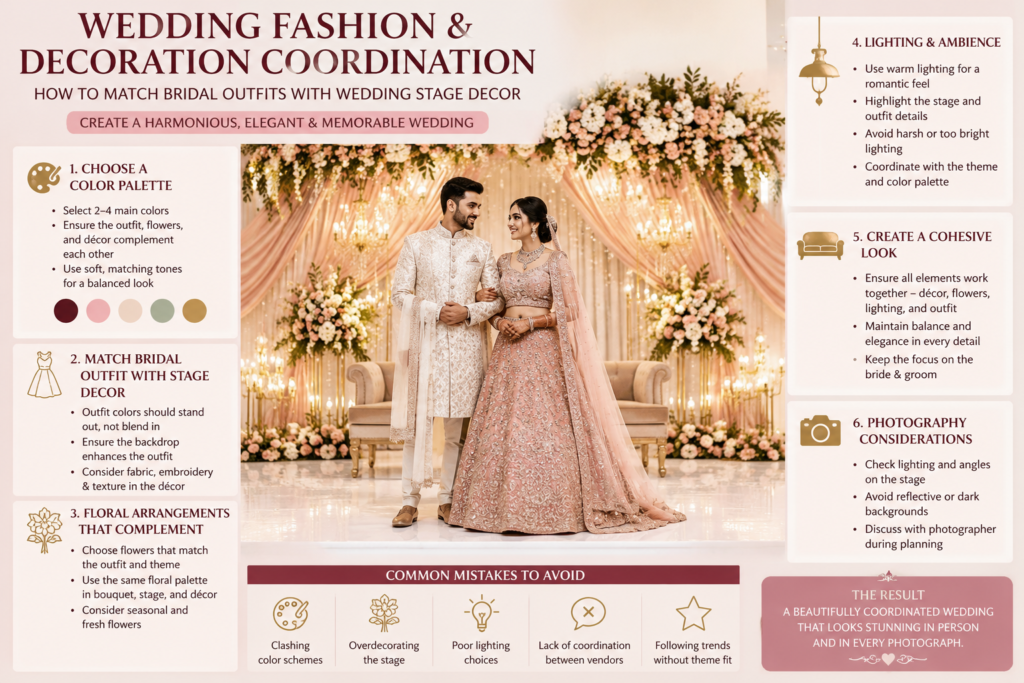
A beautiful wedding is not only about choosing the perfect bridal outfit. It is also about creating harmony between the couple’s attire and the wedding stage decoration. When the dress colors, fabrics, flowers, and stage elements work together, the entire wedding looks elegant and well-planned.
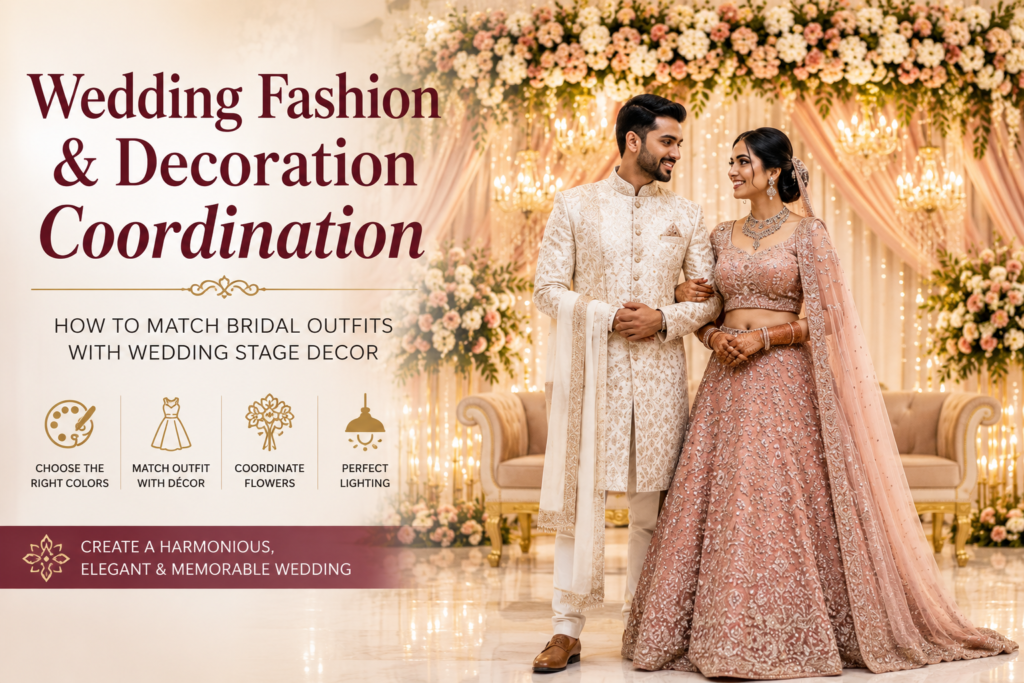
Many couples spend months selecting bridal wear but forget to coordinate it with the wedding stage. This can create a visual mismatch in photographs and reduce the overall impact of the celebration. A well-coordinated wedding creates a balanced look and makes every detail feel connected.
Whether you are planning a traditional Kerala wedding, a grand royal celebration, or a modern minimalist ceremony, matching fashion with décor can transform the entire wedding experience. In this guide, you will learn how to coordinate bridal outfits, wedding stage decorations, family attire, and wedding themes to create a stunning and memorable event.
Outfit Coordination Strategies
The foundation of wedding fashion and decoration coordination starts with outfit planning. The bride, groom, family members, and wedding squad should follow a coordinated style that matches the wedding theme and stage decoration. This creates a polished look and makes wedding photographs more visually appealing.
Couple Coordination
The bride and groom should follow a shared color palette. Their outfits do not need to be identical, but they should complement each other.
Some effective coordination ideas include:
- Similar color combinations
- Matching fabric selections
- Coordinated embroidery details
- Matching floral accessories
- Garlands that complement outfit colors
For example, a bride wearing a blush pink lehenga can pair beautifully with a groom wearing a cream sherwani with pink accents. This creates harmony without making both outfits look the same.
Wedding Squad Coordination
Bridesmaids and groomsmen contribute significantly to the overall wedding aesthetic. Coordinated outfits help create a balanced and organized appearance.
Popular wedding squad coordination ideas include:
- Bridesmaids wearing similar silhouettes
- Groomsmen using coordinated stoles or pocket squares
- Following a common color palette
- Maintaining consistent styling elements
- Avoiding excessive color variations
A coordinated wedding squad enhances group photographs and strengthens the overall wedding theme.
Family Coordination
Parents and siblings often appear in important wedding photographs. Their attire should complement both the couple’s outfits and the wedding décor.
Some useful coordination strategies include:
- Siblings following a shared color palette
- Parents choosing complementary shades
- Traditional outfits matching the ceremony style
- Avoiding colors that overshadow the bride and groom
- Maintaining elegance without excessive embellishments
Even pets participating in wedding celebrations can wear coordinated accessories that match the wedding theme.
Why Outfit Coordination Matters
Coordinated wedding attire offers several benefits:
- Creates visual harmony
- Improves wedding photography
- Enhances the stage appearance
- Strengthens the wedding theme
- Makes the event look professionally planned
The goal is not to make everyone wear the same color. Instead, focus on creating a balanced and cohesive visual experience throughout the celebration.
Wedding Stage Decoration Ideas
The wedding stage is one of the most photographed areas of the celebration. It serves as the focal point of the venue and creates the backdrop for important moments. A well-designed stage should complement the bridal outfits and reflect the overall wedding theme.
Floral stages remain one of the most popular choices for weddings. Fresh flowers add elegance, color, and texture to the décor. When the floral arrangements match the colors used in the bridal attire, the entire setup appears more cohesive. Soft pastel flowers work well with light-colored outfits, while vibrant floral arrangements can enhance richer bridal colors.
Traditional wedding stages often include cultural elements, decorative lamps, wooden structures, and classic floral arrangements. These stages pair beautifully with traditional bridal sarees, kasavu outfits, and heritage-inspired wedding attire. The combination creates a timeless and elegant atmosphere.
Modern wedding stages focus on clean designs, minimal décor, and sophisticated lighting. These setups work well with contemporary bridal gowns, designer lehengas, and modern wedding themes. Simple backdrops, subtle floral accents, and warm lighting can create a luxurious appearance without overwhelming the venue.
Royal-themed wedding stages use grand backdrops, chandeliers, premium fabrics, and elaborate floral installations. These designs are ideal for couples who want a luxurious wedding experience. Rich colors such as maroon, gold, ivory, and deep red often work well in both stage decoration and bridal fashion.
Regardless of the chosen style, the stage decoration should support the wedding theme rather than compete with it. When the stage, outfits, flowers, and venue décor work together, the wedding achieves a balanced and visually appealing look.
Color Palette Planning for Outfits and Decorations
Color plays a major role in wedding fashion and decoration coordination. A carefully selected color palette creates harmony between bridal outfits, stage décor, floral arrangements, and venue styling. When all visual elements follow the same color direction, the wedding looks more refined and professionally planned.
The first step is choosing a primary wedding color. This color should reflect the couple’s style and the overall mood of the celebration. Once the primary color is selected, complementary shades can be added to create depth and visual balance throughout the venue.
Soft pastel colors such as blush pink, lavender, peach, and ivory are popular choices for elegant daytime weddings. These shades create a fresh and romantic atmosphere while blending naturally with floral decorations and modern stage designs.
Rich colors such as maroon, emerald green, royal blue, and gold are often chosen for grand evening weddings. These colors add luxury and create a dramatic visual impact. They also work beautifully with royal-themed stage decorations and traditional wedding attire.
Neutral shades such as beige, cream, champagne, and white can be used as supporting colors. These tones help balance brighter shades and create a sophisticated appearance. Neutral colors also allow decorative elements and bridal outfits to stand out without making the venue feel overwhelming.
A successful wedding color palette should be visible throughout the celebration. The chosen colors can appear in bridal outfits, floral arrangements, stage backdrops, seating décor, invitation designs, and wedding accessories. This consistency helps create a seamless experience for guests and produces stunning wedding photographs.
When selecting colors, it is important to consider the venue, lighting conditions, and wedding season. Colors that look beautiful in natural daylight may appear different under artificial lighting. Careful planning ensures that every element works together to create the desired visual effect.
Matching Floral Arrangements with Bridal Fashion
Flowers are one of the most important elements in wedding decoration. They influence the overall atmosphere of the venue and help connect bridal fashion with stage décor. When floral arrangements complement the bridal outfit, the wedding appears more coordinated and visually appealing.
The choice of flowers should be based on the colors, textures, and style of the bridal attire. Soft floral arrangements pair beautifully with pastel lehengas and gowns, while bold floral installations work well with rich traditional wedding outfits.
Benefits of coordinating flowers with bridal fashion:
- Creates a cohesive wedding theme
- Enhances stage decoration
- Improves wedding photography
- Highlights bridal attire
- Adds elegance to the venue
Popular flower and outfit combinations include:
- Blush pink outfits with roses and peonies
- Ivory gowns with white orchids
- Maroon bridal wear with red roses
- Lavender outfits with lilacs and hydrangeas
- Gold-toned attire with white and cream flowers
Floral coordination can extend beyond the stage decoration. Wedding bouquets, bridal hair accessories, garlands, entrance décor, and table arrangements can all follow the same floral palette. This creates consistency throughout the celebration and strengthens the overall wedding aesthetic.
When selecting flowers, it is also important to consider the season and venue conditions. Fresh flowers should remain vibrant throughout the event, especially in outdoor settings. Working with a florist who understands both wedding fashion and decoration can help achieve the perfect balance between style and practicality.
A well-planned floral design does more than decorate a venue. It acts as a bridge between bridal fashion and wedding décor, creating a seamless and memorable wedding experience.
Lighting and Ambience Coordination
Lighting plays a crucial role in connecting wedding fashion and stage decoration. Even the most beautiful bridal outfit or stage design can lose its impact if the lighting is not planned properly. The right lighting enhances colors, highlights decorative details, and creates the desired atmosphere for the celebration.
Wedding lighting should complement both the venue décor and the bridal attire. Warm lighting often creates a soft and romantic look, while brighter lighting helps showcase intricate outfit details and stage decorations. A balanced lighting setup ensures that every element looks attractive in person and in photographs.
Benefits of Coordinated Wedding Lighting
- Enhances bridal outfit colors
- Improves stage decoration visibility
- Creates a welcoming atmosphere
- Produces better wedding photographs
- Highlights important design elements
Popular Lighting Options for Weddings
- Warm LED lighting for elegant settings
- Fairy lights for romantic themes
- Chandeliers for royal-style weddings
- Spotlights for stage highlights
- Decorative lanterns for traditional ceremonies
The choice of lighting should also depend on the wedding theme. Traditional weddings often benefit from warm lighting and decorative lamps, while modern weddings may use minimal lighting designs with focused highlights. Royal-themed weddings frequently incorporate chandeliers and layered lighting to create a luxurious appearance.
Lighting Mistakes to Avoid
- Excessively bright stage lighting
- Mixing too many lighting colors
- Poorly placed spotlights
- Dark corners around the stage
- Ignoring photography requirements
Wedding photographers rely heavily on lighting to capture high-quality images. Coordinating with both the decorator and photographer during the planning stage can help ensure that the lighting enhances every important moment of the celebration.
A carefully planned lighting setup does more than illuminate the venue. It creates mood, improves visual appeal, and strengthens the connection between bridal fashion and wedding décor.
Common Mistakes to Avoid When Coordinating Wedding Fashion and Décor
Many couples carefully select their wedding outfits and decorations but overlook how these elements work together. Small planning mistakes can create visual inconsistencies that affect the overall appearance of the wedding. Understanding these common mistakes can help create a more polished and memorable celebration.
The goal of wedding coordination is not to make everything look identical. Instead, every element should complement the overall theme while maintaining balance and elegance.
Choosing Unrelated Color Schemes
One of the most common mistakes is selecting outfit colors that clash with the stage decoration. A beautiful bridal outfit may lose its impact if it blends into the backdrop or conflicts with the venue décor.
Avoid:
- Contrasting colors without a clear theme
- Too many accent colors
- Last-minute color changes
- Ignoring venue aesthetics
Overdecorating the Stage
A heavily decorated stage can distract attention from the bride and groom. Excessive flowers, lighting, and decorative elements may make the venue appear crowded rather than elegant.
Avoid:
- Too many floral installations
- Excessive backdrop elements
- Overuse of decorative props
- Visual clutter around the couple
Ignoring Photography Requirements
Wedding photographs preserve memories for years. Decorations and fashion choices should always be planned with photography in mind.
Avoid:
- Dark stage areas
- Harsh lighting
- Reflective surfaces causing glare
- Busy backgrounds that distract from the couple
Lack of Coordination Between Vendors
Decorators, photographers, makeup artists, and outfit designers should work toward the same vision. Poor communication often leads to mismatched styling decisions.
Avoid:
- Planning vendors separately
- Sharing incomplete design references
- Making major changes close to the wedding date
- Ignoring professional recommendations
Following Trends Without Considering the Theme
Wedding trends change regularly, but not every trend suits every wedding. Choosing trendy elements without considering the overall theme can create an inconsistent look.
Avoid:
- Mixing multiple themes together
- Copying designs without customization
- Choosing trends that clash with the venue
- Ignoring personal style preferences
Careful planning and attention to detail can prevent these mistakes. When bridal fashion, flowers, lighting, and stage decoration are coordinated properly, the wedding feels more elegant, organized, and visually appealing.
Conclusion
Wedding fashion and decoration coordination is about creating a seamless visual experience. When bridal outfits, stage decoration, floral arrangements, lighting, and venue styling work together, the entire wedding feels more elegant and memorable.
Careful planning helps ensure that every element supports the overall wedding theme. From selecting the right color palette to coordinating flowers and lighting, each decision contributes to the final appearance of the celebration. Even small details can make a significant difference in how the wedding looks and feels.
Key Takeaways
- Choose a consistent wedding color palette
- Coordinate bridal outfits with stage décor
- Match floral arrangements with wedding fashion
- Use lighting that enhances both attire and decoration
- Avoid overdecorating the stage
- Consider photography during planning
- Ensure all vendors follow the same vision
A well-coordinated wedding is not defined by the amount of money spent but by how thoughtfully every detail is planned. When fashion and décor complement each other, the result is a beautiful celebration that looks stunning in person and remains timeless in wedding photographs.
Whether you are planning a traditional Kerala wedding, a modern ceremony, or a grand royal celebration, coordinating your bridal fashion with wedding decoration can help create a truly unforgettable wedding experience.