
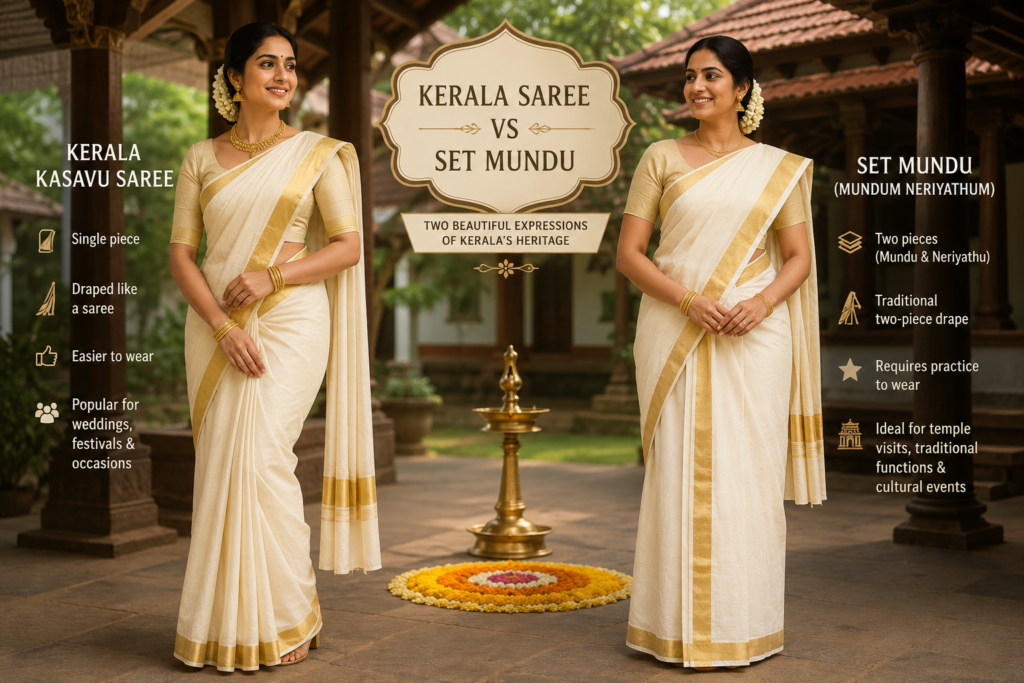
During Onam, Vishu, or a Kerala wedding, you will often see women wearing beautiful cream-and-gold traditional attire. Some call it a Kerala saree. Others call it a Set Mundu. Many people think they are exactly the same.
But they are not.
The Set Mundu is Kerala’s original two-piece traditional dress, known as Mundum Neriyathum. The Kerala Saree, also called the Kasavu Saree or Settu Saree, is a later single-piece adaptation inspired by the same timeless white-and-gold style.
Understanding this difference is important, especially if you’re shopping for Onam, attending a traditional wedding, exploring Kerala’s culture, or reconnecting with your heritage.
In this guide, you’ll learn:
- What a Set Mundu is
- What a Kerala Saree is
- The key differences between them
- A simple side-by-side comparison table
- Their cultural significance
- Which one is the better choice for different occasions
- Styling tips and traditional accessories
By the end, you’ll know exactly which outfit suits your occasion while appreciating the rich heritage behind both.
What Is a Set Mundu?
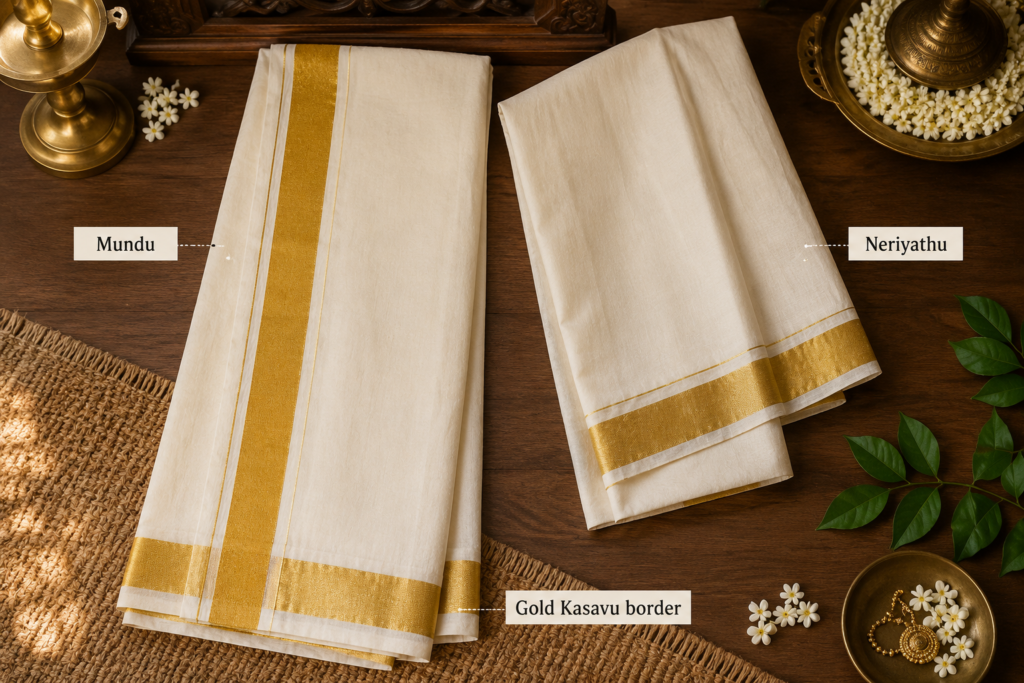
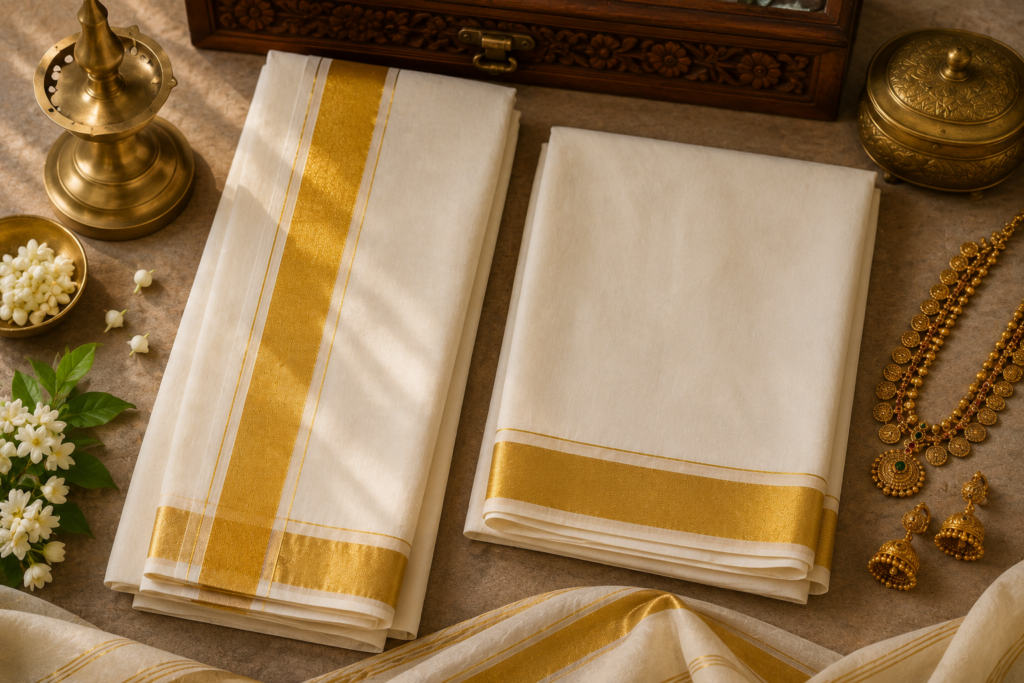
The Set Mundu, traditionally known as Mundum Neriyathum, is one of Kerala’s oldest and most iconic traditional outfits for women. Long before the modern Kerala saree became popular, women across the state wore this elegant two-piece garment for daily life, festivals, and special occasions.
The name itself explains its structure:
- Mundu – The lower garment, wrapped around the waist like a skirt.
- Neriyathu – The upper cloth, draped gracefully over the shoulder and blouse.
Together, these two pieces create the classic Set Mundu.
A Symbol of Kerala’s Heritage
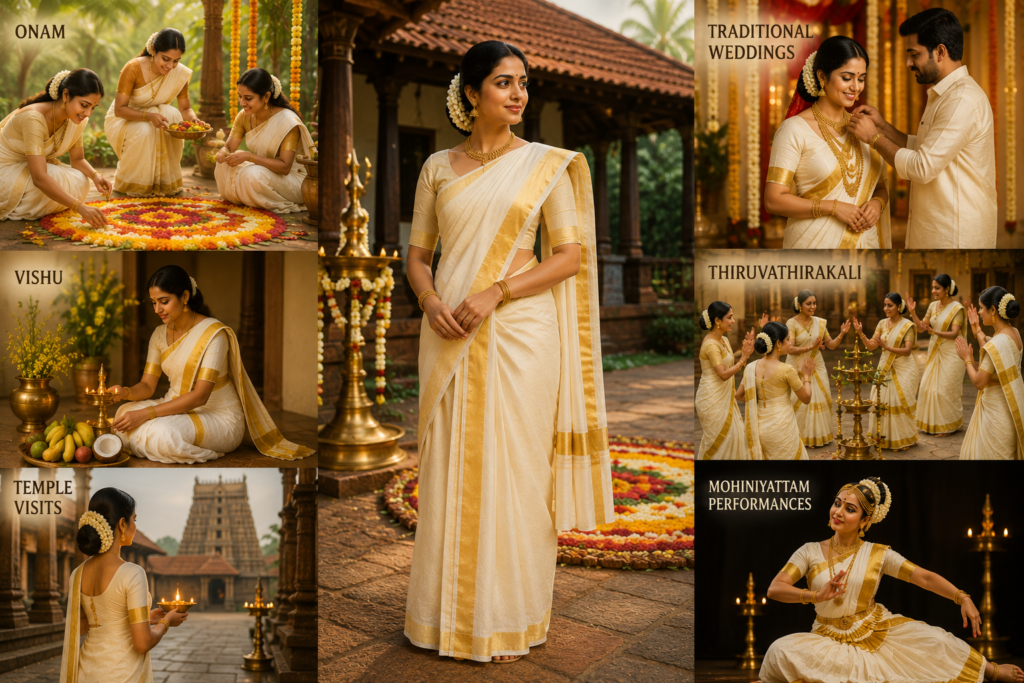
The Set Mundu has been part of Kerala’s cultural identity for centuries. It represents simplicity, elegance, and tradition. Today, it remains a popular choice during festivals such as Onam and Vishu, temple visits, traditional weddings, and cultural performances.
Many women also wear it during Thiruvathirakali, while classical dancers, especially Mohiniyattam performers, wear specially designed versions inspired by the same traditional attire.
Traditional Design
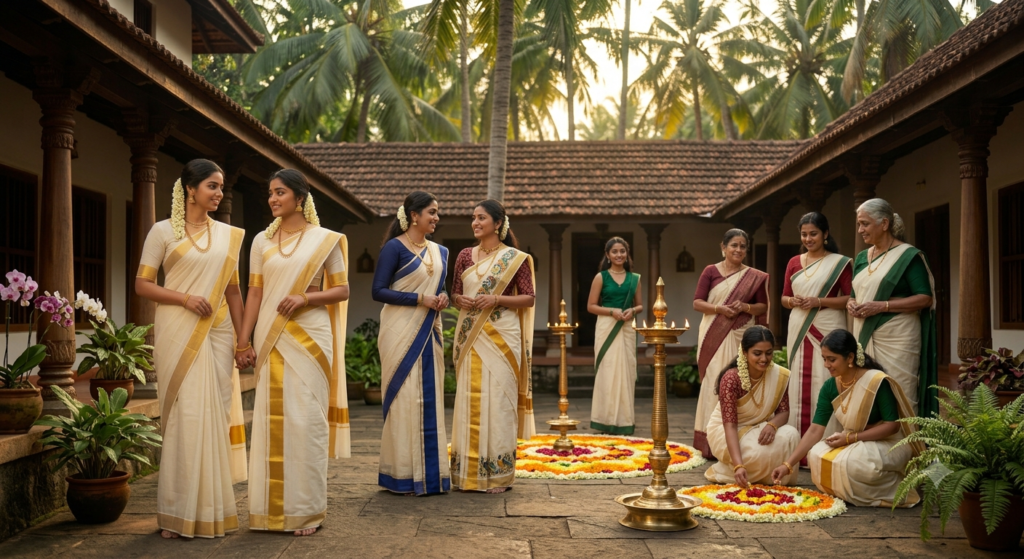
Most Set Mundus feature:
- A cream or off-white cotton body
- A beautiful gold Kasavu Kara (gold zari border)
- Lightweight, breathable fabric suited to Kerala’s tropical climate
- Handwoven craftsmanship in many traditional versions
While the classic cream-and-gold combination remains the most popular, modern Set Mundus are also available with colored borders, woven motifs, and contemporary blouse combinations.
Why Is It Still Popular?
Despite changing fashion trends, the Set Mundu continues to be loved because it combines comfort with timeless elegance. It allows freedom of movement, feels lightweight even in warm weather, and carries deep cultural significance.
For many Malayali families, wearing a Set Mundu is more than choosing an outfit—it’s a way of celebrating Kerala’s traditions and passing them on to future generations.
What Is a Kerala Saree?
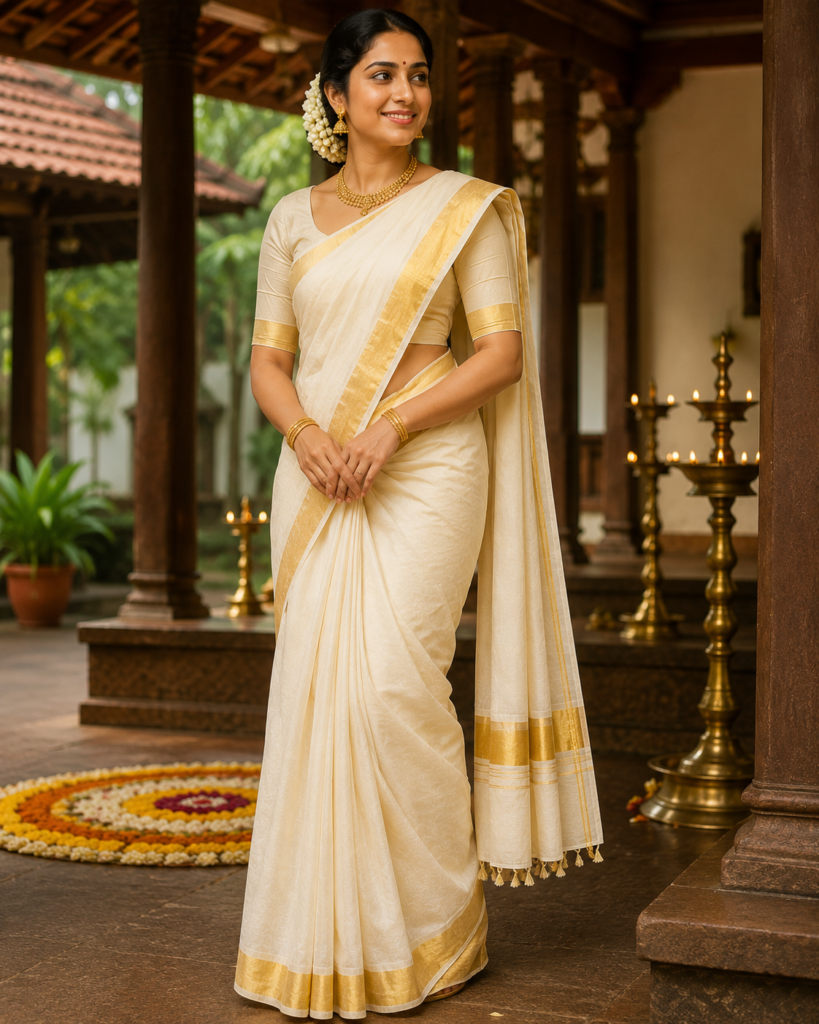
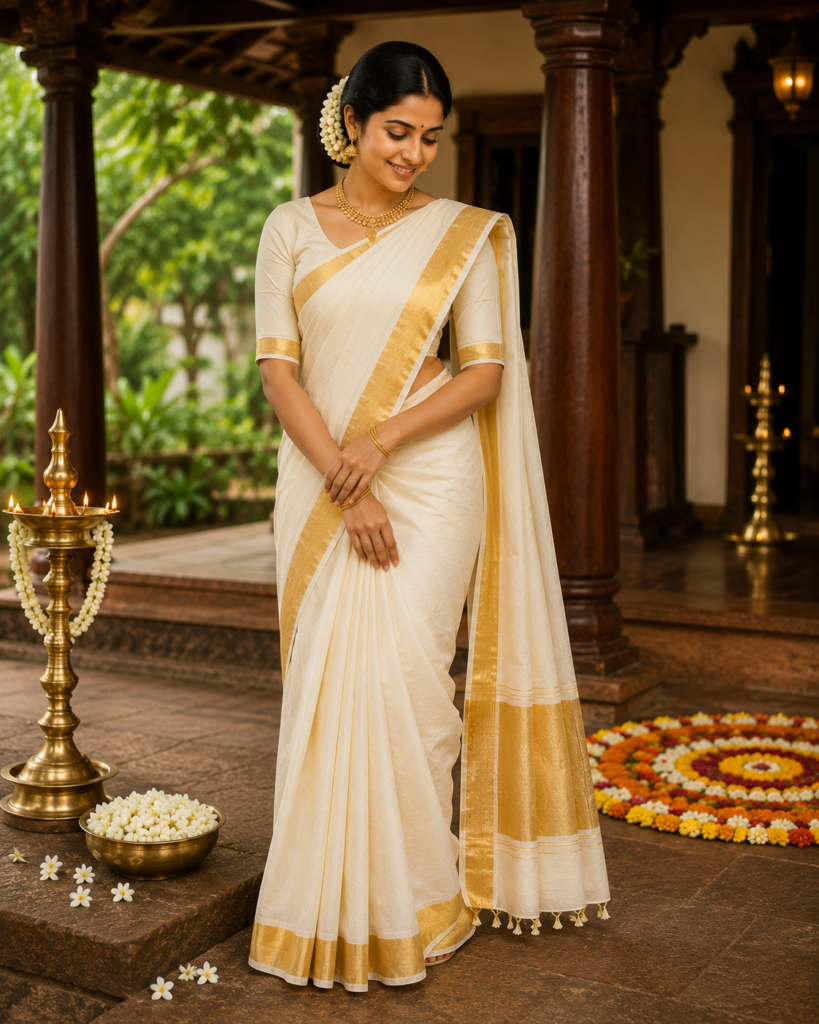
The Kerala Saree, also known as the Kasavu Saree or Settu Saree, is the modern single-piece version of Kerala’s traditional white-and-gold attire. While it shares the same elegant look as the Set Mundu, it is woven as one continuous garment and is draped like a regular saree.
Many people wear a Kerala saree because it offers the beauty of traditional Kerala clothing with the familiarity of a standard saree drape. This makes it a popular choice for women who are already comfortable wearing sarees.
The Evolution of the Kerala Saree
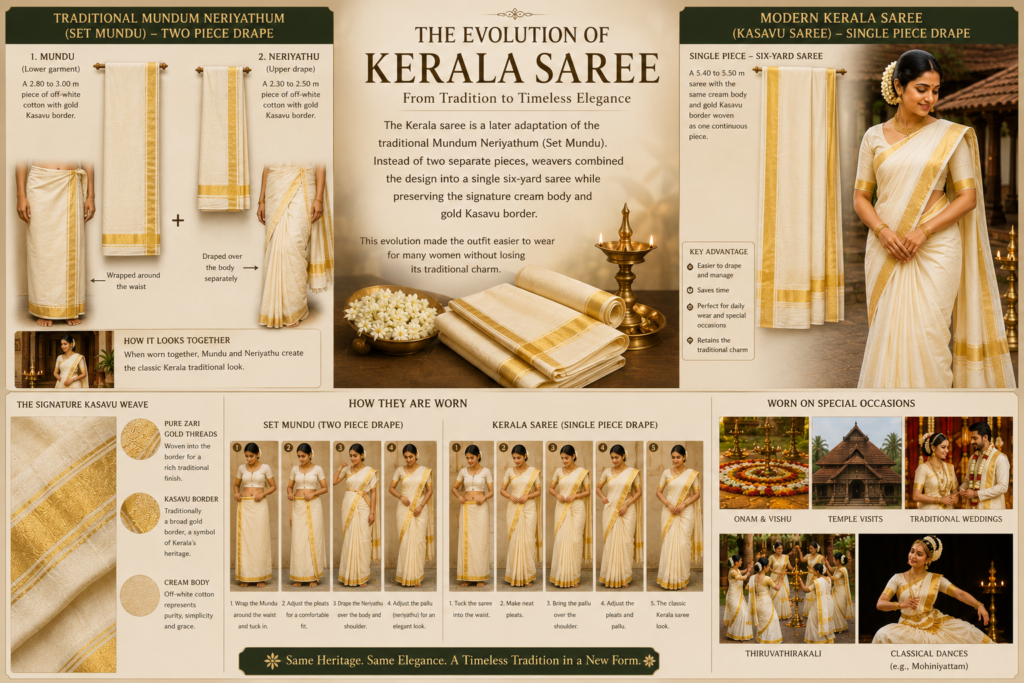
The Kerala saree is widely considered a later adaptation of the traditional Mundum Neriyathum (Set Mundu). Instead of two separate pieces, weavers combined the design into a single six-yard saree while preserving the signature cream body and gold Kasavu border.
This evolution made the outfit easier to wear for many women without losing its traditional charm.
Traditional Features
A classic Kerala saree usually includes:
- A single-piece saree measuring around six yards
- Cream, ivory, or off-white cotton fabric
- A woven gold Kasavu border along the edges
- A matching or contrasting blouse
- Lightweight and breathable material suitable for Kerala’s climate
Today, designers also create Kerala sarees with silver borders, coloured zari, hand-painted artwork, temple motifs, floral embroidery, and modern prints. These contemporary variations are especially popular among younger women while still respecting the traditional design.
When Is a Kerala Saree Worn?
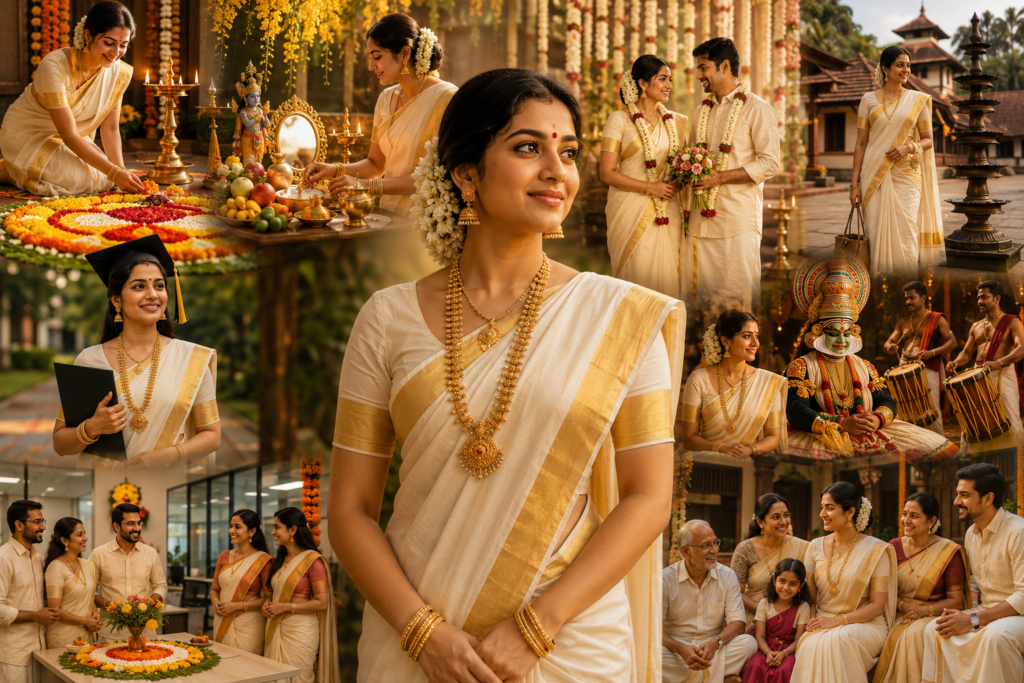
The Kerala saree is a favourite choice for many celebrations, including:
- Onam celebrations
- Vishu festivals
- Kerala weddings
- Temple visits
- Graduation ceremonies
- Cultural events
- Office festive celebrations
- Family functions and celebrations
Its elegant appearance and easy draping make it suitable for both traditional and modern occasions.
Why Do So Many Women Choose It?
The Kerala saree offers the perfect balance between heritage and convenience. Women who regularly wear sarees often find it easier to drape than a Set Mundu because it follows the familiar Nivi-style saree drape.
It also provides endless styling possibilities. By simply changing the blouse, jewellery, hairstyle, or accessories, the same Kerala saree can create a classic festive look, a graceful bridal appearance, or a modern minimalist style.
Although the Kerala saree and the Set Mundu look very similar at first glance, their construction, draping style, and historical background are different. Understanding these differences helps you choose the outfit that best suits your occasion and personal preference.
Kerala Saree vs Set Mundu: Side-by-Side Comparison
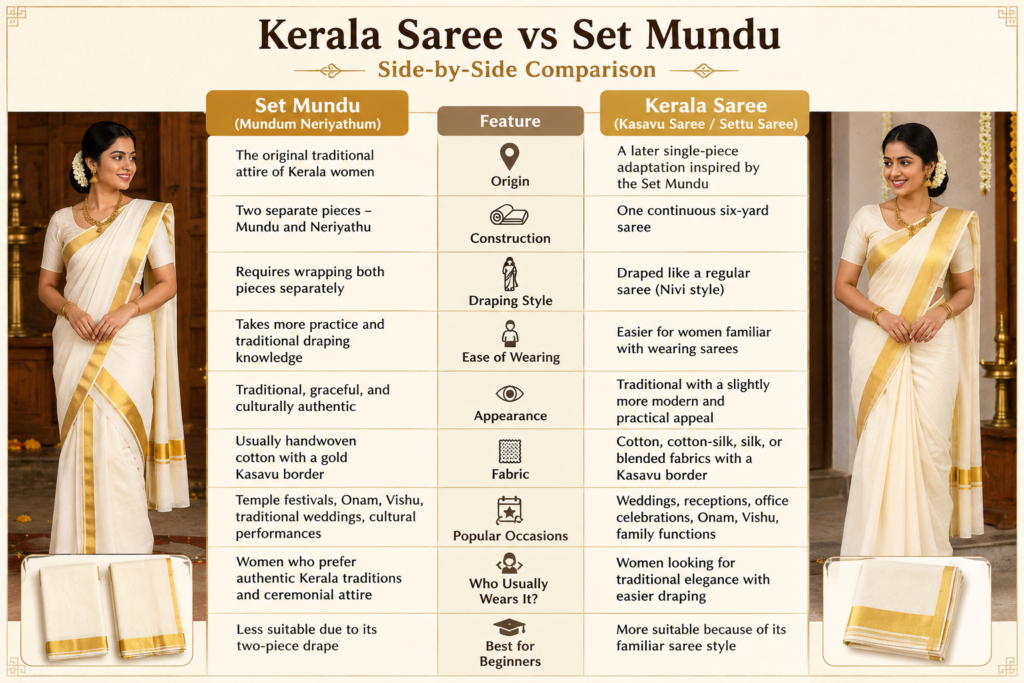
Although the Kerala Saree and the Set Mundu share the same elegant cream-and-gold appearance, they differ in several important ways. The biggest difference is how they are made and worn.
| Feature | Set Mundu (Mundum Neriyathum) | Kerala Saree (Kasavu Saree / Settu Saree) |
| Origin | The original traditional attire of Kerala women | A later single-piece adaptation inspired by the Set Mundu |
| Construction | Two separate pieces – Mundu and Neriyathu | One continuous six-yard saree |
| Draping Style | Requires wrapping both pieces separately | Draped like a regular saree (Nivi style) |
| Ease of Wearing | Takes more practice and traditional draping knowledge | Easier for women familiar with wearing sarees |
| Appearance | Traditional, graceful, and culturally authentic | Traditional with a slightly more modern and practical appeal |
| Fabric | Usually handwoven cotton with a gold Kasavu border | Cotton, cotton-silk, silk, or blended fabrics with a Kasavu border |
| Popular Occasions | Temple festivals, Onam, Vishu, traditional weddings, cultural performances | Weddings, receptions, office celebrations, Onam, Vishu, family functions |
| Who Usually Wears It? | Women who prefer authentic Kerala traditions and ceremonial attire | Women looking for traditional elegance with easier draping |
| Best for Beginners | Less suitable due to its two-piece drape | More suitable because of its familiar saree style |
Shared Features Between the Two
Even though they are different garments, the Kerala Saree and the Set Mundu celebrate the same cultural heritage. They share several defining characteristics that make them instantly recognizable.
Cream and Gold Color Combination
Both outfits traditionally feature a cream or off-white body paired with a shimmering gold Kasavu border. This timeless combination symbolizes purity, simplicity, prosperity, and celebration in Kerala’s culture.
Comfortable Cotton Fabric
Traditional versions of both garments are woven using lightweight cotton. The breathable fabric keeps the wearer comfortable, making it ideal for Kerala’s warm and humid climate.
Traditional Kasavu Border
The elegant gold border, known as Kasavu Kara, is the signature element of both garments. Depending on the design, the border may be narrow for a simple look or broad for a more festive appearance.
Perfect for Kerala Festivals
Whether someone chooses a Set Mundu or a Kerala Saree, both are widely worn during:
- Onam celebrations
- Vishu festivals
- Kerala temple festivals
- Traditional weddings
- Religious ceremonies
- Cultural events
Both outfits beautifully reflect Kerala’s rich traditions while preserving the state’s distinctive textile heritage.
Key Differences Explained
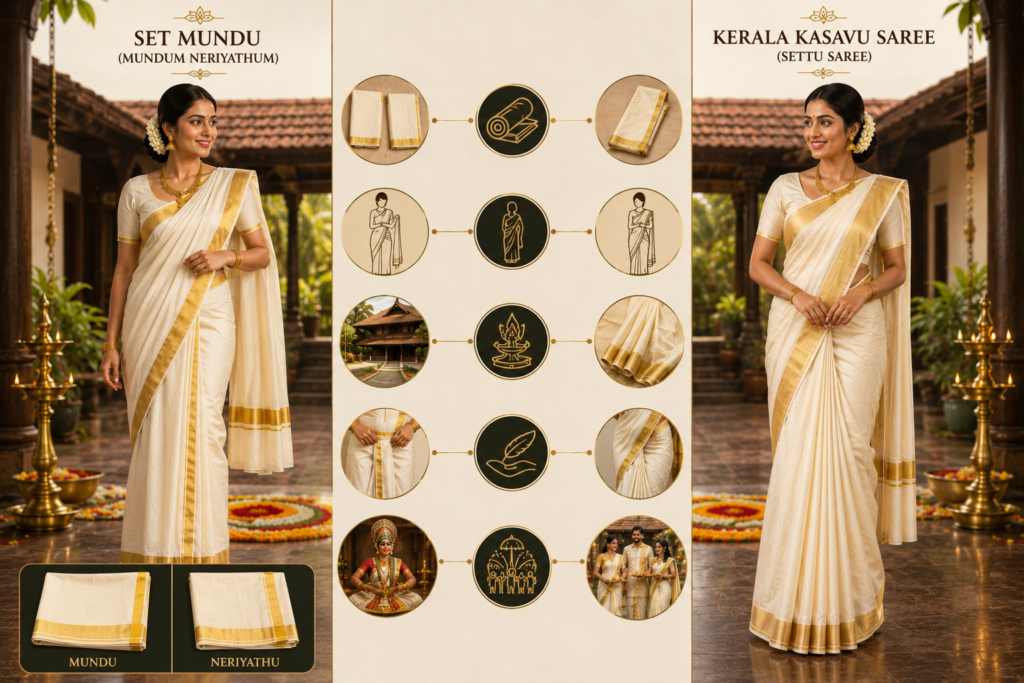
At first glance, these garments may appear identical. However, understanding their differences helps you choose the right outfit for your comfort, occasion, and personal style.
1. Number of Pieces
This is the most important difference.
A Set Mundu consists of two separate pieces—the Mundu for the lower body and the Neriyathu for the upper body.
A Kerala Saree is woven as one single piece, making it similar to sarees worn across India.
2. Draping Technique
The Set Mundu requires each piece to be wrapped separately. While it creates an elegant traditional look, it usually takes more time and practice to drape correctly.
The Kerala Saree follows the familiar saree draping style that many women already know, making it easier to wear for everyday festive occasions.
3. Cultural Significance
The Set Mundu represents Kerala’s oldest style of women’s traditional clothing and carries deep historical and cultural importance.
The Kerala Saree preserves the same aesthetic while adapting it into a more convenient format for modern lifestyles.
4. Practicality
Women attending long events, office celebrations, or weddings often choose the Kerala Saree because it is easier to manage throughout the day.
Those participating in traditional ceremonies, temple rituals, or cultural performances may prefer the Set Mundu for its authenticity and ceremonial significance.
5. Styling Flexibility
Modern Kerala Sarees are available in numerous variations, including silk blends, designer borders, embroidered motifs, and contemporary colour combinations.
The Set Mundu remains closer to its traditional roots, although designers now offer updated versions with coloured borders and fashionable blouse pairings.
Regional Weaving Heritage of Kerala
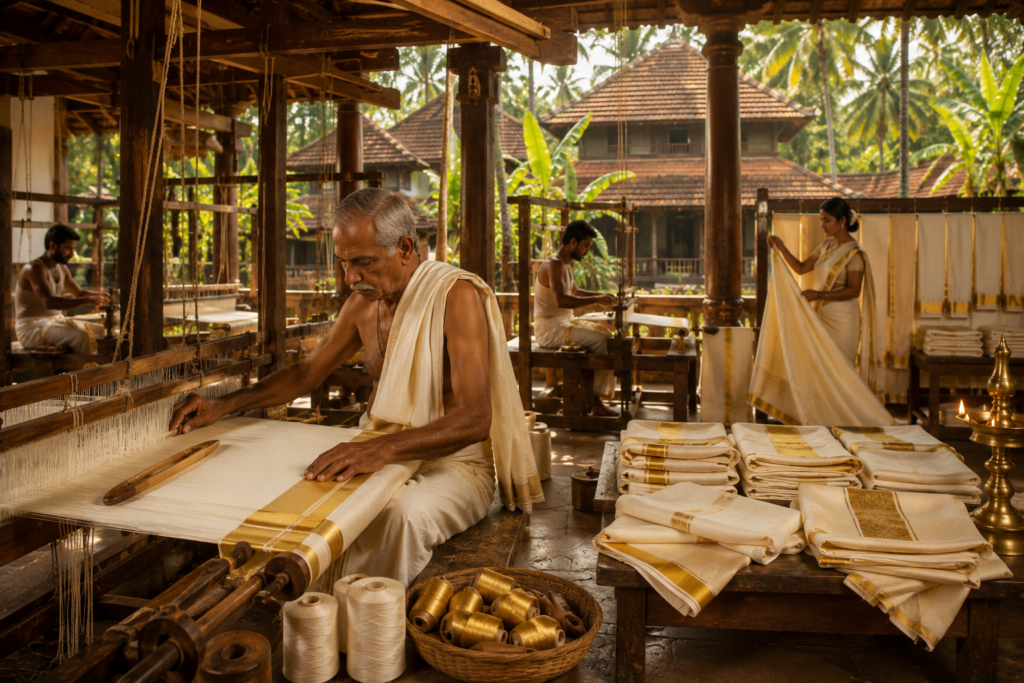
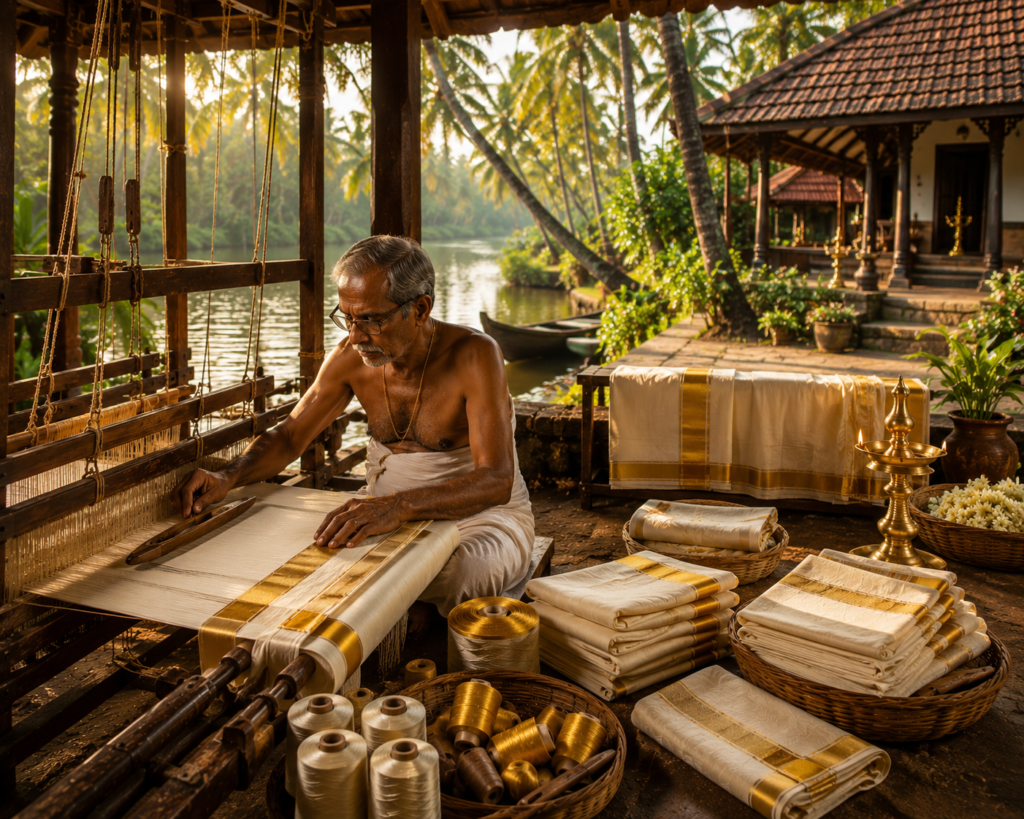
One of the reasons Kerala’s traditional attire is admired across India is the craftsmanship behind it. Several weaving towns have preserved handloom techniques for generations, producing authentic Kasavu garments that reflect the state’s rich textile heritage.
Balaramapuram
Located in southern Kerala, Balaramapuram is famous for its fine handwoven cotton Kasavu sarees and Set Mundus. Skilled artisans continue to weave these garments using traditional methods passed down through generations. The lightweight fabric and elegant gold border make Balaramapuram products highly valued for festivals and weddings.
Chendamangalam
Chendamangalam, in central Kerala, is known for its distinctive weaving style and traditional handloom industry. Sarees and Set Mundus from this region are appreciated for their clean designs, comfortable fabric, and excellent craftsmanship.
Kuthampully
Situated in Thrissur district, Kuthampully has earned a strong reputation for producing premium-quality Kerala sarees and Set Mundus. The weaving community here has preserved traditional techniques while also introducing contemporary designs that appeal to modern buyers.
These weaving centres continue to play an important role in preserving Kerala’s textile traditions. Choosing handwoven garments from these regions also supports local artisans and keeps centuries-old craftsmanship alive.
Which One Should You Choose?
There is no right or wrong choice between a Kerala Saree and a Set Mundu. The best option depends on the occasion, your comfort level, and the traditional look you want to achieve.
Choose a Set Mundu if:
- You want the most authentic Kerala traditional attire.
- You’re attending a temple ceremony or cultural event.
- You enjoy wearing heritage clothing.
- You’re participating in Thiruvathirakali or similar traditional performances.
- You appreciate the elegance of the original two-piece garment.
Choose a Kerala Saree if:
- You’re already comfortable wearing sarees.
- You want an outfit that’s quicker and easier to drape.
- You’re attending a wedding reception or office celebration.
- You’re buying your first Kerala traditional outfit.
- You prefer a balance of tradition and convenience.
Quick Decision Guide
| Occasion | Recommended Outfit |
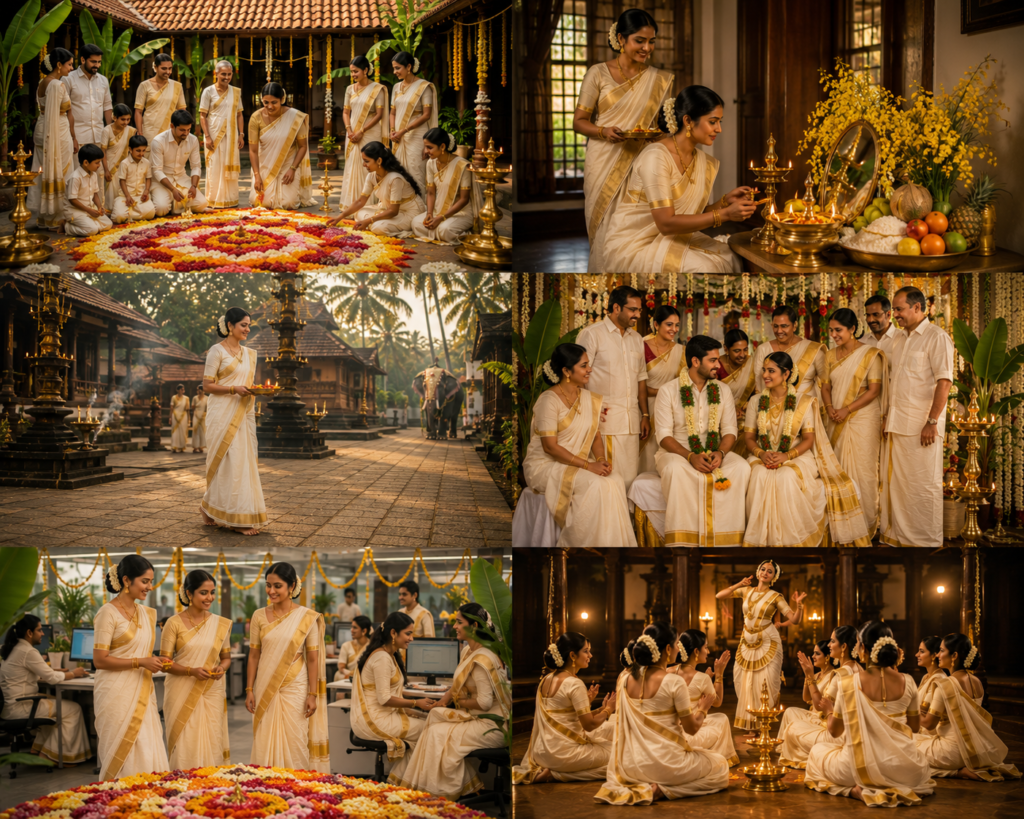
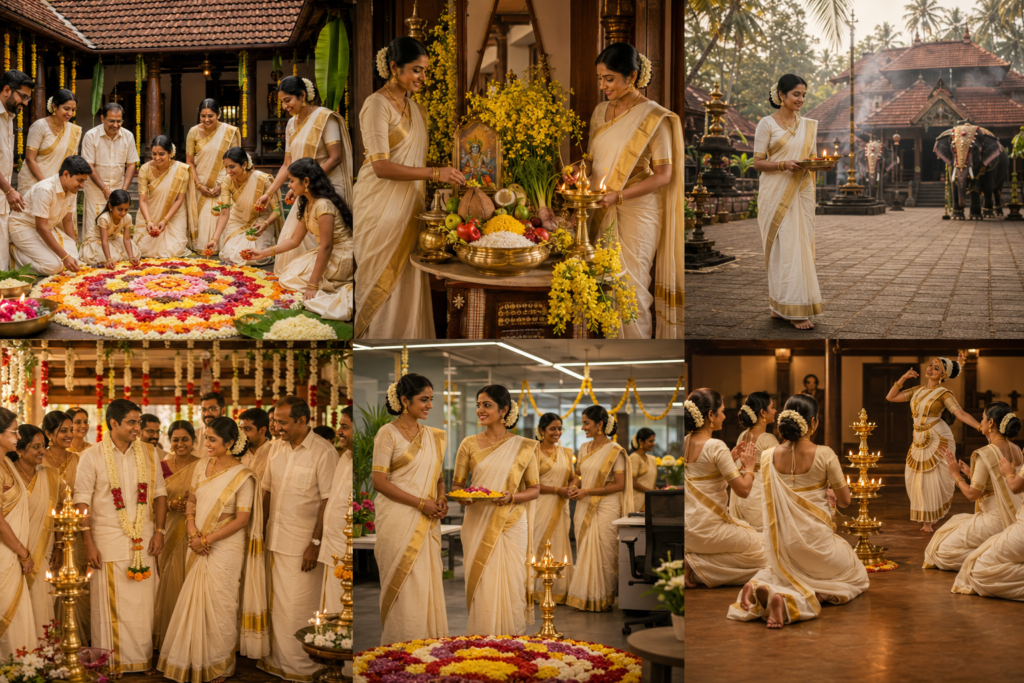
| Onam Celebration | Kerala Saree or Set Mundu |
| Vishu Festival | Kerala Saree or Set Mundu |
| Traditional Temple Visit | Set Mundu |
| Kerala Wedding (Guest) | Kerala Saree |
| Bride’s Traditional Ceremony | Set Mundu or Kerala Saree (depending on family tradition) |
| Office Festive Celebration | Kerala Saree |
| Classical Dance Performance | Set Mundu |
| First-Time Buyer | Kerala Saree |
Ultimately, both garments celebrate Kerala’s cultural identity. Your choice should reflect your comfort, personal style, and the occasion.
How to Style Each Outfit
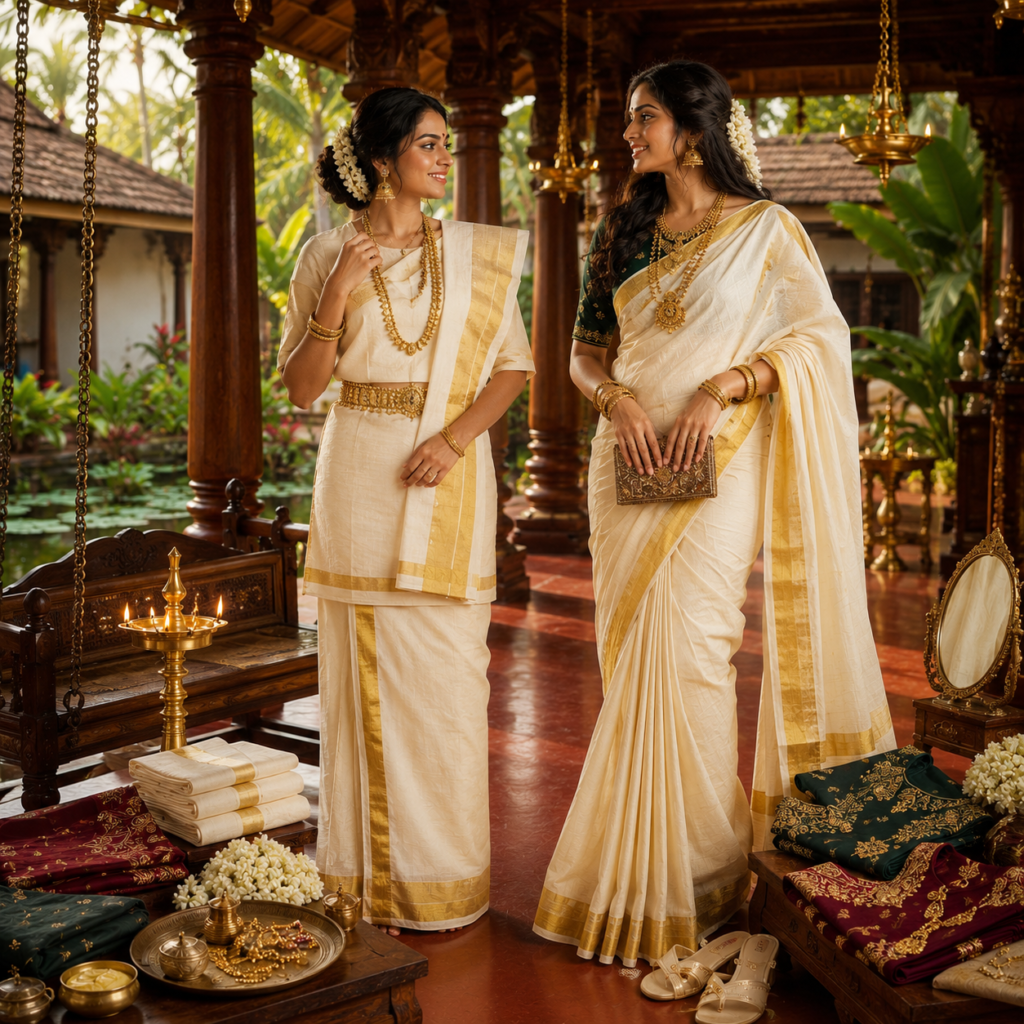
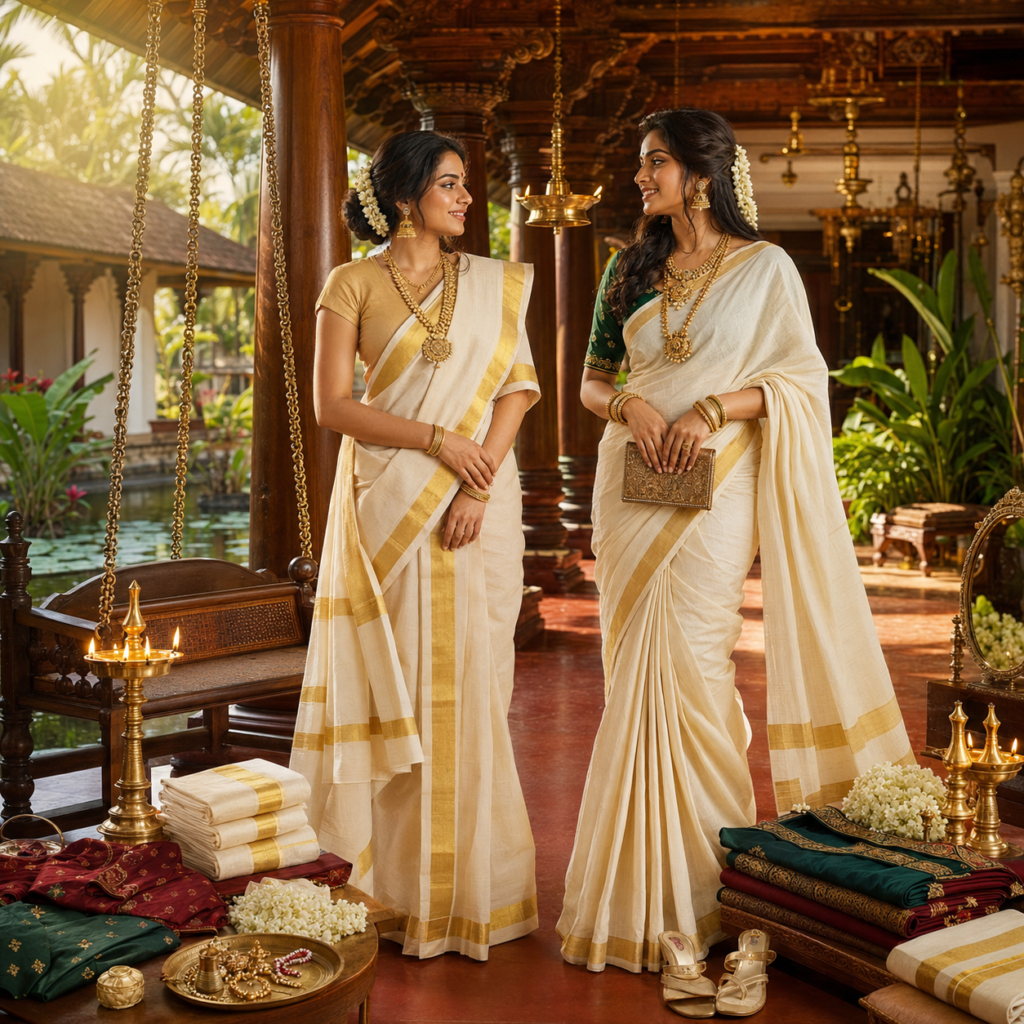
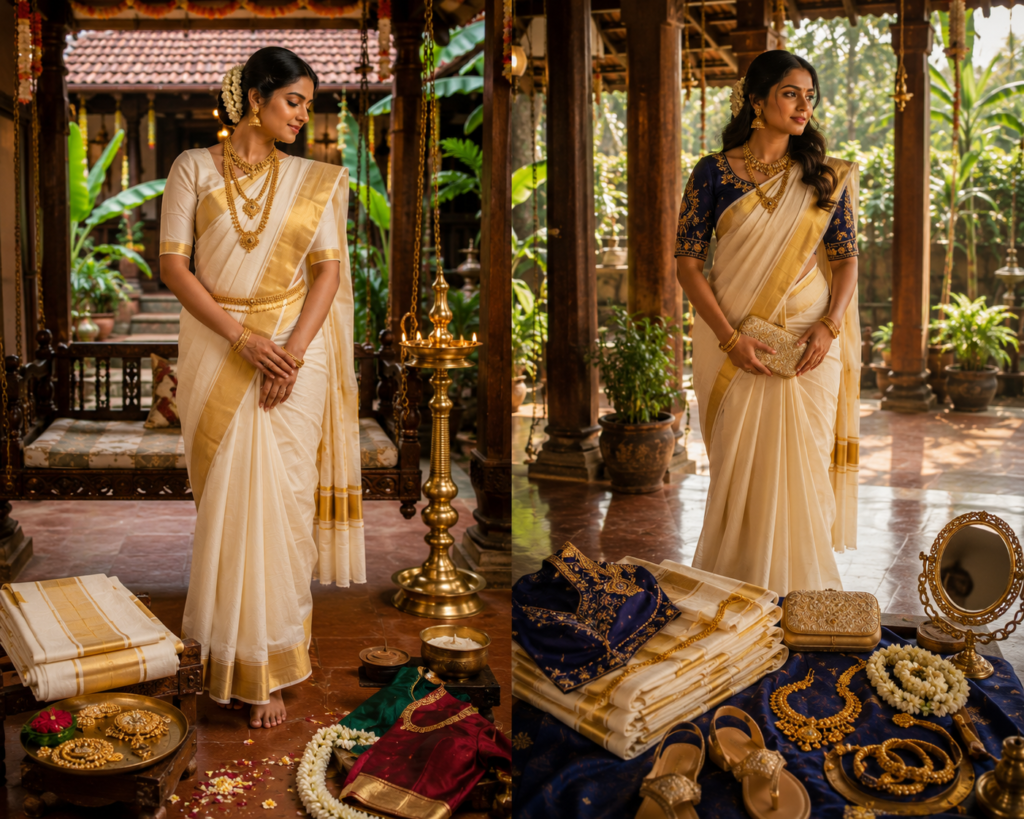
The right accessories can enhance the beauty of both garments while maintaining their traditional elegance.
Styling a Set Mundu
- Pair it with a traditional blouse in gold, green, maroon, or red.
- Wear classic Kerala temple jewellery.
- Choose Jimikki earrings and a Kasu Mala necklace.
- Decorate your hair with fresh jasmine flowers.
- Complete the look with simple gold bangles and a small bindi.
Styling a Kerala Saree
- Pair it with embroidered, brocade, or contemporary designer blouses.
- Experiment with black, bottle green, royal blue, or maroon blouse colours.
- Add statement earrings or layered temple jewellery.
- Carry a matching clutch for weddings or festive occasions.
- Finish with soft makeup and elegant sandals or heels.
Whether you choose a Set Mundu or a Kerala Saree, keeping the styling elegant and minimal allows the timeless Kasavu border to remain the highlight.
Frequently Asked Questions
Is a Kerala Saree the same as a Set Mundu?
No. A Set Mundu is a traditional two-piece garment, while a Kerala Saree is a single-piece saree inspired by the same white-and-gold design.
Which came first?
The Set Mundu, also known as Mundum Neriyathum, is the older and more traditional garment. The Kerala Saree evolved later as a single-piece adaptation.
Which is easier to wear?
Most women find the Kerala Saree easier because it follows the familiar saree draping style. A Set Mundu requires wrapping two separate pieces.
Can I wear both for Onam?
Yes. Both are traditional choices for Onam celebrations. Your decision depends on your personal preference and comfort.
Which outfit is better for weddings?
Both are suitable. A Set Mundu offers a classic traditional appearance, while a Kerala Saree provides a graceful and practical option for long celebrations.
Conclusion
Although they share the same beautiful cream-and-gold appearance, the Set Mundu and the Kerala Saree are not the same garment.
The Set Mundu is Kerala’s original two-piece traditional attire that reflects centuries of culture and craftsmanship. The Kerala Saree is its elegant single-piece adaptation, designed to preserve the same heritage while offering greater convenience for modern lifestyles.
Whether you’re celebrating Onam, attending a wedding, visiting a temple, or simply embracing Kerala’s traditions, both outfits are timeless choices that represent grace, simplicity, and cultural pride.
Instead of asking which one is better, the real question is which one best suits your occasion and personal style. Whichever you choose, you’ll be wearing a piece of Kerala’s living heritage with elegance and confidence.