
Introduction
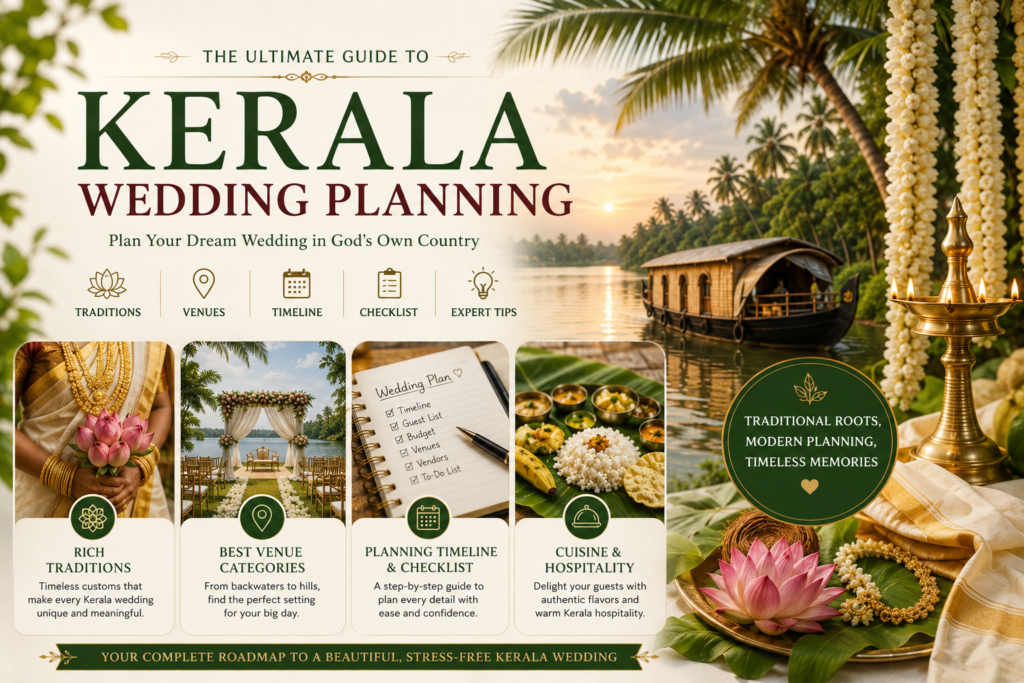
A Kerala wedding is much more than a one-day celebration. It is a beautiful combination of cultural traditions, family values, religious customs, and joyful gatherings that create memories for a lifetime. Whether you’re planning a traditional Hindu wedding, a Christian church ceremony, or a Muslim Nikah, every wedding requires thoughtful preparation to ensure everything runs smoothly. From choosing the perfect venue to coordinating vendors and managing guests, every decision contributes to a successful celebration.
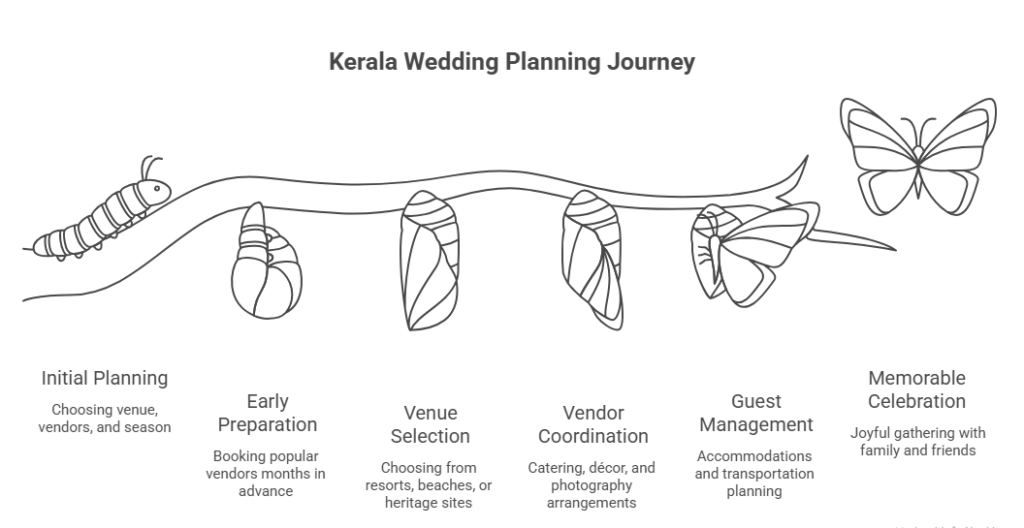
Planning early is one of the biggest advantages when organizing a wedding in Kerala. Popular venues, photographers, caterers, and makeup artists are often booked months in advance, especially during the peak wedding season. Starting your preparations well ahead of time gives you access to more options, better pricing, and enough flexibility to make informed decisions without unnecessary stress. It also allows families to focus on enjoying the celebrations rather than dealing with last-minute challenges.
Kerala offers an incredible variety of wedding experiences to suit different styles and budgets. Couples can choose from luxurious backwater resorts, scenic beach properties, peaceful hill stations, heritage venues, elegant convention centres, or traditional temple halls. Along with selecting the right venue, you’ll also need to consider the wedding season, guest accommodations, transportation, catering, décor, and photography to create a seamless experience for everyone attending.
This comprehensive Kerala wedding planning guide covers every stage of the journey, from creating a realistic planning timeline to understanding traditional rituals, choosing the ideal season, selecting the right venue, and hiring reliable vendors. You’ll also find practical planning tips, a detailed wedding checklist, and common mistakes to avoid, helping you organize a memorable celebration with confidence and ease.
Kerala Wedding Planning Timeline
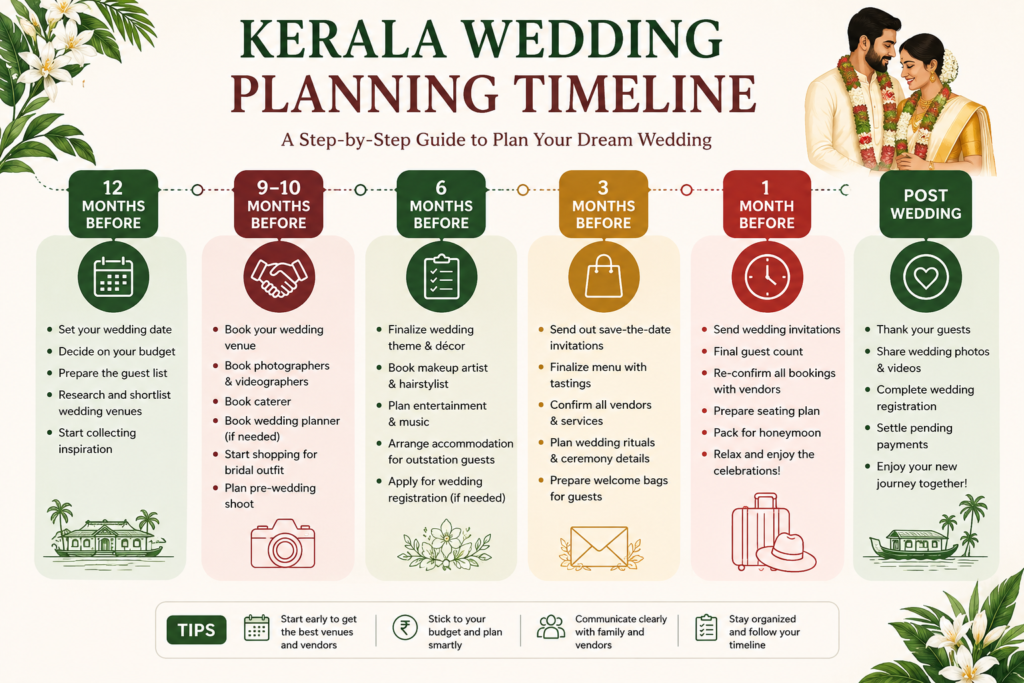
A well-organized timeline is the foundation of a successful wedding. Instead of leaving important decisions until the last minute, breaking the planning process into manageable stages helps you stay organized and reduces unnecessary pressure. Beginning your preparations around 12 months before the wedding gives you enough time to secure your preferred venue, book experienced vendors, and complete every detail without rushing.
The timeline below outlines the key tasks you should complete at different stages of your wedding planning journey. Following this schedule will help you stay on track, manage your budget effectively, and ensure every aspect of your Kerala wedding is planned with care.
12 Months Before the Wedding
The first year of wedding planning is all about building a strong foundation. The decisions you make during this stage will influence almost every other aspect of your wedding, from the overall budget to the choice of vendors and the guest experience. Starting early gives you the flexibility to compare options, negotiate better prices, and avoid the disappointment of fully booked venues or professionals.
Set Your Wedding Date
Choosing the wedding date should be your first priority. Many families in Kerala consult religious or family traditions before finalizing the date, while others select a convenient time based on work schedules, weather, or guest availability. If you’re planning a destination wedding, consider the travel convenience for your guests as well. Once the date is confirmed, the rest of the planning process becomes much easier.
Decide on Your Wedding Budget
A realistic budget helps you make informed decisions throughout the planning process. List all major expenses, including the venue, catering, décor, photography, bridal attire, makeup, entertainment, invitations, transportation, and accommodation. It is also wise to keep a contingency fund for unexpected costs that may arise during the planning journey. Having a clear budget from the beginning prevents overspending and helps prioritize what matters most.
Prepare the Guest List
Creating a preliminary guest list gives you a better idea of the wedding’s scale. The number of guests directly affects your choice of venue, catering requirements, seating arrangements, and overall budget. Work with both families to prepare an estimated list, understanding that minor changes may happen later. An early guest count makes it easier to compare venues and service packages accurately.
Start Researching Wedding Venues
The venue is one of the most important bookings you’ll make, as it sets the tone for the entire celebration. Explore different options such as backwater resorts, beach venues, heritage properties, convention centres, hill station resorts, or traditional temple halls based on your wedding style and budget. Visit shortlisted venues whenever possible to evaluate their ambience, facilities, parking, accessibility, and accommodation options. Since popular venues in Kerala are often reserved well in advance, beginning your search early gives you the best chance of securing your preferred location.
Begin Collecting Wedding Inspiration
This is also the ideal time to explore ideas for your wedding theme, colour palette, floral arrangements, outfits, and overall décor style. Save inspiration from wedding magazines, social media, and real wedding galleries to create a mood board that reflects your vision. Having a clear concept early makes it easier to communicate your preferences to decorators, photographers, and other vendors as planning progresses.
9–10 Months Before the Wedding
With your wedding date finalized, it’s time to secure the services that are in high demand. This stage is one of the most important because many of the best venues and vendors in Kerala receive bookings several months, or even a year, in advance. Confirming your key bookings early gives you more choices, better pricing, and peace of mind as you move forward with the rest of your planning.
Book Your Wedding Venue
Once you’ve shortlisted a venue, schedule site visits and compare the available facilities before making your final decision. Consider factors such as guest capacity, accessibility, parking, accommodation, backup power, and whether the venue can comfortably host all your planned events. If you’re planning multiple functions like the engagement, mehendi, reception, and wedding ceremony, check if the venue offers suitable spaces for each event. Read the contract carefully, understand the cancellation policy, and secure your booking by paying the required advance.
Finalize Your Caterer
Food is one of the highlights of any Kerala wedding, making the choice of caterer extremely important. Whether you’re planning a traditional Kerala Sadya, a multi-cuisine buffet, or a combination of both, choose a caterer with a strong reputation for quality and service. Arrange a food tasting session before finalizing the menu, and discuss options for guests with dietary preferences or food allergies. Confirm the number of service staff, serving style, and menu customization well in advance.
Hire Your Photographer and Videographer
Your wedding photographs and videos will preserve memories that last a lifetime, so choosing the right team is essential. Review complete wedding albums instead of relying only on social media highlights to evaluate their consistency and style. Discuss the type of coverage you want, whether it’s traditional photography, candid moments, cinematic wedding films, drone footage, or pre-wedding shoots. Make sure every service, delivery timeline, and payment schedule is clearly mentioned in the contract.
Consider Hiring a Wedding Planner
If you’re managing a large wedding or planning a destination celebration, hiring a professional wedding planner can make the entire process much easier. A planner helps coordinate vendors, manage timelines, oversee logistics, and handle unexpected situations on the wedding day. Their experience can also save time and help you avoid common planning mistakes. Even if you prefer handling most tasks yourself, consulting a planner for specific services can be a valuable investment.
Start Shopping for Bridal and Groom Attire
Wedding outfits often require multiple fittings and custom alterations, so it’s best to begin shopping early. Brides should explore different styles of sarees, lehengas, or traditional bridal wear, while grooms can choose from sherwanis, suits, mundus, or other outfits that match the wedding theme. Don’t forget to coordinate accessories, footwear, and jewellery to complete the overall look. Starting early gives you enough time for tailoring, design changes, and final adjustments without unnecessary pressure.
Shortlist Other Essential Vendors
While your primary focus is on the major bookings, this is also a good time to begin researching decorators, makeup artists, entertainers, invitation designers, and transportation providers. Comparing portfolios, reviews, and pricing now will make the next stage of planning much smoother. Creating a shortlist early allows you to book your preferred professionals before their schedules fill up.
6 Months Before the Wedding
By the six-month mark, most of the major bookings should already be secured. This stage focuses on refining the details that will shape your guests’ experience and bring your wedding vision to life. From finalizing décor concepts to planning pre-wedding celebrations, the decisions made during this period help create a cohesive and memorable event.
Finalize Your Wedding Décor
Wedding décor plays a major role in setting the atmosphere and reflecting your personal style. Meet with your decorator to discuss themes, colour palettes, floral arrangements, stage designs, entrance décor, lighting, and seating layouts. Whether you prefer a traditional Kerala aesthetic with jasmine flowers and temple-inspired elements or a modern luxury theme, ensure the décor complements the venue. Reviewing sample designs and previous projects can help avoid misunderstandings and ensure expectations are aligned.
Design and Order Wedding Invitations
Invitations provide guests with their first impression of the wedding celebration. This is the ideal time to finalize invitation designs, wording, and guest details before placing your order. Couples today often choose a combination of printed invitations and digital invitations to make communication easier. Be sure to proofread all names, dates, venues, and contact information carefully before approving the final design.
Book Your Makeup Artist and Styling Team
Professional makeup and styling services are usually in high demand, particularly during Kerala’s peak wedding season. Schedule trial sessions to test different makeup looks, hairstyles, and outfit combinations before making your final decision. Brides should also discuss saree draping, jewellery styling, and skin preparation routines with their chosen artist. Early planning ensures you feel confident and comfortable with your wedding-day appearance.
Plan Pre-Wedding Functions
Many Kerala weddings include multiple celebrations leading up to the main ceremony. Depending on your traditions and preferences, these events may include an engagement ceremony, mehendi function, haldi ceremony, bridal shower, bachelor party, or family gathering. Begin finalizing venues, guest lists, themes, and vendor requirements for these events. Proper planning helps maintain consistency across all celebrations while ensuring each function has its own unique charm.
Coordinate with Vendors
As your wedding plans become more detailed, maintaining clear communication with vendors becomes increasingly important. Share your schedule, venue details, and expectations with photographers, decorators, caterers, entertainers, and planners. Confirm deliverables, timelines, and payment schedules to avoid confusion later. Regular coordination during this stage helps identify potential issues early and ensures everyone is working toward the same vision.
Begin Planning Guest Logistics
If you expect guests to travel from other cities or countries, start exploring accommodation and transportation options. Reserving hotel room blocks early often provides better rates and guarantees availability during busy seasons. Consider airport transfers, local transportation, and welcome arrangements for out-of-town guests. Thoughtful planning in this area improves the overall guest experience and reduces last-minute complications.
3 Months Before the Wedding
With only three months remaining, your wedding plans should start coming together. This stage is all about confirming details, coordinating with vendors, and ensuring every arrangement is in place. Taking care of these tasks early gives you enough time to make adjustments if anything changes before the big day.
Finalize Your Wedding Menu
Now is the right time to confirm your final menu with the caterer. Schedule a tasting session if you haven’t already and review every course carefully. Whether you’re serving a traditional Kerala Sadya, a buffet, or a combination of cuisines, ensure the menu caters to your guests’ preferences. Don’t forget to include vegetarian, vegan, and child-friendly options if needed.
Confirm Guest List and Send Invitations
Your guest list should now be close to final. Send out wedding invitations with enough notice so guests can make travel and accommodation arrangements. If you’re using digital invitations alongside printed cards, ensure all event details, venue locations, and contact information are accurate. Keeping track of RSVPs during this period will help you estimate attendance more accurately.
Arrange Accommodation and Transportation
If family members and friends are travelling from outside Kerala or overseas, finalize their accommodation and transportation arrangements. Reserve hotel rooms based on the expected number of guests and coordinate airport or railway station pickups if required. If multiple wedding venues are involved, arrange transportation between locations to make travel convenient. Good planning ensures your guests enjoy a comfortable and hassle-free experience.
Meet with All Vendors
Schedule meetings or calls with every vendor involved in your wedding. Review timelines, responsibilities, arrival times, and special requirements with the photographer, caterer, decorator, makeup artist, entertainment team, and wedding planner. Share a detailed event schedule so everyone understands the sequence of ceremonies and their role. Open communication at this stage helps prevent misunderstandings on the wedding day.
Plan the Wedding Day Schedule
Create a detailed timeline for the wedding day, covering everything from makeup appointments to the final reception. Include vendor arrival times, photography sessions, ceremonial rituals, meal service, speeches, and guest activities. Share this schedule with your immediate family and key vendors so everyone stays informed. A clear timeline helps the entire event run smoothly and minimizes unnecessary delays.
Complete Legal and Administrative Requirements
If your marriage requires legal registration or supporting documents, begin preparing them now. Gather identification documents, photographs, and any certificates required by the relevant authorities. Understanding the documentation process in advance helps you avoid last-minute complications. Completing these formalities before the wedding allows you to focus entirely on the celebrations.
Review Your Budget
As bookings become finalized, compare your actual expenses with the original budget. Check for any pending payments, additional charges, or optional services that may affect your finances. If you’re approaching your budget limit, prioritize essential expenses and avoid unnecessary last-minute additions. Keeping your finances organized helps you stay in control throughout the remaining planning period.
1 Month Before the Wedding
With the wedding just weeks away, the focus shifts from planning to execution. Most major decisions have already been made, and now it’s time to confirm every arrangement and ensure everything is ready for the celebrations. This final month is also an opportunity to address any last-minute changes without feeling overwhelmed.
1 Month Before the Wedding
The final month before your wedding is all about confirming every detail and making sure everything is ready for the big day. Most of the planning is already complete, so your focus should now be on coordination, communication, and final checks. Staying organized during this stage helps prevent last-minute surprises and allows you to enjoy the celebrations with your family.
Confirm All Vendor Bookings
Reach out to every vendor to reconfirm their bookings, arrival times, and service requirements. Contact your venue manager, caterer, decorator, photographer, videographer, makeup artist, entertainment team, transportation provider, and any other professionals involved. Verify contact details, timelines, and backup plans in case of unexpected delays. Having a final confirmation ensures everyone is aligned and prepared.
Conduct a Venue Walkthrough
Visit your wedding venue with your planner, decorator, or a close family member to review the setup one last time. Walk through the ceremony area, reception space, dining arrangements, parking facilities, guest entry points, and bridal room. Discuss the placement of the stage, floral decorations, lighting, and seating layout to ensure everything matches your expectations. This walkthrough also helps identify any logistical concerns before the wedding day.
Prepare a Detailed Wedding Day Schedule
Create a comprehensive timeline covering every activity from the early morning preparations to the end of the reception. Include makeup appointments, photography sessions, vendor setup times, ceremonial rituals, meal service, speeches, entertainment, and guest departures. Share the schedule with your immediate family, wedding planner, and key vendors so everyone understands their responsibilities. A well-structured timeline keeps the event running smoothly and minimizes delays.
Complete Pending Payments
Review all vendor contracts and identify any remaining payments that need to be made before or on the wedding day. Keep payment receipts, invoices, and contracts organized in a dedicated folder for easy access. If any payments are scheduled for the wedding day, assign a trusted family member or planner to handle them. This allows you to focus on enjoying the celebration without worrying about financial arrangements.
Pack Wedding Essentials
Prepare a wedding essentials kit well in advance instead of waiting until the last minute. Include wedding attire, jewellery, footwear, accessories, makeup, emergency sewing supplies, safety pins, tissues, medications, chargers, important documents, and any ceremonial items required for the rituals. Having everything packed and ready reduces stress and helps you stay calm on the wedding day.
Confirm Guest Arrangements
Review your RSVP list and make sure all accommodation and transportation arrangements have been finalized. Share hotel details, venue directions, parking information, and event schedules with guests who are travelling from outside the city. If necessary, appoint family members or volunteers to welcome guests and assist them during the celebrations. Good communication ensures your guests have a comfortable and enjoyable experience.
Post-Wedding Tasks
Although the wedding celebrations may be over, a few important tasks still remain. Completing them promptly helps you wrap up the event smoothly while preserving memories for years to come.
Settle Final Vendor Payments
If any payments are pending, complete them according to the agreed schedule. Review invoices carefully and collect receipts for your records. If you were satisfied with the services, consider leaving reviews or testimonials to help future couples make informed decisions.
Complete Marriage Registration
If your marriage has not yet been officially registered, complete the required legal formalities as soon as possible. Keep all necessary documents, photographs, and certificates ready to ensure a smooth registration process.
Select Your Wedding Photos and Videos
Your photographer and videographer will usually share a preview gallery before creating the final album and wedding film. Take time to select your favourite images and discuss album layouts, editing preferences, and delivery timelines. A thoughtfully designed album becomes a treasured keepsake that you can revisit for years.
Send Thank-You Messages
Express your gratitude to family, friends, and guests who attended your wedding or sent gifts and blessings. A simple thank-you message, phone call, or personalized note is a meaningful way to acknowledge their presence and support. This thoughtful gesture helps strengthen relationships long after the celebrations have ended.
Preserve Your Wedding Memories
Store important items such as your wedding attire, invitation cards, photographs, and keepsakes properly to preserve them for the future. Many couples also create digital backups of their wedding photos and videos to ensure these memories remain safe and easily accessible.
Best Season for Kerala Weddings
Choosing the right wedding season is just as important as selecting the perfect venue. Kerala experiences distinct weather patterns throughout the year, and each season offers unique advantages and challenges. Factors such as temperature, rainfall, guest comfort, venue availability, and overall costs should all be considered before finalizing your wedding date.
Understanding the characteristics of each season helps you plan better and create a comfortable experience for your guests. Whether you’re dreaming of an outdoor beach ceremony, a luxurious backwater wedding, or a traditional indoor celebration, selecting the right time of year can make a significant difference.

Peak Wedding Season (November to February)
November to February is widely considered the best time to host a wedding in Kerala. The weather during these months is cool, pleasant, and ideal for both indoor and outdoor celebrations. Comfortable temperatures also make it easier for guests to enjoy long ceremonies, receptions, and outdoor photography sessions without the discomfort of excessive heat or heavy rainfall.
This period is especially popular for destination weddings at backwater resorts, beach venues, heritage properties, and hill stations. Since demand is high, premium venues and experienced vendors often receive bookings several months in advance. Couples planning a wedding during this season should ideally begin booking venues and key vendors at least nine to twelve months ahead to secure their preferred choices.
While this season offers the best weather, it is also the most expensive. Venue rental charges, accommodation rates, and vendor fees may increase due to higher demand. Creating a realistic budget and making early reservations can help manage costs while ensuring access to the best services.
Summer Weddings (March to May)
Summer weddings in Kerala require careful planning because temperatures can become quite high, particularly during the afternoon. However, with the right arrangements, this season can still provide a beautiful and memorable wedding experience. Many couples choose morning or evening ceremonies to avoid the hottest part of the day and ensure greater comfort for their guests.
Indoor banquet halls, air-conditioned convention centres, and luxury hotels are popular choices during the summer months. If you’re planning an outdoor celebration, consider providing shaded seating, cooling fans, hydration stations, and refreshing welcome drinks to keep guests comfortable. Light floral décor and breathable fabrics for wedding attire can also help everyone stay relaxed throughout the event.
Another advantage of planning a summer wedding is that some venues and vendors may offer better availability compared to the peak wedding season. This can give couples greater flexibility when selecting locations and service providers.
Monsoon Weddings (June to September)
The monsoon transforms Kerala into a lush green paradise, making it an attractive option for couples who appreciate natural beauty and romantic scenery. The rain-washed landscapes, misty backwaters, and vibrant greenery create stunning backdrops for wedding photography. Many luxury resorts also offer attractive off-season packages, making monsoon weddings a cost-effective option for budget-conscious couples.
Despite its beauty, the rainy season requires additional preparation. If you’re planning an outdoor ceremony, always arrange a backup indoor venue or covered mandap to avoid disruptions caused by unexpected showers. Waterproof walkways, covered guest seating, and reliable transportation should also be included in your planning checklist.
Working closely with your venue and wedding planner helps ensure that weather-related challenges are managed effectively. With proper preparation and contingency plans, a monsoon wedding can be just as elegant, memorable, and enjoyable as one held during Kerala’s peak wedding season.
Kerala Wedding Traditions
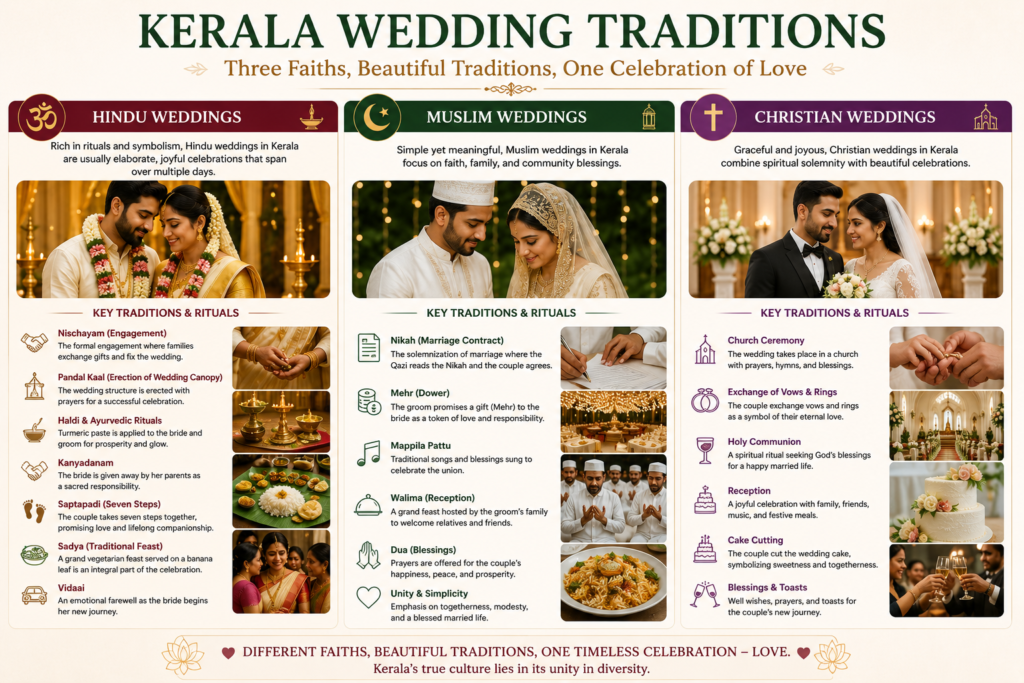
Kerala is known for its rich cultural heritage and diverse communities, and this diversity is beautifully reflected in its wedding traditions. While each religion follows its own customs and rituals, every Kerala wedding emphasizes family, blessings, and the beginning of a new chapter in the couple’s life. Understanding these traditions not only helps couples plan their ceremonies more effectively but also allows guests to appreciate the significance behind each ritual.
Whether you’re planning a traditional Hindu wedding, a Christian church ceremony, or a Muslim Nikah, respecting these customs adds meaning and authenticity to the celebration.
Kerala Hindu Wedding Traditions
Kerala Hindu weddings are generally simple, elegant, and deeply rooted in tradition. Unlike elaborate ceremonies that may span several days in other parts of India, many Kerala Hindu weddings are completed within a few hours while preserving their spiritual significance. The rituals are usually conducted in temples, auditoriums, or wedding halls under the guidance of a priest.
Nischayam (Engagement Ceremony)
Nischayam marks the formal engagement between the bride and groom’s families. During this ceremony, both families officially announce the marriage and exchange gifts as a symbol of their commitment. It is also common for the wedding date and other important arrangements to be confirmed during this event. The ceremony strengthens the bond between both families before the wedding preparations begin.
Thalikettu (Tying of the Thaali)
The Thalikettu is the most important ritual in a Kerala Hindu wedding. During the ceremony, the groom ties the sacred thaali (mangalsutra) around the bride’s neck in the presence of family members and the priest. This act symbolizes the couple’s lifelong commitment and marks the official solemnization of the marriage. It is often accompanied by traditional music and blessings from elders.
Saptapadi
Saptapadi, or the seven sacred steps, is another significant wedding ritual. The bride and groom walk together around the sacred fire while making seven promises to support, respect, and care for each other throughout their married life. Each step represents shared responsibilities, trust, prosperity, love, and companionship. This ritual signifies the couple’s commitment to building a strong and harmonious relationship.
Blessings from Elders
After the main wedding rituals are completed, the newly married couple seeks blessings from their parents, grandparents, and other elders. Elders offer their good wishes for a happy, healthy, and prosperous married life. This tradition highlights the importance of family values and respect for elders in Kerala’s culture.
Kerala Christian Wedding Traditions
Christian weddings in Kerala are known for their graceful ceremonies and strong religious significance. Most weddings take place in churches and are officiated by a priest in the presence of family and friends. While customs may vary slightly between denominations, the core traditions remain similar.
Church Wedding Ceremony
The wedding ceremony begins with prayers, scripture readings, and hymns before the bride and groom exchange their vows. The priest blesses the couple and guides them through the marriage ceremony according to Christian traditions. Family members and close friends often participate through readings and prayers, making the ceremony more personal and meaningful.
Exchange of Rings and Wedding Vows
One of the most memorable moments is the exchange of wedding rings and vows. The rings symbolize everlasting love and commitment, while the vows represent the couple’s promise to support and cherish each other throughout their lives. This exchange marks the beginning of their married journey together.
Signing the Marriage Register
After the ceremony, the bride, groom, witnesses, and priest sign the official marriage register. This serves as the formal record of the marriage according to church procedures. Once completed, the couple receives blessings before being introduced as husband and wife.
Wedding Reception
The church ceremony is usually followed by a grand reception where family and friends gather to celebrate. The reception often includes speeches, cake cutting, music, dancing, and a lavish meal. It provides an opportunity for guests to congratulate the couple and celebrate their new beginning in a joyful atmosphere.
Kerala Muslim Wedding Traditions
Muslim weddings in Kerala are centred around simplicity, faith, and mutual respect. The ceremonies follow Islamic traditions while incorporating regional customs that reflect Kerala’s cultural heritage. Although celebrations vary between families, the essential religious practices remain consistent.
Nikah
The Nikah is the official Islamic marriage ceremony and the most important part of the wedding. It is conducted by a religious leader in the presence of witnesses, where the bride and groom formally accept the marriage proposal. The ceremony includes prayers, recitation of verses from the Quran, and the signing of the marriage contract.
Mehr (Mahr)
Mehr is a mandatory gift from the groom to the bride as part of the marriage agreement. It may be given in the form of money, jewellery, property, or any mutually agreed asset. The Mehr represents the groom’s commitment and responsibility towards his wife and is an important aspect of Islamic marriage.
Walima
Following the Nikah, many families host a Walima, which is the official wedding reception. The Walima is a celebration shared with relatives, friends, and the community to mark the beginning of the couple’s married life. Guests enjoy a festive meal while offering their blessings and good wishes to the newlyweds.
Family Gatherings and Blessings
Family plays a central role in Kerala Muslim weddings. Relatives come together to welcome the newly married couple, exchange greetings, and celebrate the occasion. These gatherings strengthen family relationships and reflect the values of unity, hospitality, and community that are deeply rooted in Kerala’s traditions.
Understanding these wedding traditions helps couples plan ceremonies that honour their family’s customs while creating meaningful memories. Whether your celebration is rooted in Hindu, Christian, or Muslim traditions, respecting these rituals adds depth, significance, and cultural richness to your special day.
Kerala Christian Wedding Traditions
Christian weddings in Kerala are known for their graceful ceremonies and strong religious significance. Most weddings take place in churches and are officiated by a priest in the presence of family and friends. While customs may vary slightly between denominations, the core traditions remain similar.
Church Wedding Ceremony
The wedding ceremony begins with prayers, scripture readings, and hymns before the bride and groom exchange their vows. The priest blesses the couple and guides them through the marriage ceremony according to Christian traditions. Family members and close friends often participate through readings and prayers, making the ceremony more personal and meaningful.
Exchange of Rings and Wedding Vows
One of the most memorable moments is the exchange of wedding rings and vows. The rings symbolize everlasting love and commitment, while the vows represent the couple’s promise to support and cherish each other throughout their lives. This exchange marks the beginning of their married journey together.
Signing the Marriage Register
After the ceremony, the bride, groom, witnesses, and priest sign the official marriage register. This serves as the formal record of the marriage according to church procedures. Once completed, the couple receives blessings before being introduced as husband and wife.
Wedding Reception
The church ceremony is usually followed by a grand reception where family and friends gather to celebrate. The reception often includes speeches, cake cutting, music, dancing, and a lavish meal. It provides an opportunity for guests to congratulate the couple and celebrate their new beginning in a joyful atmosphere.
Best Wedding Venue Categories in Kerala
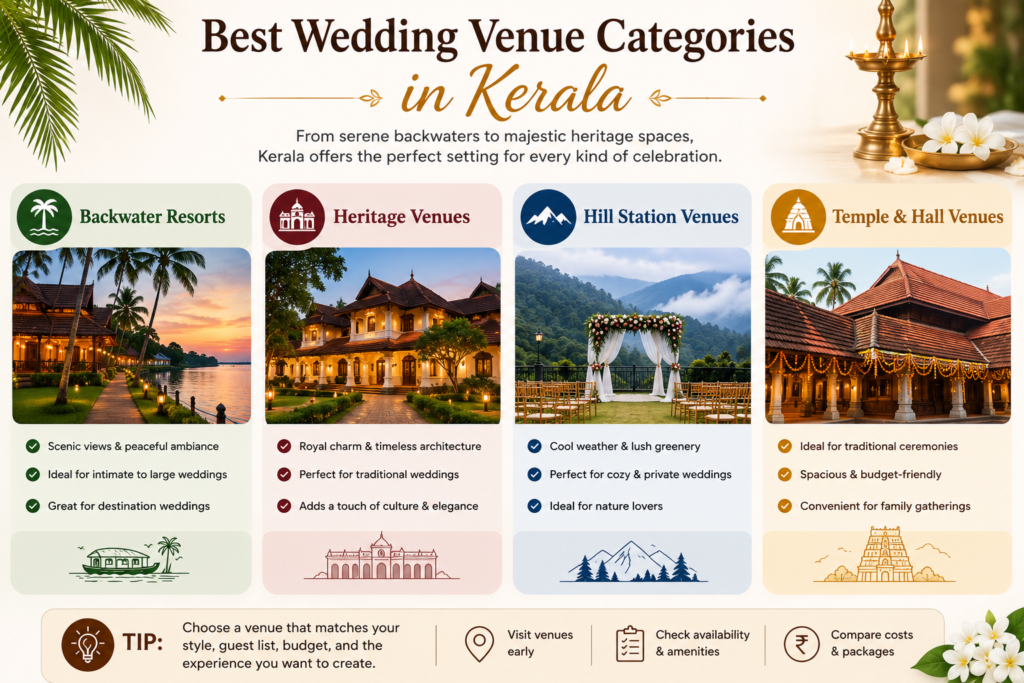
The venue you choose sets the tone for your entire wedding celebration. It influences the ambience, guest experience, photography, décor, and even your overall budget. Kerala offers a wide variety of wedding venues, from luxurious resorts surrounded by nature to traditional temple halls that reflect the state’s rich cultural heritage. Choosing the right venue depends on your guest count, wedding style, budget, and preferred location.
Before making a final decision, consider factors such as accessibility, parking, accommodation, catering facilities, weather conditions, and backup arrangements. Visiting shortlisted venues in person can help you understand their layout and determine whether they match your vision for the wedding.
Backwater Resorts
Backwater resorts are among the most sought-after wedding venues in Kerala, especially for destination weddings. Located in picturesque areas such as Alleppey and Kumarakom, these resorts offer stunning waterfront views, lush greenery, and a peaceful atmosphere. The scenic surroundings create an unforgettable setting for both the wedding ceremony and reception.
Many backwater resorts provide complete wedding packages that include accommodation, catering, décor, and event coordination. This makes planning easier, particularly for couples hosting guests from different cities or countries. The beautiful landscapes also provide exceptional opportunities for wedding photography and cinematic videography.
Backwater weddings are ideal for couples looking for an elegant and intimate celebration surrounded by Kerala’s natural beauty.
Beach Resorts
For couples who dream of exchanging vows by the sea, Kerala’s beach resorts offer a perfect setting. Popular coastal destinations such as Kovalam, Varkala, and Marari provide breathtaking ocean views and spectacular sunset backdrops. These venues are especially popular for destination weddings and modern outdoor celebrations.
Beach weddings often feature relaxed décor, floral arches, elegant seating arrangements, and open-air receptions. Since weather conditions can change unexpectedly, it’s important to choose a venue with indoor backup facilities. Planning ceremonies during the early morning or evening also helps guests stay comfortable while enjoying the coastal ambience.
Heritage Venues
Kerala’s heritage properties combine history, culture, and timeless elegance. Many restored palaces, traditional mansions, and heritage hotels showcase classic Kerala architecture with wooden interiors, courtyards, tiled roofs, and intricate craftsmanship. These venues create a warm and authentic atmosphere for couples who appreciate tradition and cultural charm.
Heritage venues require minimal decoration because their architectural beauty naturally enhances the overall wedding setting. They are an excellent choice for traditional ceremonies, cultural weddings, and couples seeking a unique experience that reflects Kerala’s rich history.
Hill Station Resorts
Hill stations such as Munnar and Wayanad provide a refreshing alternative to city weddings. Surrounded by tea plantations, forests, waterfalls, and mist-covered mountains, these resorts offer a peaceful environment for intimate weddings and destination celebrations. The cool climate also makes outdoor ceremonies more comfortable throughout much of the year.
Hill station venues are particularly suitable for smaller guest lists and couples who want a private wedding experience close to nature. Many resorts also offer luxury accommodation, wellness facilities, and beautiful outdoor spaces for pre-wedding events, making them ideal for multi-day celebrations.
Temple Halls and Convention Centres
Temple halls and convention centres remain one of the most popular choices for traditional Kerala weddings. These venues are designed to accommodate large gatherings and often provide spacious dining areas, ample parking, and convenient access for guests. Their practicality makes them suitable for families planning grand celebrations with hundreds of attendees.
Convention centres also offer flexible spaces that can be customized to suit different wedding themes and décor styles. Many venues provide in-house facilities such as air conditioning, lighting, stage setup, and catering support, simplifying the planning process. If your priority is convenience, affordability, and the ability to host a large number of guests, these venues are an excellent option.
Tips for Choosing the Right Wedding Venue
Selecting the perfect venue involves more than simply finding a beautiful location. Keep these practical considerations in mind before making your final decision:
- Choose a venue that comfortably accommodates your expected guest count.
- Visit the venue in person before confirming your booking.
- Check parking facilities, accessibility, and accommodation options.
- Ask about backup arrangements for outdoor ceremonies.
- Understand what is included in the venue package, such as catering, décor, furniture, and lighting.
- Carefully review the booking agreement, payment terms, and cancellation policy before signing the contract.
The right venue creates the perfect backdrop for your special day while ensuring your guests enjoy a comfortable and memorable experience. Taking the time to compare different venue categories will help you find a location that aligns with your vision, budget, and wedding style.
Conclusion
Planning a Kerala wedding is an exciting journey that combines tradition, careful organization, and personal style. From selecting the perfect wedding date and venue to booking trusted vendors and coordinating every ceremony, each step plays an important role in creating a memorable celebration. Starting your preparations early allows you to make informed decisions, stay within your budget, and avoid the stress of last-minute arrangements.
Choosing the right season, understanding your family’s wedding traditions, and creating a realistic planning timeline can make the entire process much more manageable. Whether you’re hosting a grand celebration in a convention centre, an elegant beach wedding, a peaceful backwater ceremony, or an intimate hill station event, thoughtful planning ensures that every detail comes together seamlessly. Paying attention to guest comfort, vendor coordination, and logistics also contributes to a smooth and enjoyable wedding experience.
Most importantly, remember that your wedding is a celebration of love, family, and new beginnings. While perfection is often the goal, creating meaningful moments with your loved ones is what truly makes the day special. By following this Kerala wedding planning guide and staying organized throughout the journey, you can confidently plan a beautiful wedding that reflects your vision and creates lifelong memories.
If you’re looking for professional guidance, working with an experienced Kerala wedding planner can simplify the planning process, save valuable time, and ensure every aspect of your special day is managed with care. With the right support and preparation, you can focus on enjoying every moment of your wedding while creating unforgettable memories with your family and friends.