
Introduction
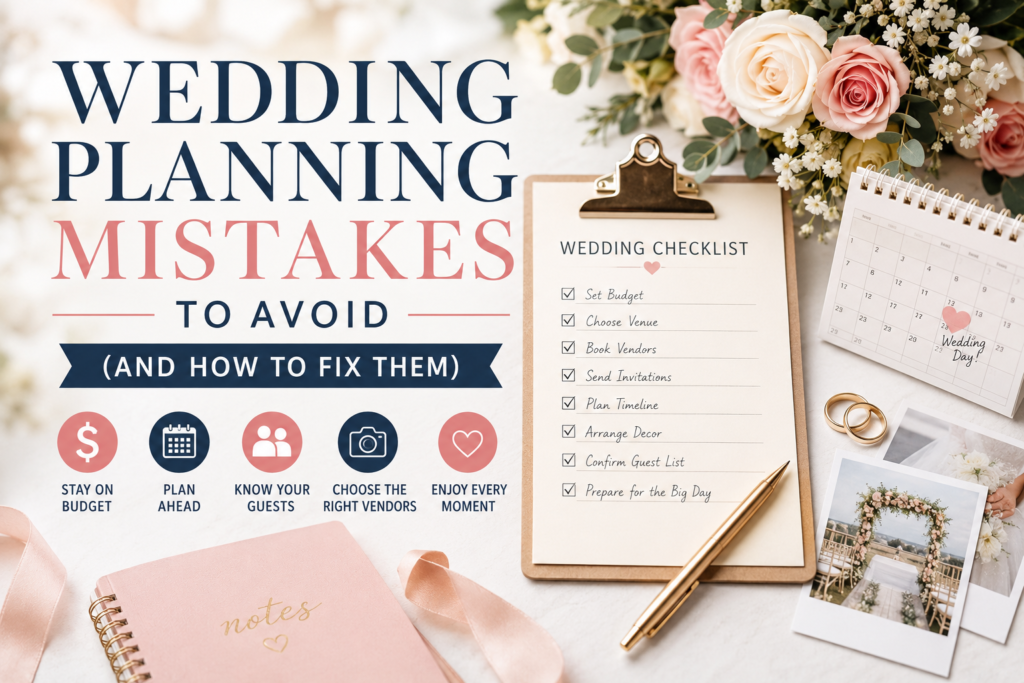
Planning a wedding is one of the most exciting milestones in a couple’s life. It’s a time filled with joy, anticipation, and dreams of creating a memorable celebration. However, between choosing the perfect venue, hiring reliable vendors, managing your budget, and coordinating countless details, wedding planning can quickly become overwhelming. Even the most organized couples can make mistakes that lead to unnecessary stress, unexpected expenses, and last-minute challenges.
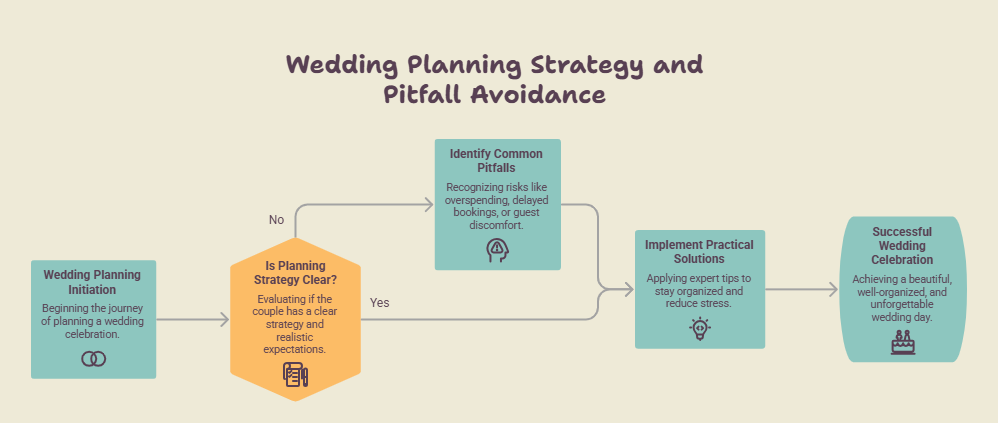
The truth is that no wedding is perfect, and that’s completely okay. Most wedding planning mistakes happen because couples are unaware of common pitfalls rather than being unprepared. From overspending on the budget to delaying important bookings or overlooking guest comfort, small decisions can have a significant impact on your wedding day.
The good news is that these mistakes are entirely avoidable. With careful planning, realistic expectations, and a clear strategy, you can stay organized, reduce stress, and enjoy every stage of your wedding journey. Learning from the experiences of others allows you to make informed decisions and focus on what truly matters—celebrating your love with family and friends.
In this guide, we’ll cover the most common wedding planning mistakes and provide practical solutions to help you avoid them. Whether you’re planning an intimate ceremony or a grand celebration, these expert tips will help you create a wedding that’s beautiful, well-organized, and unforgettable.
Financial & Budgeting Mistakes
A wedding budget is more than just a spending limit—it’s the foundation of your entire planning process. Every decision, from your venue to your flowers, depends on how well you’ve planned your finances. Without a clear budget, it’s easy to overspend in one area and compromise another. Proper budgeting helps you prioritize what’s important while giving you confidence throughout the planning journey.
Starting Without a Clear Budget
Many couples begin booking venues or vendors before deciding how much they can realistically afford. It’s easy to fall in love with a stunning venue or premium package, only to realize later that it consumes a large portion of the budget.
Before making any commitments, determine your total budget and divide it into categories such as venue, catering, photography, attire, décor, entertainment, transportation, and miscellaneous expenses. Tracking every payment helps prevent overspending and keeps your finances under control.
Ignoring Hidden Costs
One of the most overlooked wedding planning mistakes is forgetting about additional expenses. Vendor travel fees, taxes, gratuities, overtime charges, delivery fees, equipment rentals, and service charges can significantly increase your final bill.
Always ask vendors for a detailed quotation that includes every possible charge. Knowing the total cost beforehand helps you compare vendors fairly and avoid unpleasant surprises later.
Not Setting Aside an Emergency Fund
Unexpected expenses are almost inevitable during wedding planning. You may need additional seating, extra floral arrangements, weather backup rentals, or last-minute transportation. Without an emergency fund, these situations can create unnecessary financial stress.
A good rule is to reserve 15–20% of your total budget as a contingency fund. If you don’t need it, you’ll simply have extra savings after your wedding.
Assuming DIY Always Saves Money
DIY projects can personalize your wedding, but they aren’t always cheaper. Buying materials, correcting mistakes, and investing countless hours can sometimes cost more than hiring a professional.
Instead, choose simple DIY projects such as welcome signs, table numbers, or wedding favors. Leave larger tasks like floral arrangements and complex décor to experienced vendors who can deliver professional results while saving you time and stress.
A realistic budget doesn’t limit your dream wedding—it helps you make smarter decisions. Careful financial planning allows you to enjoy your celebration without worrying about unexpected expenses.
Scheduling & Logistics Mistakes
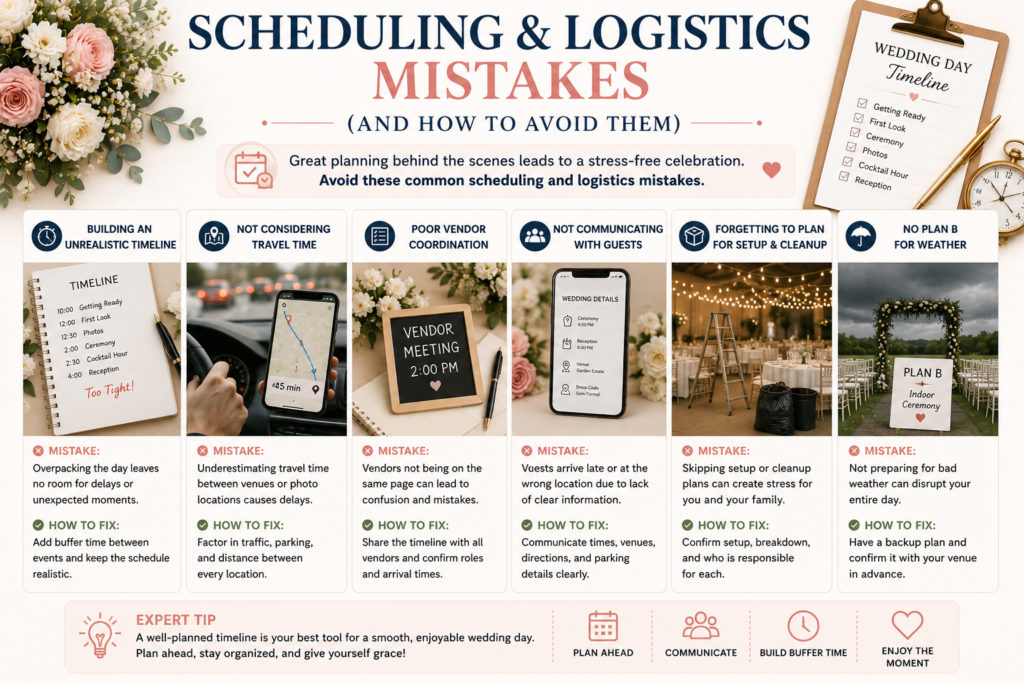
A well-planned timeline keeps your wedding running smoothly from beginning to end. Even with excellent vendors and a generous budget, poor scheduling can create delays, confusion, and unnecessary stress. Planning your timeline carefully ensures that everyone knows where they need to be and when, allowing you to relax and enjoy your special day.
Starting Wedding Planning Too Late
One of the biggest mistakes couples make is postponing the planning process. Popular venues, photographers, caterers, and makeup artists are often booked many months in advance, especially during peak wedding seasons.
Start planning as soon as you’ve chosen your wedding date. Booking your venue and essential vendors early gives you more options, better pricing, and greater peace of mind.
Over-Scheduling the Wedding Day
Trying to fit too many activities into one day can make your wedding feel rushed. Multiple ceremonies, long photography sessions, frequent outfit changes, and packed entertainment schedules often leave little time to actually enjoy the celebration.
Create a realistic timeline that includes buffer time between major events. Allow extra minutes for travel, family photos, guest interactions, and unexpected delays. A flexible schedule keeps the day relaxed and enjoyable.
Booking the Venue Before Finalizing the Guest List
Choosing a venue before estimating your guest count can create unnecessary problems. A venue that’s too small may feel overcrowded, while one that’s too large can increase costs and reduce the intimate atmosphere.
Prepare an estimated guest list before touring venues. This helps you select a location that’s both comfortable and cost-effective.
Ignoring Weather Backup Plans
Outdoor weddings offer beautiful scenery, but weather conditions can change unexpectedly. Rain, strong winds, or extreme temperatures may disrupt your ceremony and affect guest comfort.
Always discuss backup options with your venue. Whether it’s an indoor hall, tent rental, or alternative ceremony space, having a contingency plan ensures your celebration continues without unnecessary stress.
Not Coordinating Timelines With Vendors
Every wedding vendor follows a schedule. If your photographer, caterer, florist, DJ, and transportation team aren’t working from the same timeline, delays can quickly occur.
Share your final wedding schedule with every vendor at least a week before the event. Confirm arrival times, setup schedules, and contact information so everyone remains coordinated throughout the day.
A successful wedding isn’t built on perfect timing—it’s built on thoughtful planning. By organizing your schedule, preparing for unexpected situations, and communicating with your vendors, you’ll create a seamless celebration that allows you to focus on making unforgettable memories.
Guest Management Mistakes
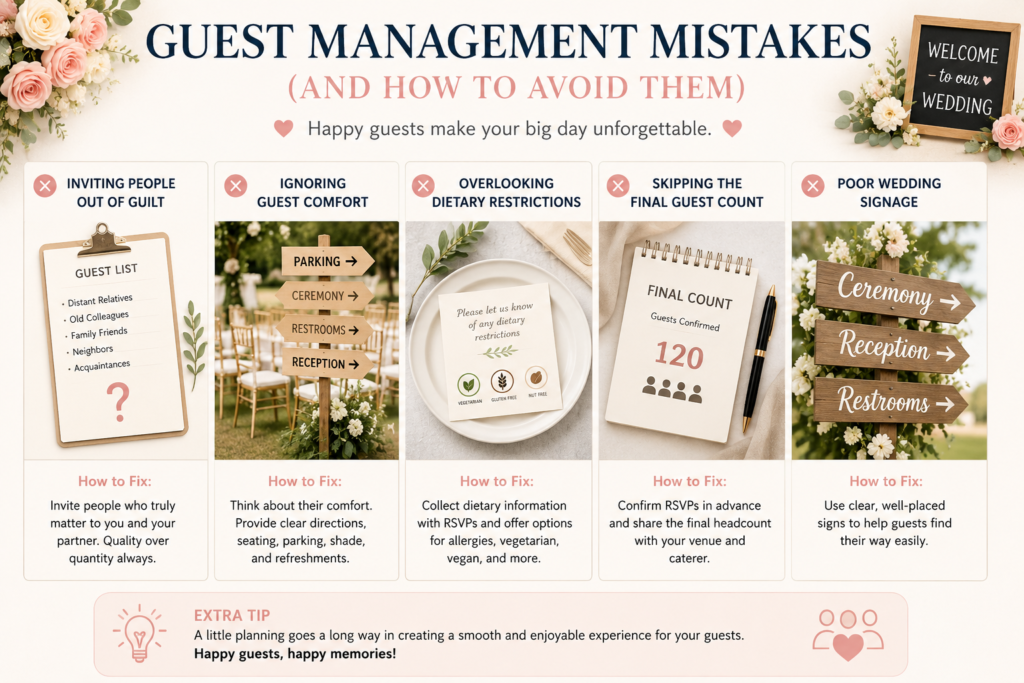
Your guests are an important part of your wedding celebration. While it’s natural to focus on the venue, decorations, and entertainment, your guests’ overall experience will shape how they remember your special day. A well-planned guest experience keeps everyone comfortable, informed, and engaged throughout the celebration.
Inviting People Out of Guilt
Creating the guest list is one of the toughest parts of wedding planning. Many couples feel obligated to invite distant relatives, former colleagues, or acquaintances simply to avoid disappointing others. However, every additional guest increases your budget and can make the event feel less personal.
Instead, focus on inviting the people who genuinely matter to you and your partner. Set clear priorities from the beginning and communicate openly with family members to manage expectations.
Ignoring Guest Comfort
Even the most beautiful wedding can lose its charm if guests feel uncomfortable. Limited seating, poor parking, long waiting times, inadequate shade, or confusing venue layouts can negatively affect their experience.
Think about your wedding from a guest’s perspective. Provide clear directions, comfortable seating, accessible restrooms, refreshments during waiting periods, and transportation if multiple venues are involved. Small details often leave the biggest impression.
Overlooking Dietary Restrictions
Your menu should accommodate different dietary preferences and food allergies. Ignoring these needs may leave some guests with limited or no suitable meal options.
Collect dietary information with your RSVPs and share it with your caterer well before the event. Offering vegetarian, vegan, gluten-free, and allergy-friendly options ensures every guest enjoys the celebration.
Skipping the Final Guest Count
Guest numbers often change after invitations are sent. Failing to confirm your final headcount can result in insufficient seating, food shortages, or unnecessary expenses.
Confirm RSVPs several weeks before the wedding and provide the final numbers to your venue, caterer, and rental providers. Accurate planning helps everything run smoothly.
Poor Wedding Signage
Guests shouldn’t have to guess where they’re supposed to go. Missing or unclear signs can create confusion and delays.
Use clear signage for parking, ceremony locations, reception entrances, seating arrangements, restrooms, and activity areas. Well-designed signs improve navigation while enhancing your wedding décor.
Vendor Selection & Contract Mistakes
Your vendors are responsible for turning your wedding vision into reality. Choosing the wrong professionals—or failing to understand your contracts—can lead to unnecessary stress and disappointment.

Hiring Vendors Based Only on Price
While staying within budget is important, choosing the cheapest vendor isn’t always the smartest decision. Low prices may come with limited experience, poor communication, or lower-quality service.
Compare vendors based on their portfolio, experience, reviews, professionalism, and overall value instead of price alone.
Skipping Written Contracts
Verbal agreements can easily lead to misunderstandings regarding payment schedules, cancellation policies, deliverables, or timelines.
Always sign a detailed written contract before making any payments. Read every clause carefully and ask questions if anything is unclear.
Hiring Friends or Family Without Experience
Friends and relatives often offer to help with photography, catering, or entertainment. While their support is appreciated, relying on inexperienced individuals for key responsibilities may create unnecessary pressure and disappointment.
For essential services, hire experienced professionals. Let friends and family contribute in ways that allow them to enjoy the celebration without added stress.
Booking Vendors Without Research
Never book the first vendor you find. Every professional has a different style, level of experience, and working approach.
Read reviews, browse complete portfolios, schedule consultations, and compare multiple vendors before making your final decision.
Photography & Media Mistakes
Your wedding photos and videos preserve memories you’ll treasure forever. Investing time in planning your photography ensures every meaningful moment is captured beautifully.
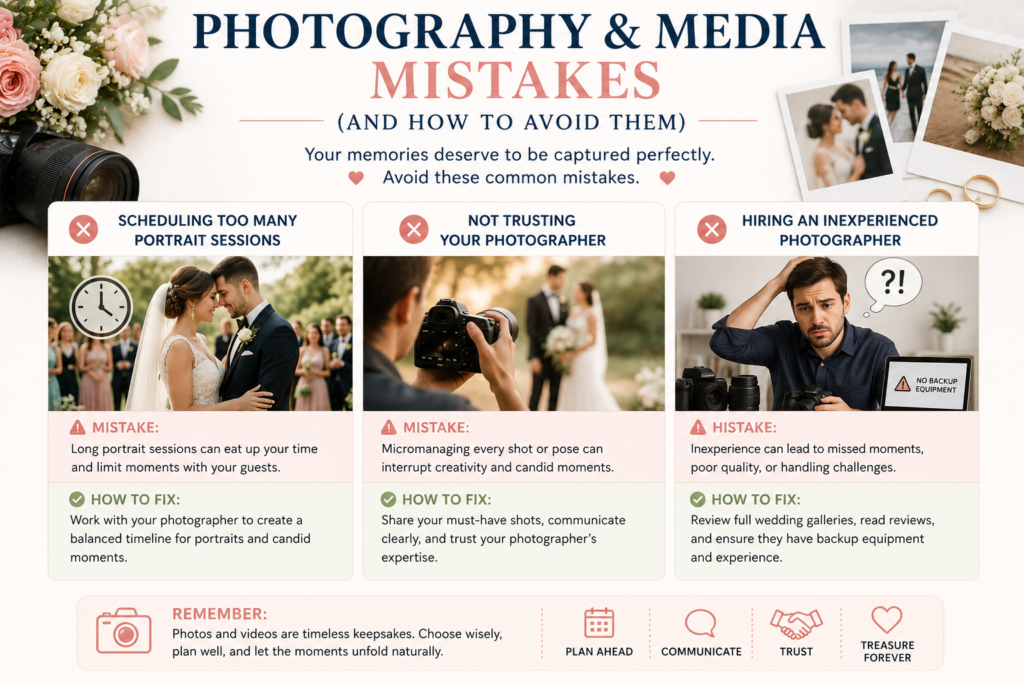
Scheduling Too Many Portrait Sessions
Long portrait sessions often leave couples with less time to spend with their guests.
Work with your photographer to create a balanced timeline that includes family portraits, couple photos, and candid moments without delaying the celebration.
Not Trusting Your Photographer
Micromanaging every pose can interrupt the photographer’s creativity.
Choose a photographer whose style you love, communicate your must-have shots in advance, and trust them to capture natural moments throughout the day.
Hiring an Inexperienced Photographer
Wedding photography requires experience, technical skill, and the ability to adapt quickly.
Review complete wedding galleries, read testimonials, and confirm your photographer has backup equipment before making your decision.
Personal & Emotional Well-Being Mistakes
Wedding planning is exciting, but it can also be emotionally demanding. Taking care of your mental well-being is just as important as organizing the event itself.
Trying to Please Everyone
Family members and friends often have different opinions about your wedding. Trying to satisfy everyone can become exhausting.
Listen respectfully, but remember that your wedding should reflect your values and preferences as a couple.
Ignoring Your Partner’s Input
Wedding planning should be a shared responsibility rather than one person’s project.
Discuss decisions together, divide responsibilities fairly, and communicate openly throughout the planning process.
Falling Into the Pinterest Trap
Social media showcases beautiful weddings, but constantly comparing yours to others can create unrealistic expectations.
Use inspiration as guidance instead of trying to recreate every trend. Focus on celebrating your unique story.
Micromanaging Every Detail
Trying to control every aspect of the wedding often leads to burnout.
Delegate responsibilities, trust your vendors, and focus on enjoying the experience rather than striving for perfection.
Forgetting Self-Care
Planning can become overwhelming if you neglect your health.
Eat well, stay hydrated, exercise regularly, and get enough sleep. Taking breaks will help you remain calm and energized.
Wedding Day Execution Mistakes
After months of planning, it’s finally time to celebrate. Avoiding a few common mistakes helps ensure your wedding day unfolds smoothly.
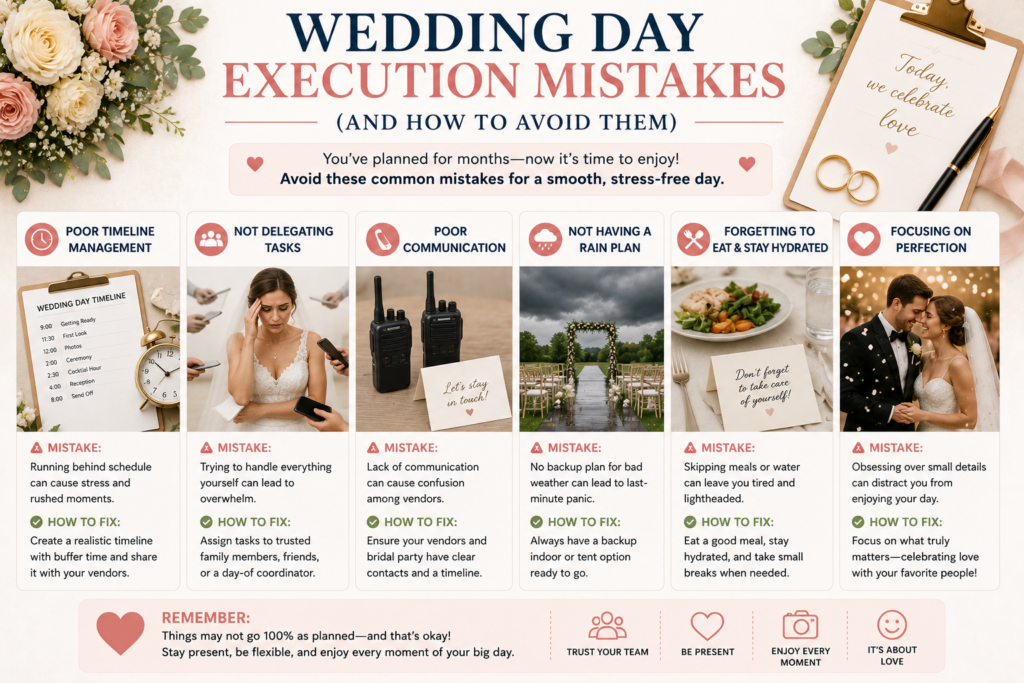
Not Hiring a Day-of Coordinator
Without someone managing the timeline, small issues can quickly become stressful.
A day-of coordinator handles vendor communication, schedules, and unexpected situations so you can focus on enjoying your celebration.
Wearing Uncomfortable Shoes
You’ll spend hours standing, walking, and dancing.
Break in your wedding shoes beforehand and keep a comfortable backup pair for the reception.
Drinking Too Much Too Early
Celebrating responsibly allows you to enjoy every important moment and remain comfortable throughout the day.
Stay hydrated and eat regular meals before consuming alcohol.
Missing Quiet Time With Your Partner
Wedding days pass quickly.
Schedule 10–15 minutes alone together to appreciate the moment before returning to your guests.
Trying New Beauty Treatments
Avoid experimenting with new skincare or cosmetic treatments just before the wedding.
Stick to products and routines you’ve already tested to reduce the risk of unexpected reactions.
Wedding Planning Checklist
Before your wedding day, make sure you’ve completed these essentials:
- Finalize your budget and outstanding payments.
- Confirm all vendor bookings and timelines.
- Verify your final guest count.
- Complete your seating plan.
- Prepare a weather backup plan.
- Pack an emergency kit.
- Confirm transportation arrangements.
- Break in your wedding shoes.
- Prepare important documents.
- Get enough rest and stay hydrated.
Conclusion
Planning a wedding comes with challenges, but most common mistakes can be avoided with proper preparation. Creating a realistic budget, booking reliable vendors, organizing a detailed timeline, and prioritizing your guests’ comfort will help you enjoy a smoother planning experience.
Remember, your wedding isn’t about achieving perfection—it’s about celebrating your love and creating lasting memories with the people who matter most. Stay flexible, trust your planning, and enjoy every moment of this once-in-a-lifetime celebration.
Frequently Asked Questions
1. What is the biggest wedding planning mistake?
Starting without a clear budget is one of the most common mistakes because it often leads to overspending and unnecessary financial stress.
2. How early should I start planning my wedding?
Ideally, begin planning 9–12 months before your wedding. Popular venues and vendors may require even earlier bookings.
3. Is wedding insurance necessary?
Wedding insurance isn’t mandatory, but it provides financial protection against cancellations, weather disruptions, and other unexpected events.
4. Should I hire a wedding planner?
A wedding planner or day-of coordinator can reduce stress by managing vendors, timelines, and last-minute issues.
5. How can I reduce wedding planning stress?
Plan early, create a detailed checklist, delegate responsibilities, trust experienced vendors, and focus on enjoying the journey rather than chasing perfection.