
Introduction
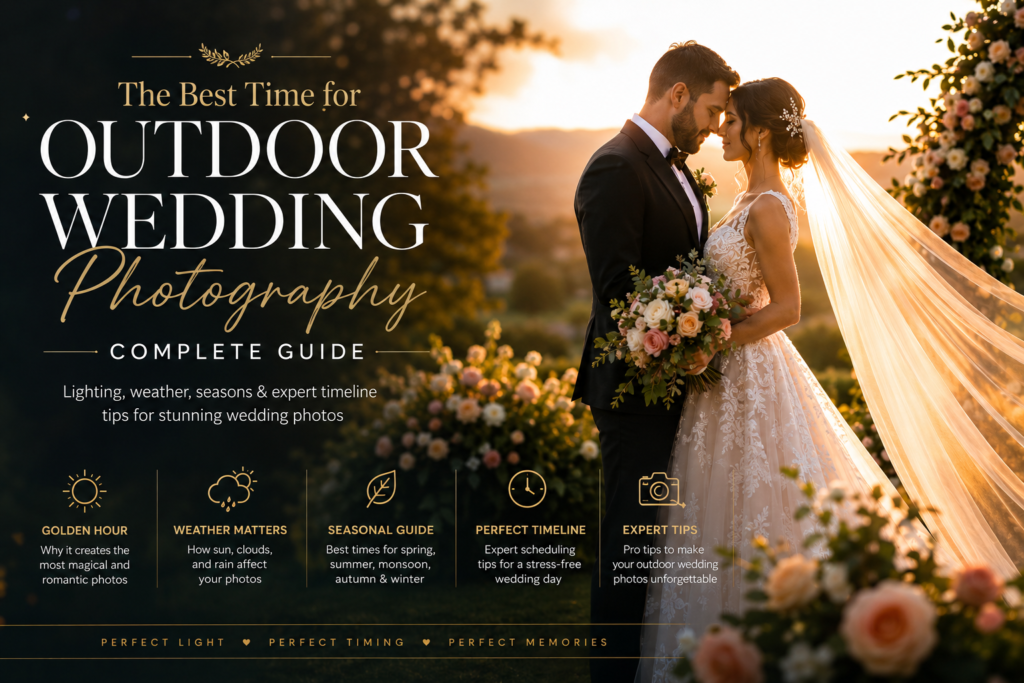
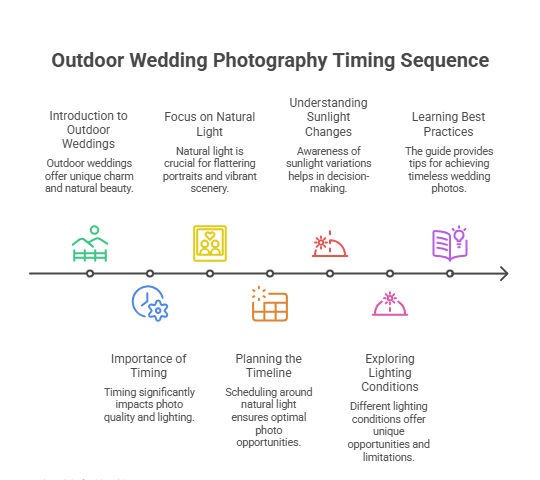
Outdoor weddings have a unique charm that indoor venues often can’t replicate. Natural landscapes, open skies, and beautiful scenery create the perfect backdrop for unforgettable wedding photographs. However, one factor has a bigger impact on your photos than many couples realize—timing.
The time of day determines the quality, direction, and color of natural light. Even the most experienced photographer with high-end equipment cannot completely overcome poor lighting conditions. Choosing the right time for your ceremony and portrait session can make the difference between ordinary photos and breathtaking memories.
Many couples focus on selecting the perfect venue, décor, and outfits but overlook the importance of planning their wedding timeline around natural light. A well-planned schedule allows your photographer to capture soft, flattering portraits, vibrant landscapes, and genuine emotions without harsh shadows or overexposed highlights.
Whether you’re planning a beach wedding, a garden ceremony, a mountaintop celebration, or a destination wedding, understanding how sunlight changes throughout the day will help you make informed decisions. From the magical glow of golden hour to the challenges of midday sun, every lighting condition offers unique opportunities and limitations.
In this guide, you’ll learn the best time for outdoor wedding photography, how different lighting conditions affect your photos, the role of weather and seasons, and practical scheduling tips to ensure your wedding album looks timeless.
Why Timing Matters in Outdoor Wedding Photography
Natural light is one of the most important elements in photography. Unlike indoor shoots where lighting can be controlled with artificial equipment, outdoor photography depends on the position and intensity of the sun. As the day progresses, the angle, color, and softness of sunlight change, directly affecting every photograph.
The right lighting enhances skin tones, reduces harsh shadows, and creates depth in every image. It also helps photographers capture fine details in wedding attire, decorations, and the surrounding landscape. When the lighting is favorable, your photos feel brighter, more natural, and emotionally engaging.
Poor timing, on the other hand, can create strong shadows under the eyes, washed-out skies, and uneven lighting across faces. These issues often require additional editing and, in some cases, cannot be fully corrected during post-processing.
Planning your ceremony and portrait sessions around the best natural light allows your photographer to focus on storytelling instead of constantly working around difficult lighting conditions. It also creates a more relaxed experience, giving you the freedom to enjoy your special day while beautiful moments unfold naturally.
next
Golden Hour: The Best Time for Outdoor Wedding Photography
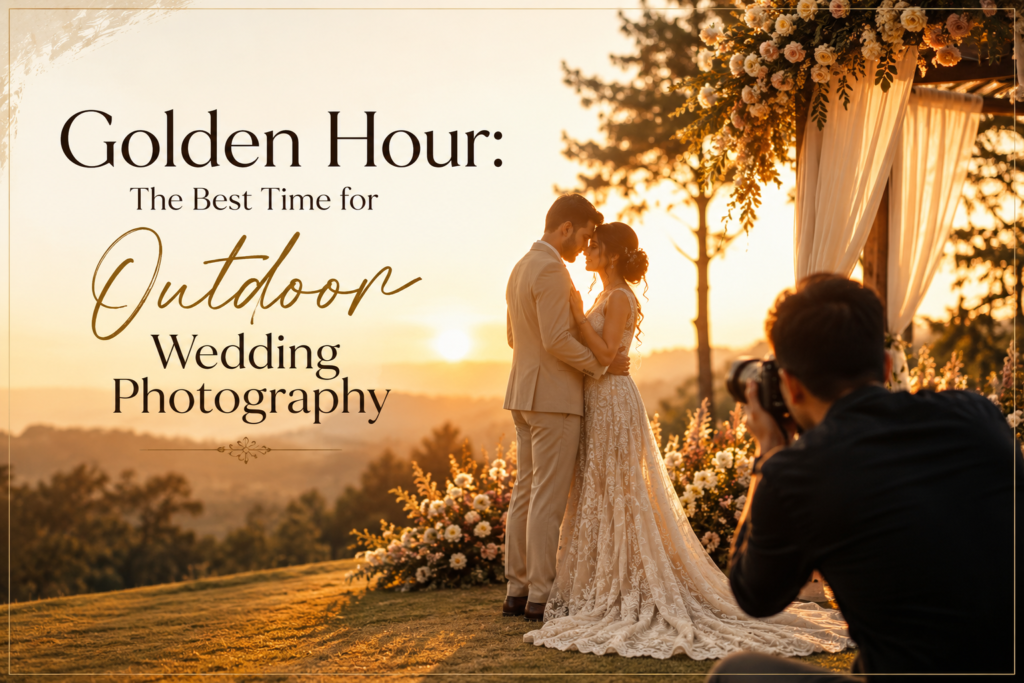
If professional wedding photographers could choose only one time of day for every outdoor wedding, most would choose golden hour. This brief period before sunset offers the most flattering natural light, creating warm, romantic, and timeless wedding photographs.
Golden hour isn’t just about beautiful colors—it’s about the quality of light. The sun sits lower in the sky, producing softer illumination that enhances skin tones, minimizes harsh shadows, and adds depth to every image. Whether your wedding is at a beach, garden, vineyard, or hilltop, golden hour provides ideal conditions for stunning portraits.
What Is Golden Hour?
Golden hour is the period that begins approximately one hour before sunset and lasts until the sun disappears below the horizon. During this time, sunlight travels through more of the Earth’s atmosphere, filtering out harsher blue light and creating a soft, warm glow.
Unlike the intense overhead sunlight experienced at midday, the sun’s lower angle produces directional light that wraps gently around the couple. This creates natural highlights, smooth transitions between light and shadow, and a flattering appearance without requiring excessive editing.
Although it’s called “golden hour,” the exact duration varies depending on the season and your location. During summer, it may last longer, while in winter it can be noticeably shorter. Your photographer will usually calculate the exact timing based on the local sunset on your wedding day.
Why Golden Hour Is Perfect for Wedding Photography
Soft and Flattering Light
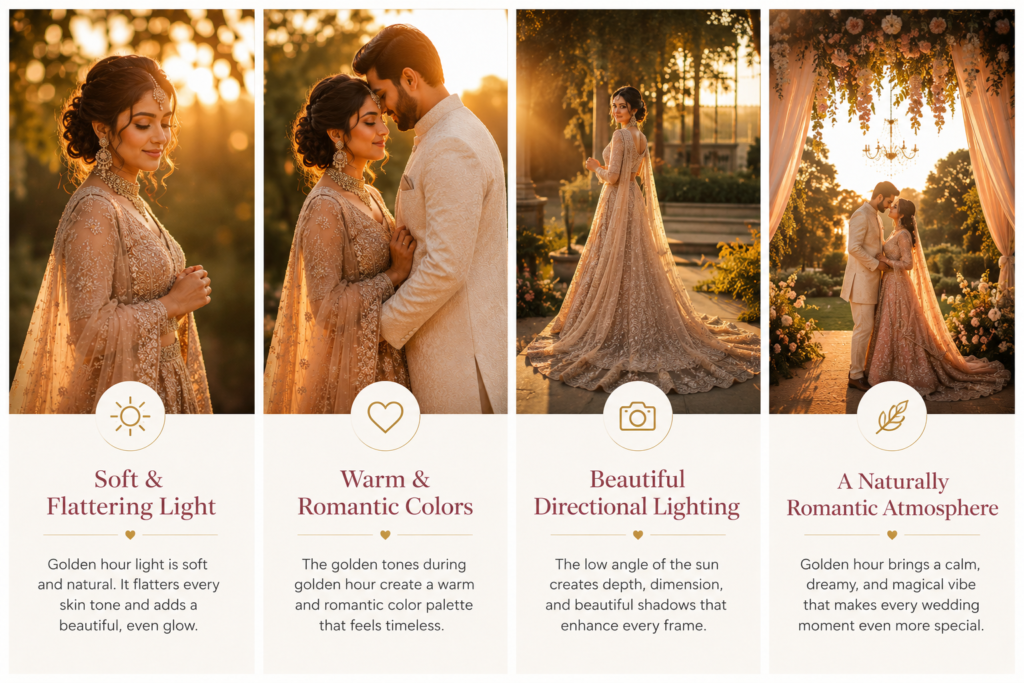
One of the biggest advantages of golden hour is the softness of the light. Because the sun is lower in the sky, it creates gentle illumination that flatters every skin tone.
This softer light reduces the appearance of harsh facial shadows and bright hotspots, resulting in more natural-looking portraits. Couples often notice that their photos appear smoother and more elegant without looking overly edited.
Warm, Romantic Colors
Golden hour is famous for its warm, honey-colored glow. The sunlight adds subtle golden tones to the surroundings, making greenery richer, skies more vibrant, and wedding attire stand out beautifully.
This warm color palette creates an emotional and romantic atmosphere that perfectly complements weddings. It’s one of the reasons golden hour images have a timeless quality that remains beautiful for years.
Beautiful Directional Lighting
Unlike overhead sunlight, golden hour light comes from the side, creating natural depth and dimension. This directional lighting adds shape to faces, enhances textures in wedding dresses and suits, and creates visually balanced compositions.
It also allows photographers to experiment with creative techniques such as backlighting, rim lighting, and silhouettes, producing artistic images that feel cinematic.
Fewer Harsh Shadows
Midday sunlight often creates deep shadows beneath the eyes, nose, and chin. During golden hour, these shadows become much softer and more natural.
The result is cleaner portraits with balanced exposure, making every expression easier to see. This is especially beneficial for group photos where consistent lighting across multiple faces is important.
A Naturally Romantic Atmosphere
Golden hour doesn’t just improve technical image quality—it transforms the mood of your photographs. The combination of warm light, long shadows, and colorful skies creates a dreamy setting that enhances genuine emotions between the couple.
Whether it’s a quiet walk, a shared laugh, or a heartfelt embrace, golden hour helps capture moments that feel authentic and cinematic.
How to Schedule Your Wedding Around Golden Hour
A little planning goes a long way in making the most of this beautiful light. Instead of trying to fit photography into your schedule, it’s often better to build your schedule around the sunset.
Here are a few practical planning tips:
- Plan your ceremony to begin about 1.5 to 2 hours before sunset. This allows enough time for the ceremony while ensuring there’s still daylight for family photos and portraits.
- Schedule your couple’s portrait session during the final hour before sunset. This is when the light is at its softest and most flattering.
- If your reception has already started, step away for 5–15 minutes during golden hour. These few minutes can produce some of the most memorable photographs of the entire day.
- Check your wedding date’s sunset time in advance. Sunset changes throughout the year, so avoid assuming it will occur at the same time in every season.
- Coordinate with your photographer and wedding planner. They can help create a timeline that balances the ceremony, travel, family photos, and reception without feeling rushed.
Why Couples Should Prioritize Golden Hour
Many couples spend months choosing the perfect venue, floral arrangements, and décor, but the beauty of those details is best showcased under the right light. Golden hour naturally enhances every element of your wedding without requiring elaborate lighting equipment or extensive post-processing.
If your venue allows flexibility, planning your timeline around sunset is one of the simplest ways to elevate your wedding photography. Even a brief portrait session during this time can provide images that become the highlights of your wedding album.
Early Morning Wedding Photography
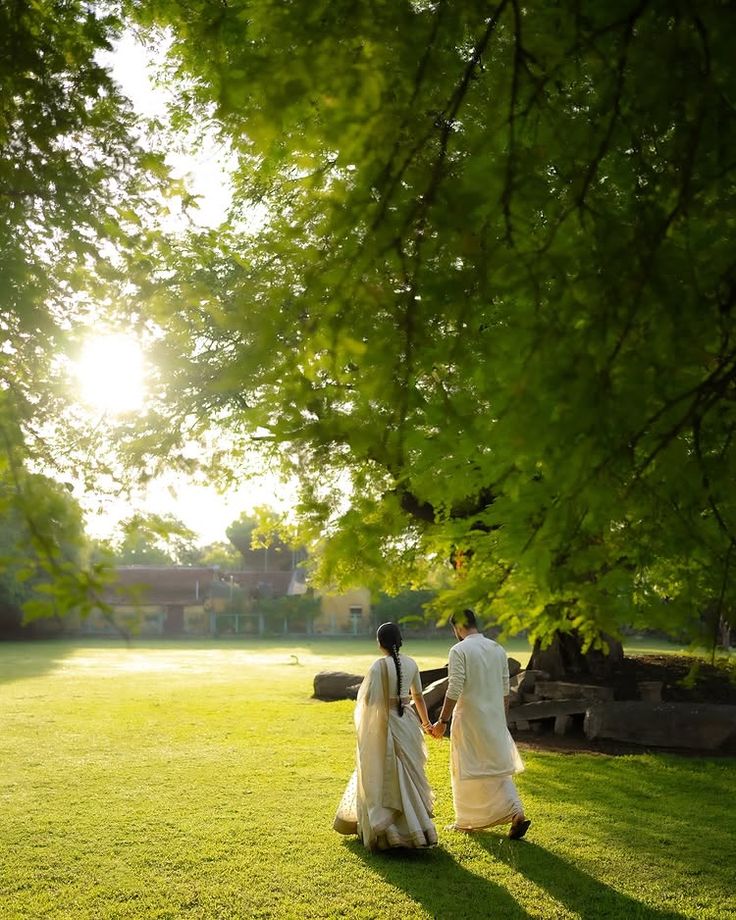
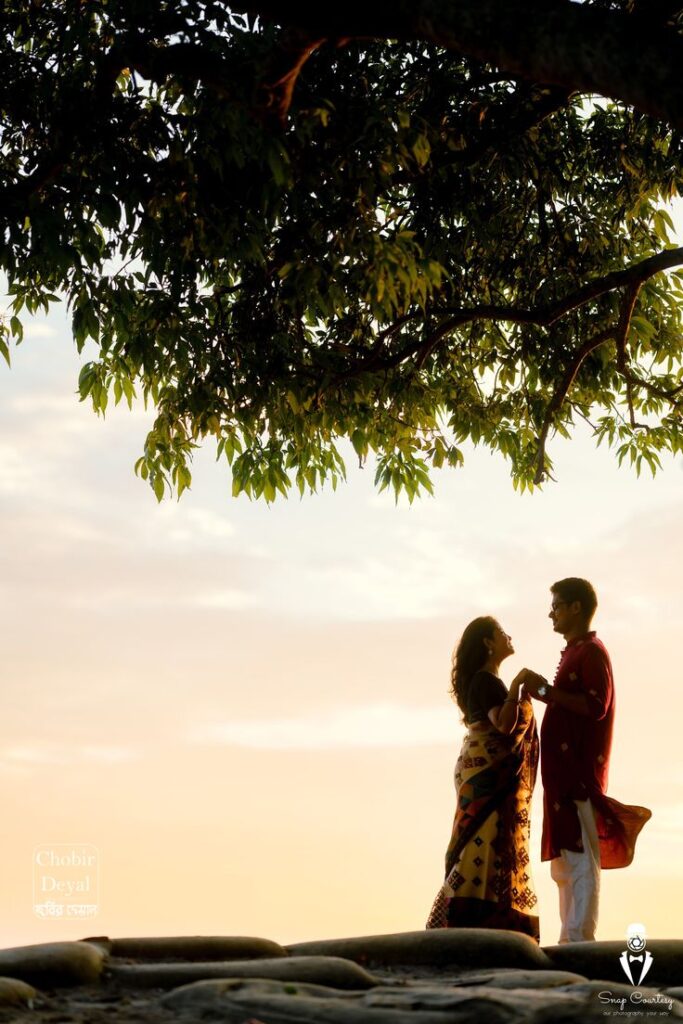
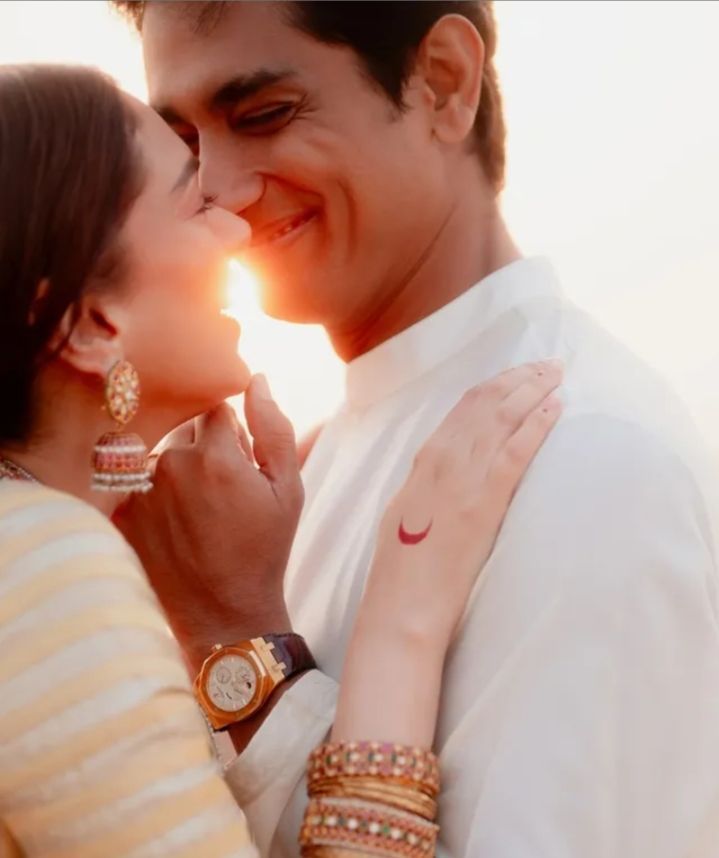
While golden hour before sunset is often considered the ideal time for outdoor wedding photography, it’s not the only option. Early morning, from sunrise until around 10:00 AM, offers another excellent window for capturing beautiful, naturally lit wedding photos.
Morning weddings are becoming increasingly popular, especially for intimate ceremonies, destination weddings, and outdoor celebrations in warmer climates. The soft morning light, cooler temperatures, and peaceful atmosphere create ideal conditions for timeless photographs.
Why Early Morning Is Great for Wedding Photography
Morning sunlight has a gentle quality that flatters both the couple and the surrounding landscape. Since the sun is still relatively low in the sky, the light is softer and more even compared to the intense midday sun.
This natural lighting reduces harsh shadows and creates balanced exposure, allowing photographers to capture details without worrying about overexposed highlights or deep facial shadows. The result is clean, fresh, and natural-looking images.
Another advantage is the calm environment. Popular outdoor venues such as beaches, gardens, parks, and hill stations are usually less crowded in the morning, giving photographers more freedom to compose beautiful shots without distractions.
Benefits of Early Morning Wedding Photography
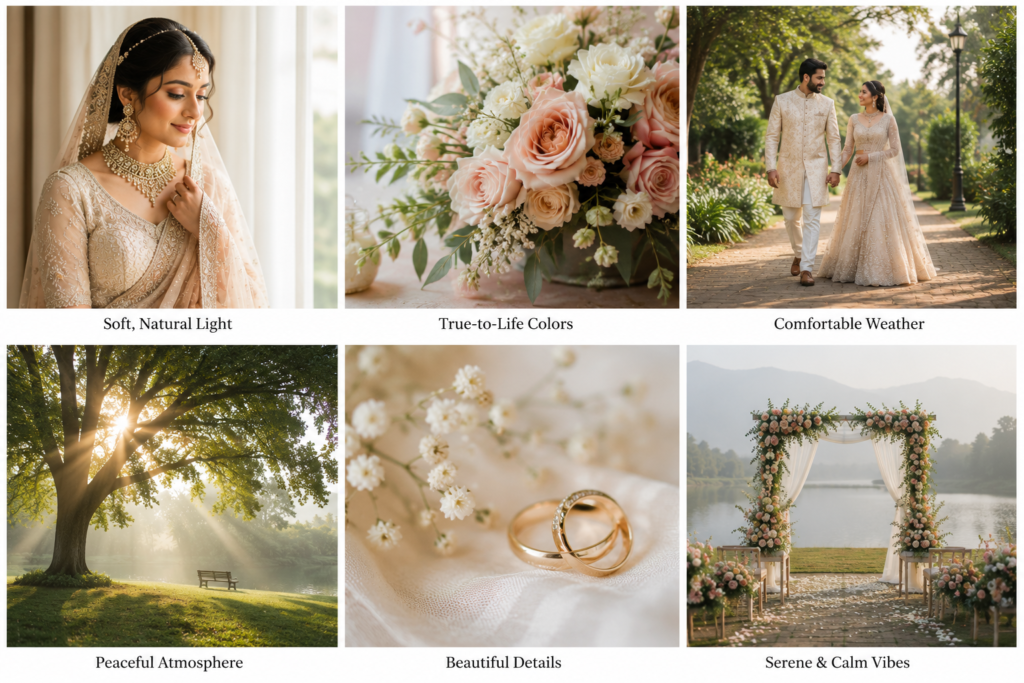
Soft, Natural Light
The first few hours after sunrise provide soft directional light that enhances facial features without creating harsh contrasts. This makes morning ideal for romantic portraits, family photographs, and candid moments.
The gentle light also helps preserve fine details in wedding dresses, veils, floral arrangements, and decorations, making every element of your celebration stand out beautifully.
True-to-Life Colors
Morning light produces neutral, accurate colors that require minimal correction during editing. Skin tones appear natural, greenery looks vibrant, and the sky maintains a clean, balanced appearance.
If you’re aiming for a bright and elegant wedding album with realistic colors, morning photography delivers excellent results.
Comfortable Weather
Outdoor weddings often involve extended periods of standing, walking, and posing for photos. Morning temperatures are generally cooler than those later in the day, making the experience more comfortable for everyone.
This is especially beneficial during summer weddings, where afternoon heat can cause discomfort, sweating, and fatigue. Comfortable couples tend to appear more relaxed and expressive in photographs.
Peaceful Atmosphere
Early mornings offer a quiet, calm setting that naturally encourages intimate moments between the couple. The slower pace allows photographers to capture genuine emotions without the distractions that often come with busier parts of the day.
Whether it’s a private first look, a walk through a garden, or portraits overlooking a scenic landscape, the peaceful environment helps create authentic, heartfelt images.
When Should You Choose a Morning Wedding?
Morning photography is an excellent choice in several situations:
- You’re planning a summer wedding, where afternoon temperatures may be too hot.
- Your venue is a popular tourist location that becomes crowded later in the day.
- You’re hosting a destination wedding and want to enjoy the rest of the day with guests.
- You’re planning an intimate ceremony with a relaxed schedule.
- You prefer bright, natural, and airy photography over warm sunset tones.
Morning weddings are also ideal for couples who enjoy starting their day early and want to make the most of daylight without feeling rushed.
Tips for Planning a Morning Photography Session
To achieve the best results, planning is just as important as choosing the right lighting.
Start hair, makeup, and preparations early enough to avoid delays. Working backward from your ceremony time helps ensure everything stays on schedule without unnecessary stress.
If possible, visit your venue before the wedding at the same time of day. This allows you and your photographer to observe how the light falls across different locations and identify the best spots for portraits.
Finally, communicate your timeline clearly with your photographer and wedding planner. A well-organized schedule ensures that every important moment—from getting ready to the ceremony and portraits—is captured without feeling hurried.
Is Morning Better Than Golden Hour?
Both morning light and golden hour produce exceptional wedding photographs, but each offers a different style.
Morning photography creates clean, fresh, and naturally bright images with realistic colors and a peaceful atmosphere. Golden hour, on the other hand, produces warm, romantic, and cinematic photographs with its signature golden glow.
The best choice depends on your wedding timeline, venue, season, and personal style. An experienced photographer can help you decide which lighting conditions best match the vision you have for your wedding album.
High Noon Wedding Photography: Challenges and Solutions
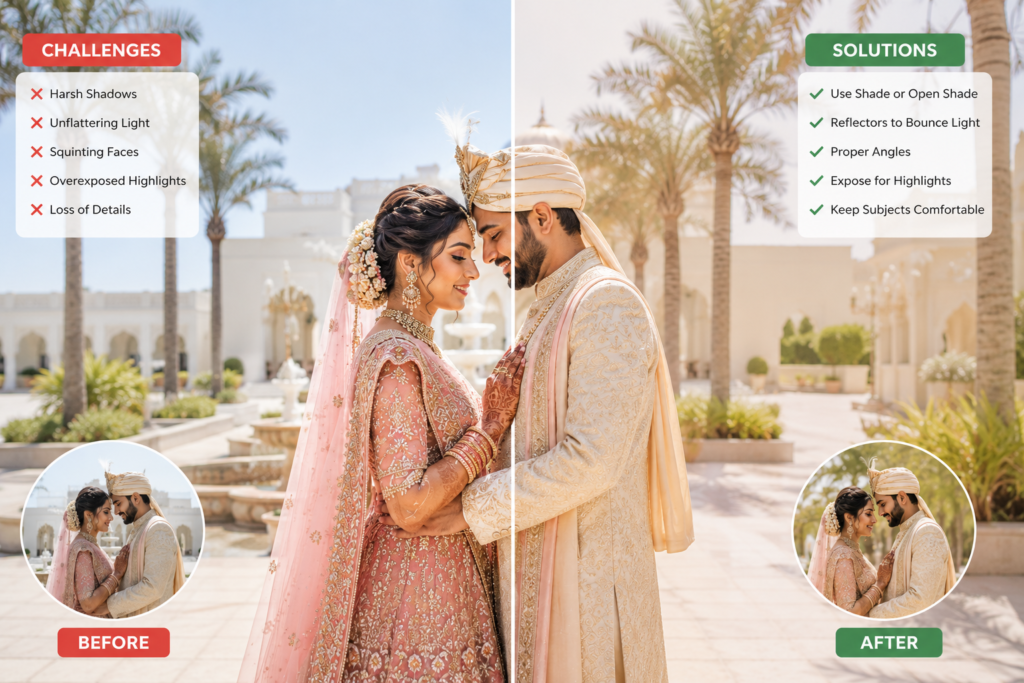
Not every wedding can be scheduled during the golden hour or early morning. Venue availability, religious traditions, guest convenience, and seasonal factors often mean that ceremonies take place around midday. While high noon (approximately 11:00 AM to 2:00 PM) presents some challenges, it doesn’t mean your wedding photos will suffer.
Professional photographers work with all types of lighting conditions. With the right planning, location, and techniques, they can still create beautiful outdoor wedding photographs, even under the brightest sun.
Why Is Midday Sun Challenging?
At noon, the sun is almost directly overhead. This creates strong, vertical light that produces harsh shadows, high contrast, and uneven exposure.
Unlike the soft, angled light of golden hour, midday sunlight is intense and unforgiving. Without proper planning, it can make portraits appear less flattering and reduce the overall quality of your wedding photos.
Fortunately, experienced photographers know how to adapt and use creative techniques to overcome these challenges.
Common Challenges of High Noon Wedding Photography
Harsh Facial Shadows
One of the most noticeable issues with midday photography is the appearance of dark shadows under the eyes, nose, and chin. This effect is often called “raccoon eyes” because the deep eye shadows can make people appear tired or older than they actually are.
These shadows become even more visible when the couple looks directly toward the sun, making facial expressions harder to capture naturally.
Overexposed Highlights
Bright midday sunlight can create extremely bright areas on wedding dresses, veils, white flowers, and light-colored decorations.
When highlights become overexposed, fine details in the fabric and textures may be lost. Although modern cameras have excellent dynamic range, recovering heavily overexposed areas is often difficult during editing.
Squinting and Uncomfortable Expressions
Looking toward bright sunlight naturally causes people to squint. Even subtle squinting can change facial expressions and make portraits look less relaxed.
Couples may also find it difficult to keep their eyes open during family portraits, resulting in inconsistent expressions across multiple photographs.
Heat and Guest Discomfort
Outdoor weddings held during midday are often accompanied by higher temperatures, especially during spring and summer.
Excessive heat can lead to sweating, fatigue, and discomfort for both the couple and their guests. Makeup may require touch-ups more frequently, and prolonged exposure to the sun can make long photography sessions tiring.
High Contrast Backgrounds
Midday sunlight creates scenes with very bright skies and darker foregrounds. This high contrast can make it difficult to expose both the couple and the background correctly in a single image.
Without careful camera settings or additional lighting tools, photographers may have to choose between preserving sky details or properly exposing the couple.
How Professional Photographers Handle Midday Light
Although midday light presents challenges, experienced photographers use several techniques to create balanced and flattering images.
Look for Open Shade
One of the simplest and most effective solutions is photographing in open shade. Areas beneath large trees, building overhangs, gazebos, covered walkways, or shaded courtyards provide soft, even lighting while still maintaining a natural outdoor feel.
It’s important to choose locations with consistent shade rather than areas where sunlight filters through leaves. Patchy light can create uneven bright spots on faces and clothing.
Use Natural Features
Many outdoor venues include architectural elements and natural surroundings that can act as large light diffusers.
Photographers often position couples near:
- Stone walls
- Garden arches
- Covered patios
- Large trees
- Historic buildings
- Forest pathways
These locations help soften direct sunlight while adding depth and visual interest to the photographs.
Take Advantage of Cloud Cover
If clouds move across the sun during the ceremony, photographers often use those moments to capture important portraits.
Thin cloud cover acts like a giant natural diffuser, reducing harsh shadows and creating soft, even lighting across the entire scene. While cloudy weather may reduce the warm glow of golden hour, it often produces excellent portrait lighting throughout the day.
Position the Couple Carefully
Rather than having the couple face directly into the sun, photographers often position them with the sun behind or slightly to one side.
This approach minimizes squinting, softens facial shadows, and can create beautiful backlit portraits with a subtle glow around the couple. It also allows the photographer to expose the faces more naturally while maintaining detail in the background.
Use Professional Lighting Equipment
When necessary, photographers may use tools such as reflectors, diffusers, or off-camera flash to improve the quality of midday light.
- Reflectors bounce soft light back onto the couple, reducing shadows.
- Diffusers soften harsh sunlight before it reaches the subjects.
- Off-camera flash adds balanced light to faces without overpowering the natural environment.
These tools help create a more polished and professional look while preserving the outdoor atmosphere.
Practical Tips for Couples
If your ceremony must take place around noon, a little preparation can make a big difference.
- Choose a venue with plenty of shaded areas for portraits.
- Schedule family photos in locations with consistent lighting.
- Stay hydrated, especially during warmer months.
- Keep tissues and makeup essentials handy for quick touch-ups.
- Trust your photographer’s guidance when positioning for photos.
- Allow extra time so portraits can be taken without rushing.
Key Takeaway
Midday sunlight may be the most challenging lighting condition for outdoor wedding photography, but it isn’t a reason to worry. With thoughtful planning, a suitable venue, and an experienced photographer who understands natural light, you can still achieve beautiful, memorable wedding photographs.
ok
How Weather Affects Outdoor Wedding Photography
When planning an outdoor wedding, it’s easy to focus on the venue, décor, and timeline while overlooking one important factor—the weather. While photographers can adapt to different lighting conditions, weather directly influences the mood, colors, and overall quality of your wedding photographs.
The good news is that there isn’t a single “perfect” weather condition for outdoor photography. Sunny, cloudy, and even lightly rainy days each offer unique opportunities. Understanding how different weather conditions affect your photos will help you plan confidently and work with your photographer to achieve beautiful results.
Sunny Days
A bright, sunny day is what many couples imagine when planning an outdoor wedding. Blue skies and vibrant landscapes create a cheerful atmosphere, and when timed correctly, sunny weather can produce breathtaking photographs.
However, the quality of sunlight changes throughout the day, making timing just as important as the weather itself.
Advantages of Sunny Weather
Vibrant Colors
Sunlight naturally enhances the colors of flowers, greenery, decorations, and landscapes. Gardens appear lush, ocean views become more vivid, and architectural details stand out beautifully.
This creates photographs that feel bright, energetic, and full of life.
Stunning Golden Hour
Sunny days usually produce the most spectacular golden hours. As the sun begins to set, the warm light transforms the entire landscape into a soft, glowing backdrop that is ideal for romantic portraits.
Many of the iconic wedding photos seen in magazines are captured during this brief period before sunset.
Dramatic Sunsets
Clear skies often lead to colorful sunsets with shades of orange, pink, and gold. These natural colors add depth and emotion to wedding portraits, creating memorable images that require very little enhancement during editing.
Challenges of Sunny Weather
While sunny conditions are beautiful, they also come with a few challenges.
If the ceremony takes place around midday, harsh sunlight can create strong shadows, bright highlights, and uncomfortable heat. Guests may also feel the effects of prolonged sun exposure, especially during summer weddings.
The solution isn’t to avoid sunny weather—it is to plan your timeline wisely and use shaded areas when necessary.
Overcast Days
Many couples feel disappointed when they see clouds in the forecast. Surprisingly, photographers often welcome overcast conditions because they create some of the most flattering natural light for portraits.
Clouds act like a giant natural diffuser, spreading sunlight evenly across the scene and eliminating harsh contrasts.
Benefits of Cloudy Weather
Soft, Even Lighting
Overcast skies reduce strong shadows and bright highlights, allowing photographers to capture balanced exposures with ease.
Skin tones appear natural, facial features are evenly illuminated, and group photos become much easier to photograph.
Comfortable Conditions
Cloudy weather often brings cooler temperatures, making outdoor ceremonies more comfortable for couples and guests.
Without intense sunlight, everyone tends to look more relaxed, resulting in genuine smiles and natural expressions.
Consistent Lighting
Unlike sunny days where the lighting changes dramatically throughout the afternoon, cloudy conditions provide consistent light for longer periods.
This consistency allows photographers to move between locations without constantly adjusting camera settings, making the entire photography session smoother.
Limitations of Overcast Weather
Although cloudy conditions provide excellent portrait lighting, they don’t produce the warm golden glow associated with sunset photography.
The sky may also appear less colorful in wide landscape shots. However, experienced photographers often use creative composition and editing techniques to enhance the mood while preserving the natural atmosphere.
Partly Cloudy Days
Partly cloudy weather offers a combination of sunshine and cloud cover throughout the day.
While this can create beautiful dramatic skies, it also means lighting conditions change frequently. Photographers must constantly adjust camera settings and shooting positions to maintain consistent image quality.
Fortunately, professionals are trained to adapt quickly, ensuring that every important moment is captured regardless of changing conditions.
Opportunities on Partly Cloudy Days
Passing clouds can briefly soften harsh sunlight, creating perfect opportunities for portraits.
Photographers often take advantage of these moments to capture family photos, couple portraits, or close-up detail shots while the lighting is naturally diffused.
The mix of clouds and sunlight can also produce visually striking skies that add depth and character to outdoor wedding photographs.
What About Rain?
Rain doesn’t automatically ruin an outdoor wedding. In fact, some of the most memorable wedding photographs are taken during or immediately after light rain.
Umbrellas, reflections on wet pathways, misty landscapes, and dramatic skies can create artistic images that feel unique and romantic.
The key is preparation.
How to Prepare for Unexpected Rain
If rain is possible on your wedding day, consider these practical tips:
- Have a backup indoor or covered ceremony location.
- Keep a few elegant umbrellas ready for portraits.
- Choose waterproof footwear if you’ll be walking on grass or uneven ground.
- Protect dresses and suits when moving between locations.
- Build flexibility into your wedding timeline.
- Trust your photographer to adapt to changing conditions.
Experienced wedding photographers often carry weather protection for their cameras and can continue shooting safely in light rain.
Always Have a Backup Plan
Weather forecasts are helpful, but they aren’t always accurate. A flexible plan helps reduce stress and ensures your celebration continues smoothly regardless of the conditions.
Discuss backup options with your wedding planner, venue coordinator, and photographer several weeks before your wedding. Knowing exactly what to do if the weather changes allows everyone to stay focused on enjoying the day rather than worrying about last-minute decisions.
Key Takeaway
Every weather condition offers something unique for outdoor wedding photography. Sunny days provide vibrant colors and breathtaking sunsets, overcast skies create soft and flattering portraits, partly cloudy conditions add dramatic visual interest, and even light rain can result in unforgettable images.
Instead of hoping for perfect weather, focus on choosing an experienced photographer who understands how to work with changing conditions. With thoughtful planning and a flexible schedule, your wedding photos can be beautiful in almost any forecast.
Seasonal Considerations for Outdoor Wedding Photography
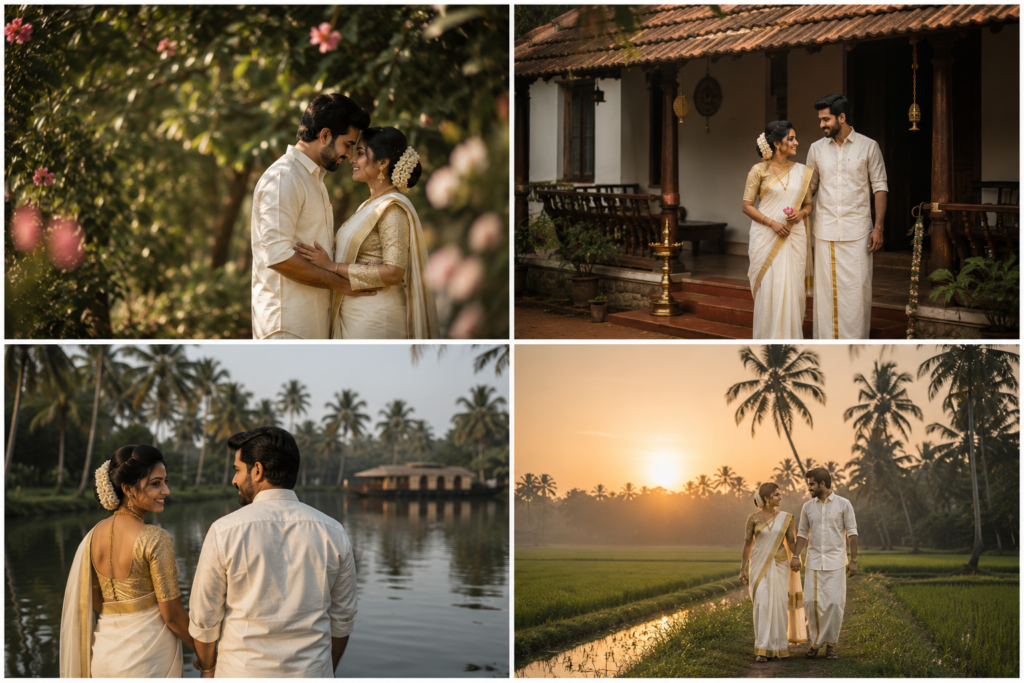
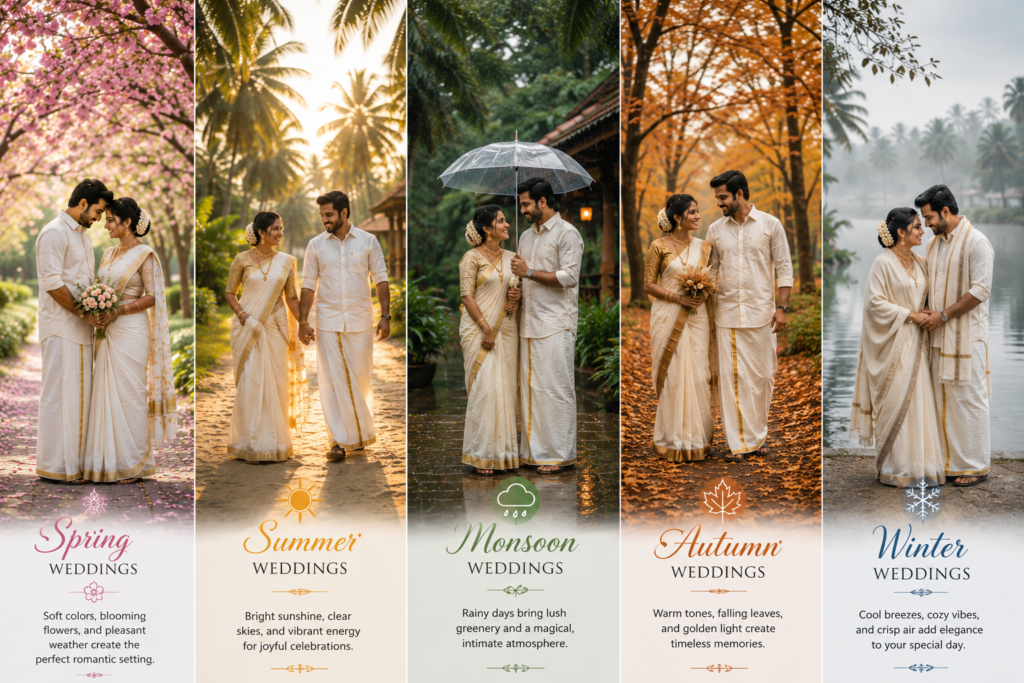
The season you choose for your wedding influences much more than the weather. It affects sunrise and sunset timings, daylight hours, temperature, landscape colors, and the overall mood of your photographs. Understanding these seasonal changes helps you plan a wedding timeline that makes the most of natural light.
Each season offers its own unique beauty. Whether you dream of blooming gardens in spring, golden sunsets in summer, colorful autumn leaves, or the crisp elegance of winter, adjusting your schedule to the season will help you achieve stunning outdoor wedding photos.
Spring Weddings
Spring is one of the most popular seasons for outdoor weddings, thanks to its pleasant temperatures and blooming landscapes.
Gardens come alive with colorful flowers, trees regain fresh greenery, and the soft natural light creates a romantic atmosphere that’s perfect for wedding photography.
Advantages of Spring Photography
Spring offers moderate temperatures that make outdoor portrait sessions comfortable for both the couple and guests.
The vibrant flowers and lush greenery naturally enhance wedding photos, reducing the need for elaborate backdrops or decorations.
Golden hour is also pleasant during spring, providing warm light without the intense heat experienced in summer.
Things to Consider
Spring weather can be unpredictable. A bright morning may turn cloudy or rainy by the afternoon, so it’s important to have a backup plan for outdoor ceremonies.
Checking weather forecasts regularly and discussing contingency plans with your photographer will help you stay prepared.
Summer Weddings
Summer provides the longest daylight hours of the year, giving photographers more flexibility when planning outdoor sessions.
The extended evenings allow couples to enjoy a later golden hour, making it easier to complete ceremonies, family portraits, and receptions before sunset photography.
Advantages of Summer Photography
Longer daylight means there’s less pressure to rush through the wedding schedule.
Golden hour occurs later in the evening, giving photographers more time to capture portraits in beautiful warm light.
Summer also offers vibrant landscapes, clear skies, and spectacular sunsets that create breathtaking wedding albums.
Challenges During Summer
Higher temperatures can make outdoor ceremonies uncomfortable, especially around midday.
To avoid excessive heat, many couples schedule ceremonies later in the afternoon so that portrait sessions naturally transition into golden hour.
Providing shaded seating, refreshments, and hydration stations also helps guests remain comfortable throughout the celebration.
Monsoon Weddings
In regions where monsoon season is common, outdoor weddings require additional planning but can produce incredibly unique photographs.
Soft rain, mist-covered landscapes, and dramatic skies create a cinematic atmosphere that many couples find unforgettable.
Advantages of Monsoon Photography
Cloud-covered skies provide naturally diffused lighting, resulting in soft portraits with minimal harsh shadows.
Rain can also create beautiful reflections on pathways, lakes, and gardens, adding creativity and depth to wedding photographs.
Planning Tips
Choose venues with covered outdoor spaces or elegant indoor alternatives.
Keep stylish umbrellas available for portraits and allow extra time in the schedule in case weather conditions change unexpectedly.
Autumn Weddings
Autumn is loved for its comfortable temperatures and rich natural colors.
Trees begin displaying shades of gold, orange, and red, creating stunning natural backdrops without requiring extensive decorations.
Advantages of Autumn Photography
The warm colors of autumn complement wedding attire beautifully, especially neutral and earthy color palettes.
Cooler weather also makes longer photography sessions more comfortable for everyone involved.
Golden hour during autumn often produces rich, warm tones that add depth and emotion to every photograph.
Things to Keep in Mind
As the season progresses, sunsets begin occurring earlier.
Couples should plan ceremonies earlier in the afternoon to ensure there’s enough daylight for family portraits and couple sessions before sunset.
Winter Weddings
Winter weddings offer a clean, elegant aesthetic that’s completely different from other seasons.
The lower angle of the sun throughout the day creates softer lighting, making it easier to capture flattering outdoor portraits even outside traditional golden hour.
Advantages of Winter Photography
Cool temperatures help couples remain comfortable during extended portrait sessions.
The softer sunlight often produces balanced lighting with fewer harsh shadows compared to summer.
Winter landscapes also provide a minimalist and sophisticated backdrop, especially in hill stations or locations with misty mornings.
Challenges During Winter
The biggest consideration is the early sunset.
Since daylight ends much earlier, couples should plan ceremonies well before sunset to allow enough time for group photos and couple portraits.
Scheduling a first look before the ceremony can also help maximize available daylight.
Adjusting Your Wedding Timeline by Season
Every season requires slight adjustments to your wedding schedule.
Here are some practical recommendations:
| Season | Recommended Ceremony Time | Best Portrait Session |
| Spring | Mid to Late Afternoon | Golden Hour |
| Summer | Late Afternoon | Evening Golden Hour |
| Monsoon | Flexible with Backup Plan | During Breaks in Rain or Soft Cloud Cover |
| Autumn | Early to Mid Afternoon | Before Sunset |
| Winter | Early Afternoon | 1–2 Hours Before Sunset |
Instead of choosing a fixed ceremony time months in advance, work backward from your local sunset time. This simple planning method helps ensure your photographer has enough daylight to capture every important moment.
Work With Your Photographer
An experienced wedding photographer understands how seasonal changes affect natural light.
During the planning stage, they’ll recommend the best ceremony time, portrait schedule, and backup options based on your wedding date and venue.
By collaborating early, you can create a timeline that allows beautiful photographs without rushing from one event to the next.
Key Takeaway
Every season brings its own charm to outdoor wedding photography. Spring offers blooming landscapes, summer provides long golden evenings, monsoon creates dramatic and artistic scenes, autumn showcases vibrant natural colors, and winter delivers soft lighting with an elegant atmosphere.
Rather than choosing a season based only on weather, consider how daylight hours, sunset timing, and natural scenery align with your photography goals. A thoughtfully planned timeline will help you capture beautiful memories no matter the season.
Planning Your Wedding Timeline for Perfect Photos
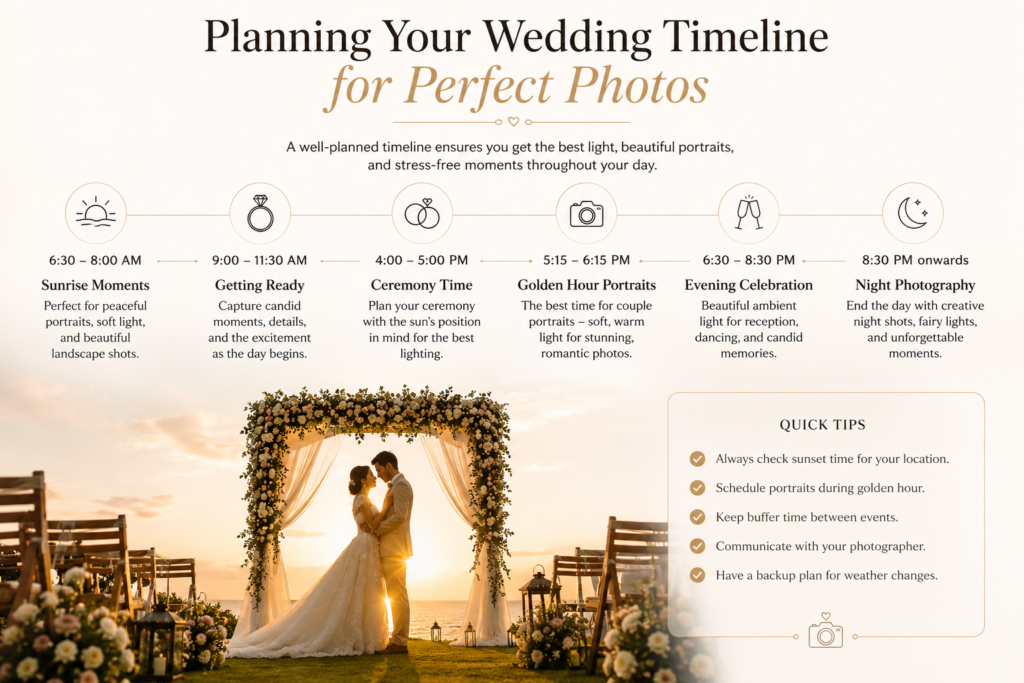
A well-planned wedding timeline is just as important as choosing the right venue or photographer. Even the most talented photographer needs enough time and the right lighting to capture every meaningful moment. A carefully organized schedule helps reduce stress, keeps the day running smoothly, and ensures you never have to rush through your photos.
Instead of fitting photography around your wedding events, it’s often better to build your timeline with photography in mind. This approach allows you to enjoy your celebration while giving your photographer the opportunity to document every important detail naturally.
Why Your Wedding Timeline Matters
Your wedding day is filled with once-in-a-lifetime moments—from getting ready with your loved ones to exchanging vows and celebrating with family and friends. If the schedule is too tight, these moments can feel rushed, leaving little time for relaxed and meaningful photographs.
A realistic timeline gives everyone enough breathing room. It also provides flexibility if something runs slightly behind schedule, which is common on wedding days.
The goal isn’t to spend the entire day taking photos. Instead, it’s to create a schedule where photography fits naturally into the flow of the celebration.
Build Your Timeline Around Sunset
One of the simplest ways to improve your wedding photography is to start planning from the sunset time rather than the ceremony time.
Find out when the sun sets on your wedding date and work backward. This ensures you have enough daylight for portraits, family photos, and other important moments before natural light fades.
For example, if sunset is at 6:30 PM, your timeline might look like this:
| Time | Activity |
| 2:00 PM | Bride and Groom Getting Ready |
| 3:30 PM | First Look (Optional) |
| 4:00 PM | Couple Portraits |
| 4:45 PM | Family & Wedding Party Photos |
| 5:30 PM | Ceremony Begins |
| 6:15 PM | Golden Hour Portraits |
| 6:45 PM | Reception Begins |
This is only a sample timeline. Your actual schedule will depend on your venue, traditions, travel time, and the season.
Schedule Enough Time for Every Photography Session
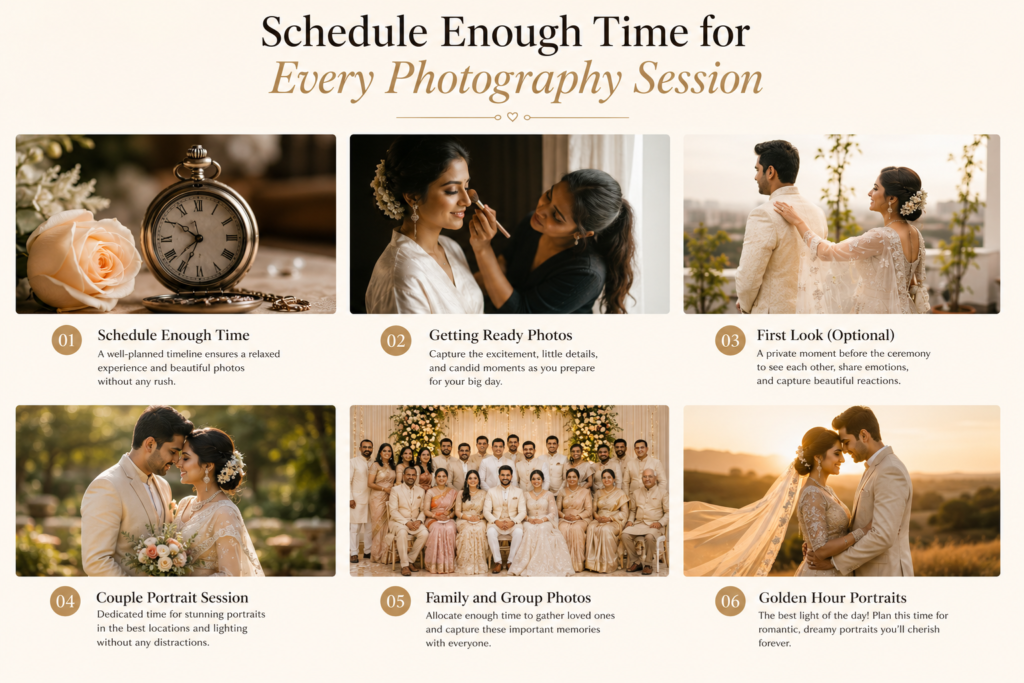
Getting Ready Photos
The day begins long before the ceremony.
Photographs of hair styling, makeup, wedding attire, jewelry, invitations, and candid moments with family help tell the complete story of your wedding day.
Allocate at least 60–90 minutes for these preparations without interruptions.
First Look (Optional)
A First Look is a private moment where the couple sees each other before the ceremony.
Many couples choose this option because it creates an intimate experience away from the crowd while allowing photographers to capture genuine emotions.
It also provides extra time for portraits before guests arrive, reducing pressure later in the day.
Couple Portrait Session
Your portrait session deserves more than a quick 10-minute window.
Plan 30–60 minutes for couple portraits, depending on the size of your venue and the number of locations you’d like to use.
If possible, divide the session into two parts:
- Before the ceremony
- During golden hour
This gives you a wider variety of lighting styles and backgrounds.
Family and Group Photos
Family photographs are among the most cherished images from any wedding.
Prepare a list of important family combinations before the wedding day and share it with your photographer. This helps everyone stay organized and prevents confusion during the session.
Allow 20–40 minutes, depending on the size of your family.
Golden Hour Portraits
Even if you’ve already completed your main portrait session, try to step away for 10–15 minutes during golden hour.
These few minutes often produce the most beautiful photographs of the entire wedding.
The warm natural light creates a romantic atmosphere that’s difficult to recreate at any other time of day.
Leave Buffer Time Between Events
One of the biggest mistakes couples make is creating a schedule with no extra time.
Hair and makeup may take longer than expected, transportation can be delayed, or family members might be difficult to gather for group photos.
Adding 10–15 minutes between major events gives your schedule flexibility and helps reduce unnecessary stress.
A relaxed timeline allows photographers to work creatively instead of constantly racing against the clock.
Visit Your Venue Before the Wedding
If possible, visit your venue with your photographer before the wedding day.
Walking through the location at the same time your ceremony will take place helps identify:
- The best portrait locations
- Areas with beautiful natural light
- Shaded spots for midday photography
- Scenic sunset viewpoints
- Indoor backup locations in case of rain
This preparation allows everyone to work more efficiently on the wedding day.
Coordinate With Your Wedding Team
Your photographer shouldn’t be the only person familiar with the timeline.
Share the final schedule with:
- Wedding planner
- Venue coordinator
- Makeup artist
- Hair stylist
- Videographer
- Transportation providers
- Immediate family members
When everyone understands the timeline, the day flows more smoothly and important moments are less likely to be delayed.
Keep Travel Time Realistic
If your ceremony and reception are at different locations, don’t underestimate travel time.
Remember to include:
- Traffic
- Parking
- Walking distances
- Guest movement
- Time to unload photography equipment
Building these details into your schedule prevents unnecessary delays later in the day.
Trust Your Photographer’s Guidance
Professional wedding photographers plan timelines every week. They understand how long each session typically takes and how natural light changes throughout the day.
If your photographer recommends adjusting your ceremony time by even 30 minutes, it’s usually because that small change can significantly improve the quality of your wedding photographs.
Their experience can help you create a schedule that balances beautiful photography with an enjoyable celebration.
Sample Outdoor Wedding Photography Timeline
Here’s an example of a photography-friendly timeline for an evening outdoor wedding:
| Time | Activity |
| 1:30 PM | Photographer Arrives |
| 1:45 PM | Bridal & Groom Preparations |
| 3:00 PM | Detail Photos |
| 3:30 PM | First Look |
| 4:00 PM | Couple Portraits |
| 4:45 PM | Wedding Party Photos |
| 5:15 PM | Family Portraits |
| 6:00 PM | Ceremony |
| 6:40 PM | Golden Hour Portrait Session |
| 7:00 PM | Reception |
| 8:30 PM | Night Portraits (Optional) |
This timeline provides enough flexibility while maximizing the best natural lighting throughout the day.
Key Takeaway
A thoughtfully planned wedding timeline allows your photographer to capture every important moment without rushing. By scheduling your day around natural light, allowing buffer time, coordinating with your wedding team, and prioritizing golden hour, you’ll create the perfect conditions for timeless outdoor wedding photographs.
Remember, great wedding photography isn’t just about the camera or the location—it’s also about giving each moment the time it deserves.
Mistakes Couples Should Avoid
Even with a beautiful venue and a skilled photographer, a few planning mistakes can affect the quality of your wedding photos. Fortunately, most of these issues can be avoided with proper preparation and communication.
Here are some of the most common mistakes couples make when planning outdoor wedding photography.
Scheduling the Ceremony at Midday
One of the biggest mistakes is planning the ceremony between 11:00 AM and 2:00 PM, when the sun is at its strongest.
This lighting often creates harsh shadows, causes guests to squint, and makes outdoor portrait sessions more challenging. If possible, schedule your ceremony later in the afternoon so your portraits naturally lead into golden hour.
Ignoring Sunset Time
Many couples book a ceremony without checking when the sun sets on their wedding date.
As a result, they may finish the ceremony after daylight has faded, leaving little time for outdoor portraits. Always plan your timeline by working backward from sunset to ensure you have enough natural light.
Rushing the Portrait Session
Wedding days often feel busy, but rushing through portraits can affect the final results.
Allow enough time for your photographer to guide you through different poses, locations, and candid moments. Relaxed sessions almost always produce more natural and emotional photographs.
Forgetting a Backup Plan
Weather can change unexpectedly, especially during certain seasons.
Not having a backup location or covered area may create unnecessary stress if it rains or becomes too windy. Discuss alternative options with your venue and photographer before the wedding day.
Choosing a Venue Without Considering Light
A venue may look beautiful during a daytime visit but have limited shade or poor lighting during your actual ceremony time.
Visit the venue at the same time of day your wedding is scheduled. This helps you understand how sunlight moves across the space and identify the best locations for portraits.
Not Communicating With Your Photographer
Your photographer should know your complete wedding schedule well before the event.
Share important details such as travel time, family photo lists, special traditions, and must-have shots. Good communication allows your photographer to prepare and capture every meaningful moment.
Underestimating Travel Time
If your ceremony, reception, and portrait locations are different, don’t overlook travel time.
Traffic delays, parking, and walking between locations can reduce valuable photography time. Always include extra time in your schedule to avoid unnecessary pressure.
Expert Tips for Picture-Perfect Outdoor Wedding Photos
Professional photographers rely on experience, planning, and creativity to produce stunning images. These expert tips will help you get the best results from your outdoor wedding photography.
Plan Around Natural Light
Whenever possible, schedule portraits during the golden hour or early morning. Natural light creates more flattering photographs than harsh midday sunlight.
Trust Your Photographer
Avoid worrying about posing or camera angles.
An experienced photographer understands lighting, composition, and timing. Relax, enjoy the moment, and let them guide you throughout the session.
Visit the Venue Beforehand
A pre-wedding venue visit helps identify the best portrait locations, shaded areas, scenic viewpoints, and backup options.
It also allows you to visualize how your wedding timeline will flow.
Keep Your Schedule Flexible
Wedding days rarely follow the timeline perfectly.
Adding short buffer periods between major events gives your photographer enough time to adapt without rushing important moments.
Focus on Genuine Emotions
The most memorable wedding photographs often aren’t posed—they’re real moments shared between the couple.
Laugh naturally, talk to each other, hold hands, and enjoy the day. Genuine emotions create timeless photographs.
Don’t Skip Golden Hour
Even if your reception has already started, stepping outside for just 10–15 minutes during golden hour can produce some of your favorite wedding portraits.
Many photographers consider these images the highlight of the wedding album.
Prepare for Weather Changes
Bring umbrellas, comfortable shoes, water, and a few essential touch-up items.
Being prepared allows you to stay relaxed if the weather changes unexpectedly.
Frequently Asked Questions
1. What is the best time for outdoor wedding photography?
The best time is during the golden hour, which typically begins about one hour before sunset. The soft, warm light creates flattering portraits, beautiful colors, and minimal harsh shadows.
2. Can beautiful wedding photos be taken at noon?
Yes. Although midday sunlight is more challenging, experienced photographers use shaded locations, reflectors, diffusers, and careful positioning to create beautiful images.
3. How long does golden hour last?
Golden hour generally lasts 30 to 60 minutes, depending on the season and your location. Your photographer can calculate the exact timing based on your wedding date.
4. Is cloudy weather good for outdoor wedding photography?
Absolutely. Overcast skies provide soft, even lighting that reduces harsh shadows and creates flattering portraits. Many photographers actually enjoy working in these conditions.
5. Should we schedule a first look?
A first look is optional but highly recommended if you want more time for portraits before the ceremony. It also helps reduce time pressure later in the day and allows you to enjoy more of your reception.
6. What happens if it rains on our wedding day?
Light rain doesn’t have to ruin your wedding photos. Elegant umbrellas, covered outdoor spaces, and creative compositions can result in unique and memorable images. Having a backup plan ensures your day continues smoothly.
7. How early should we book a wedding photographer?
It’s best to book your photographer 9–12 months in advance, especially if you’re planning your wedding during peak wedding season. Early booking gives you access to your preferred photographer and enough time to discuss your timeline and photography goals.
Conclusion
Outdoor wedding photography is about much more than choosing a beautiful location. The timing of your ceremony, the quality of natural light, the season, and even the weather all play an important role in creating photographs you’ll treasure for a lifetime.
While golden hour remains the ideal time for romantic portraits, early morning also offers soft, flattering light, and even midday ceremonies can produce stunning images with the right planning. Understanding how light changes throughout the day allows you to build a wedding timeline that works in harmony with nature rather than against it.
Every wedding is unique, and there is no one-size-fits-all schedule. By working closely with your photographer, visiting your venue in advance, preparing for seasonal changes, and allowing enough time for portraits, you can create the perfect conditions for unforgettable wedding memories.
At the end of the day, the best wedding photographs aren’t just about perfect lighting—they’re about capturing genuine emotions, meaningful moments, and the love you share. With thoughtful planning and an experienced photographer by your side, your outdoor wedding album will become a timeless reminder of one of the happiest days of your life.