
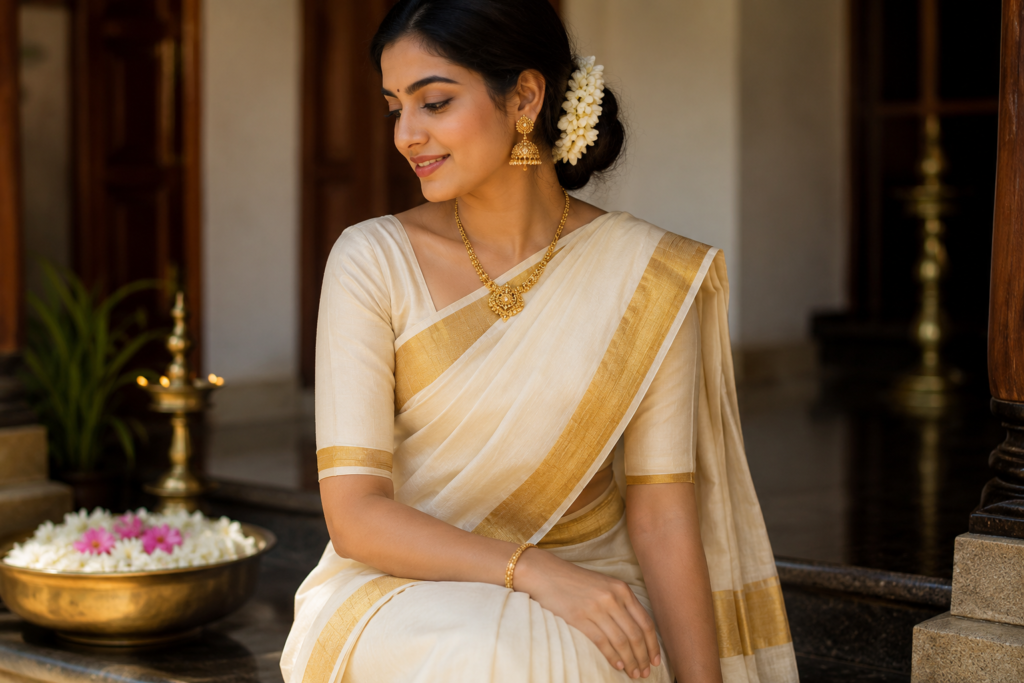
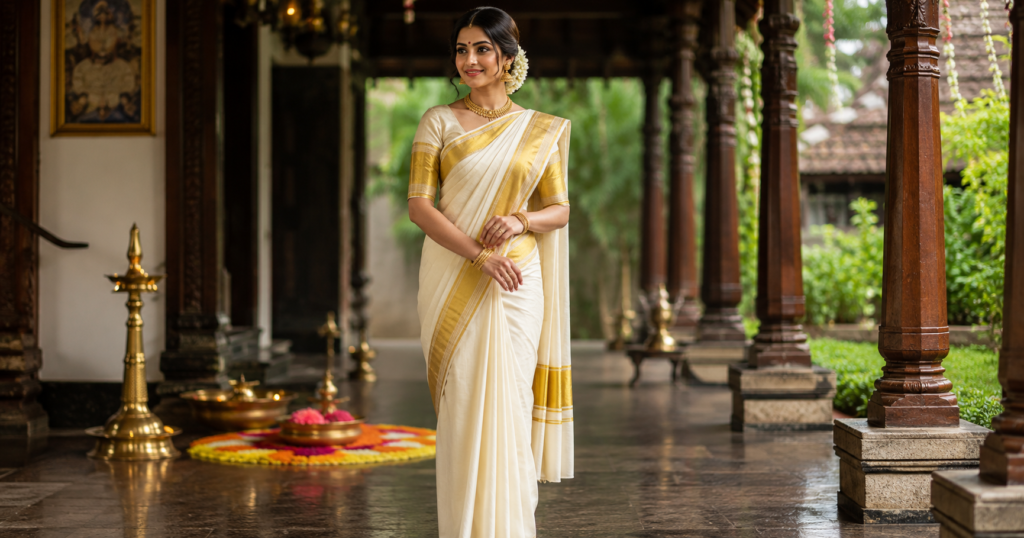
The Kasavu saree ivory or off-white with a gold zari border is the heart of every Onam wardrobe. This guide covers everything from choosing an authentic handloom piece to draping, blouse trends, accessories, and after-care, so you can put together a look that’s festive, comfortable, and true to Kerala’s weaving heritage.
Understanding the Traditional Kasavu Saree
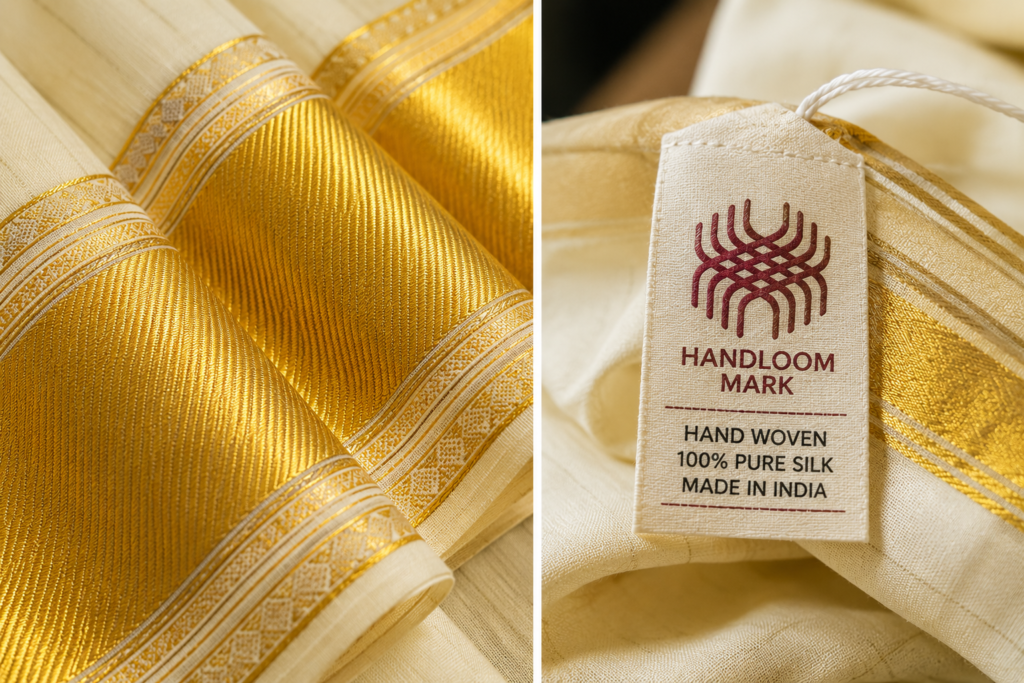
At its core, a Kasavu saree is defined by two things: the ivory-and-gold zari base that gives it its signature glow, and the fabric it’s woven in usually a handloom cotton or cotton-silk blend that drapes softly and stays cool in Kerala’s humidity.
Where to buy authentic handloom Kasavu
Kerala’s GI (Geographical Indication)-tagged handloom clusters are your best bet for genuine, artisan-made sarees:
- Balaramapuram (Thiruvananthapuram) the original home of the Kasavu weave, known for fine cotton counts and traditional temple borders.
- Chendamangalam (Ernakulam) famous for lighter, breathable weaves and eco-friendly dyeing.
- Kuthampully (Thrissur) known for elaborate gold borders and richer zari work, often chosen for weddings and Onam.
- Kasaragod produces sturdier, more affordable handloom cotton, popular for everyday festive wear.
How to check authenticity: Look for the official Handloom Mark or GI tag on the saree, feel for slight irregularities in the weave (a sign of hand work, unlike uniform power-loom fabric), and buy directly from cooperative stores (like Hantex or Handloom House) or weaver collectives when possible. Genuine zari has a duller, warmer gold tone compared to the bright, flat gold of synthetic borders.
How to drape a Kasavu saree (Kerala Nair style)
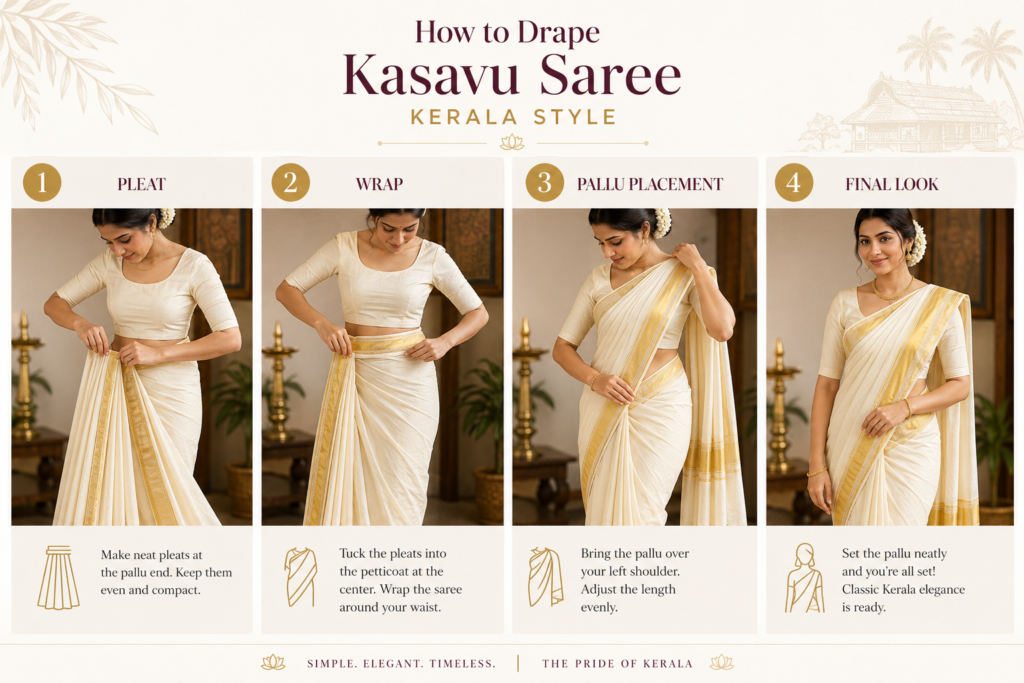
- Tuck the plain end into your petticoat at the right waist and wrap the saree once around your body, left to right.
- Make 5–7 even pleats at the front, tuck them in at the navel so the gold border falls straight along the pleats.
- Wrap the remaining fabric around once more, bringing it to the front over the left shoulder.
- Let the pallu (the zari-bordered end) fall open over the shoulder instead of pleating it this is what distinguishes the Kerala drape from a Nivi-style saree.
- Pin the pallu at the shoulder if needed for movement, and adjust pleats so the border sits flat, not twisted.
If you’re short on time, a pre-stitched saree replicates this exact silhouette in under two minutes a practical option on a busy Onam morning.
Modern and Fusion Trends for 2026
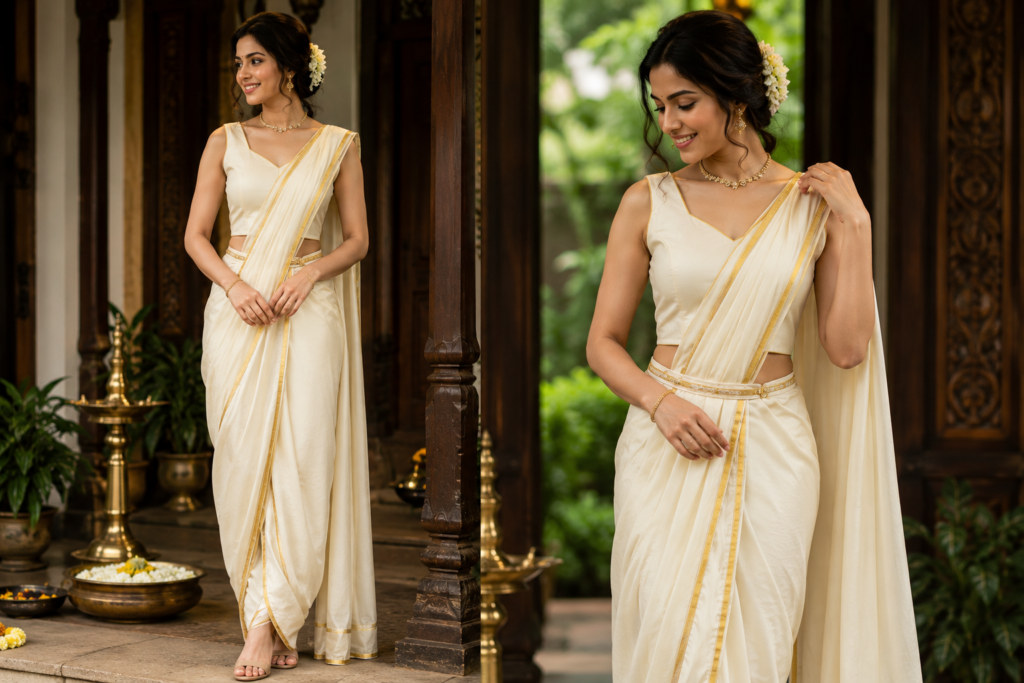
Not everyone wants a six-yard drape this Onam, and that’s fine the Kasavu aesthetic now comes in several easier formats:
- Pre-stitched sarees pre-pleated and stitched for a quick, no-fuss drape, ideal for first-timers or young girls.
- Dhoti-style and half-saree drapes a contemporary, structured silhouette popular with younger women for daytime events.
- Saree-gowns with Kasavu piping a fitted gown base finished with a gold Kasavu border, worn for evening functions.
- Pastel color-blocking the traditional ivory paired with soft blush, mint, or lavender panels instead of an all-white palette.
- High-waisted wrap skirts Kasavu fabric styled as a skirt with a separate blouse or crop top, a favourite for younger, fusion-forward crowds.
Celebrity-Inspired Blouse Styles
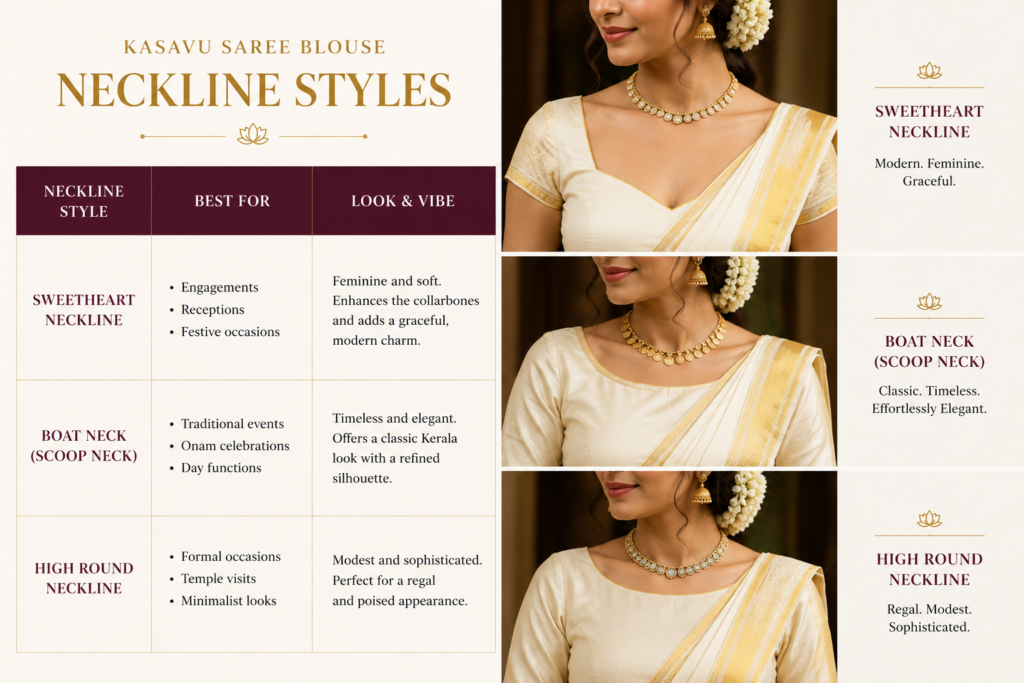
The blouse is where most of the styling experimentation happens. Here’s what’s trending, borrowed straight from red-carpet and celebrity Onam looks:
Necklines
| Style | Best suited for |
| Sweetheart neckline | Evening and party looks |
| Spaghetti or broad straps | Fusion drapes, saree-gowns |
| V-neck / boat neck | Classic, everyday festive wear |
| High round-neck | Traditional puja and family gatherings |
Sleeves and prints
| Style | Best suited for |
| Shoulder-length puffed sleeves | Statement, photo-ready looks |
| Elbow-length sleeves | Balanced, versatile choice |
| Polka dot or traditional prints | Adds contrast without overpowering the gold border |
| Sleeveless contrast blouses | Modern, minimal styling |
Styling tip: Keep the blouse fabric or colour as the only contrast element — a printed or coloured blouse works best against a plain ivory-and-gold saree, not a heavily embellished one.
Choosing a Look for Your Body Type and Skin Tone
Since the palette stays largely ivory and gold, fit and border width do most of the work in flattering your shape:
- Petite frames choose a narrower gold border and drape the pallu without heavy pleating, so the saree doesn’t overwhelm your height.
- Fuller frames a V-neck or sweetheart blouse with elbow-length sleeves elongates the upper body; avoid very broad, high borders that add visual width.
- Tall frames you can carry wider zari borders and contrast blouses well; a dhoti-style drape also works nicely on a taller frame.
- Warmer (deeper) skin tones antique or matte gold jewelry and darker blouse contrasts (maroon, bottle green, mustard) stand out beautifully.
- Cooler (fairer) skin tones bright temple jewelry and pastel color-blocked borders complement well without overpowering.
Styling and Accessories
Jewelry
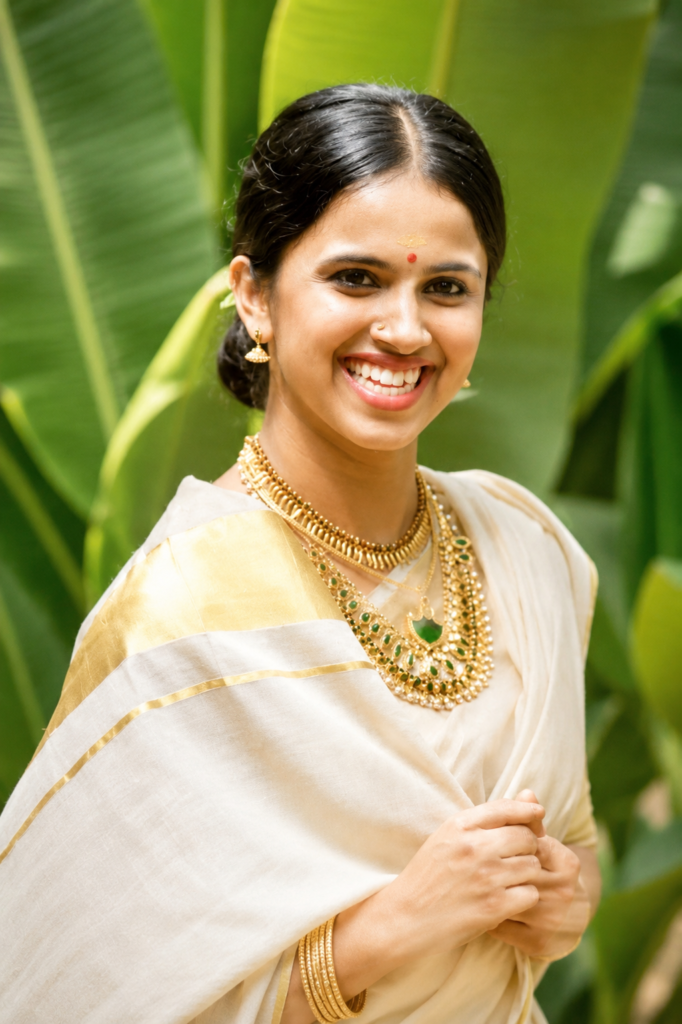
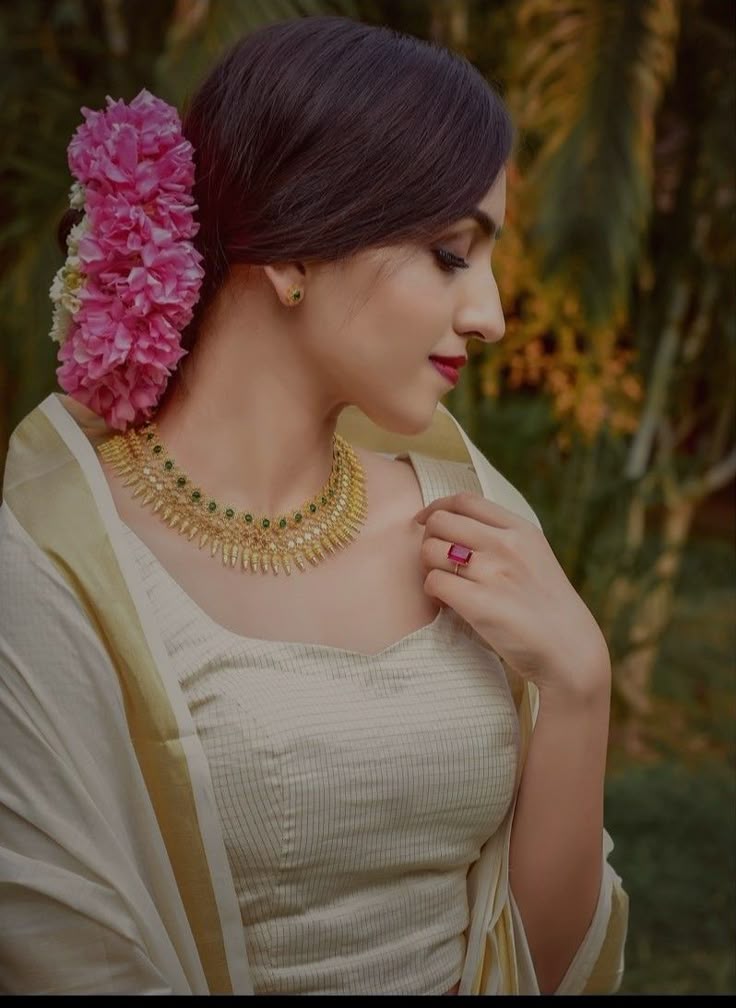
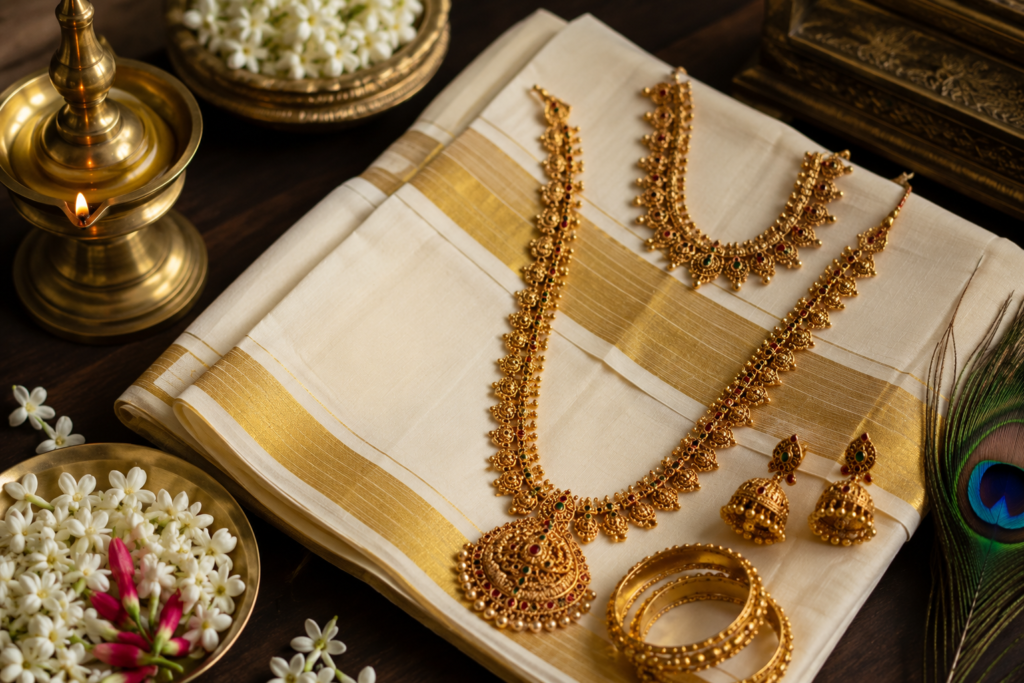
Gold is non-negotiable for Onam, but the finish matters:
- Temple jewelry the classic choice, with motifs of deities and intricate carving.
- Antique gold a matte, oxidised finish that pairs beautifully with plain Kasavu borders.
- Jhumkas and Nethi Chutti jhumkas for the ears and a Nethi Chutti (forehead ornament) for a complete traditional look.
Hair and beauty
- Braided low bun the go-to hairstyle, neat and practical for a day of festivities.
- Fresh gajra flowers (jasmine or mullappoo) tucked into the bun for fragrance and finishing touch.
- Dewy makeup with soft kohl a natural, glowing base with kohl-rimmed eyes keeps the focus on the gold and ivory palette.
Practical gear
- Kolhapuri sandals flat, comfortable, and complements the earthy handloom aesthetic.
- Cushioned mules a more comfortable alternative for long hours of standing or walking.
- Potli bags and clutches compact and traditional, ideal for carrying essentials without disrupting the look.
Occasion Specific Looks
| Occasion | Recommended styling |
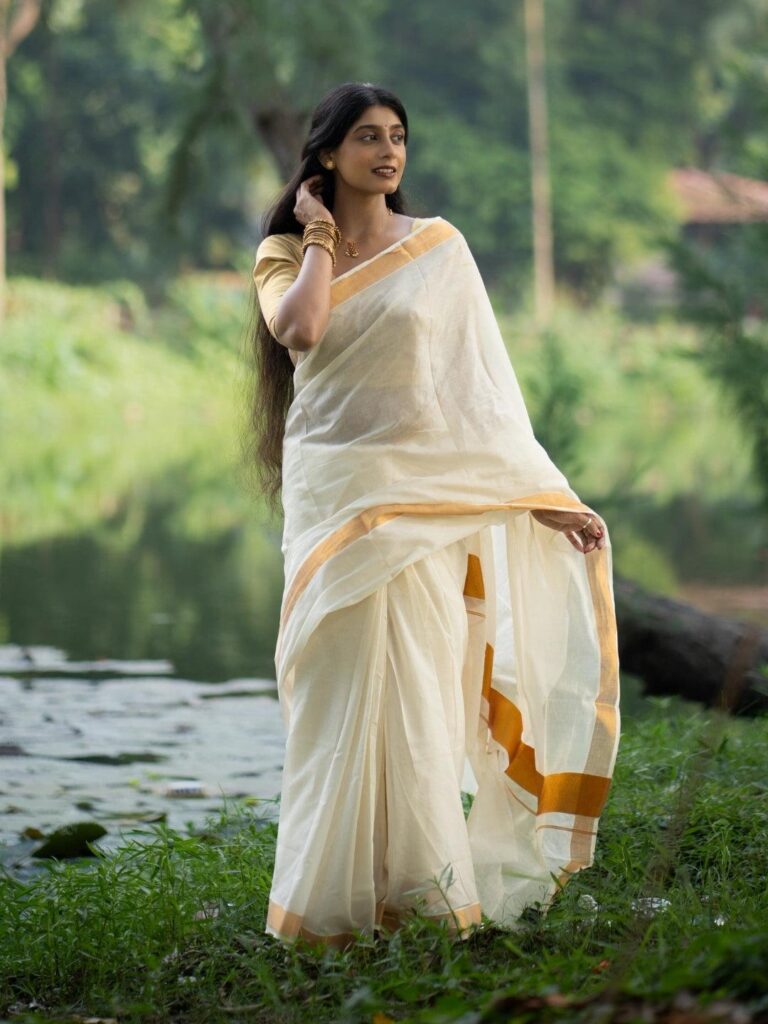
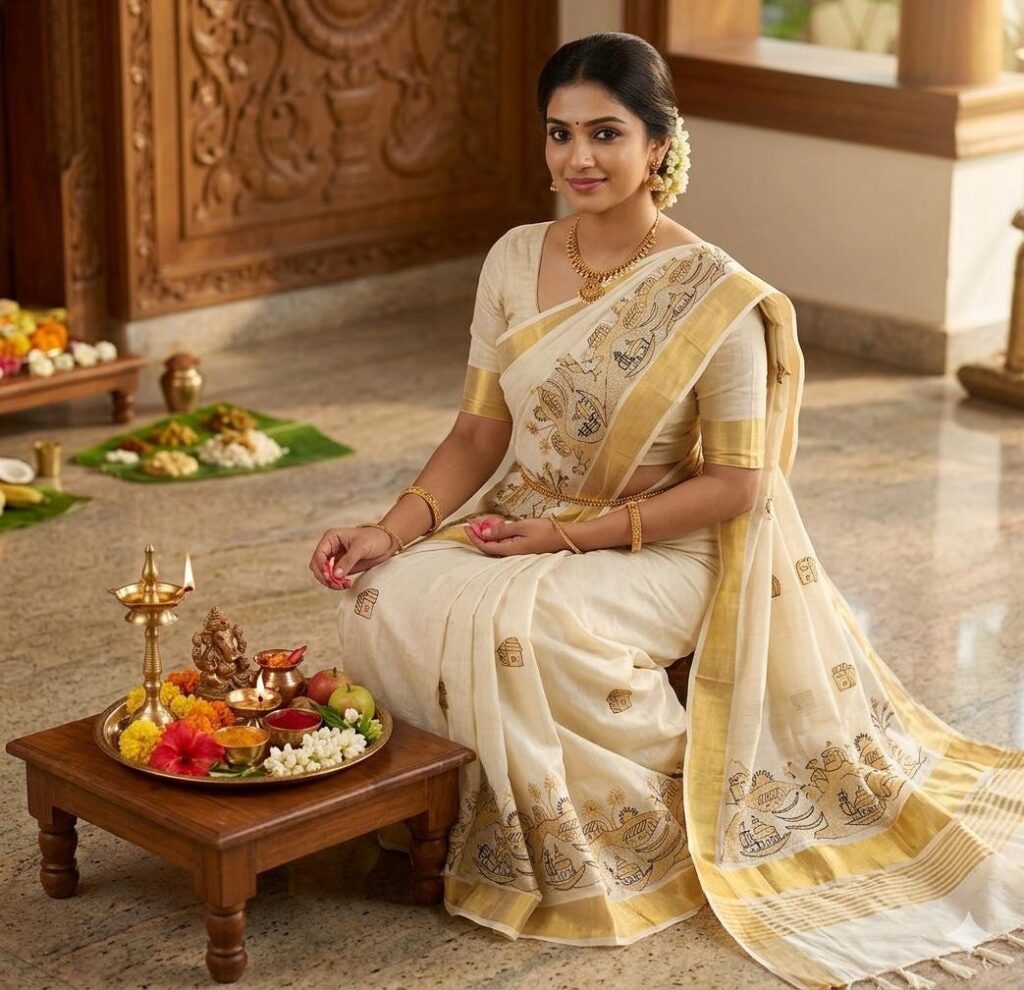
| Puja and family gatherings | Traditional drape, temple jewelry, minimal makeup |
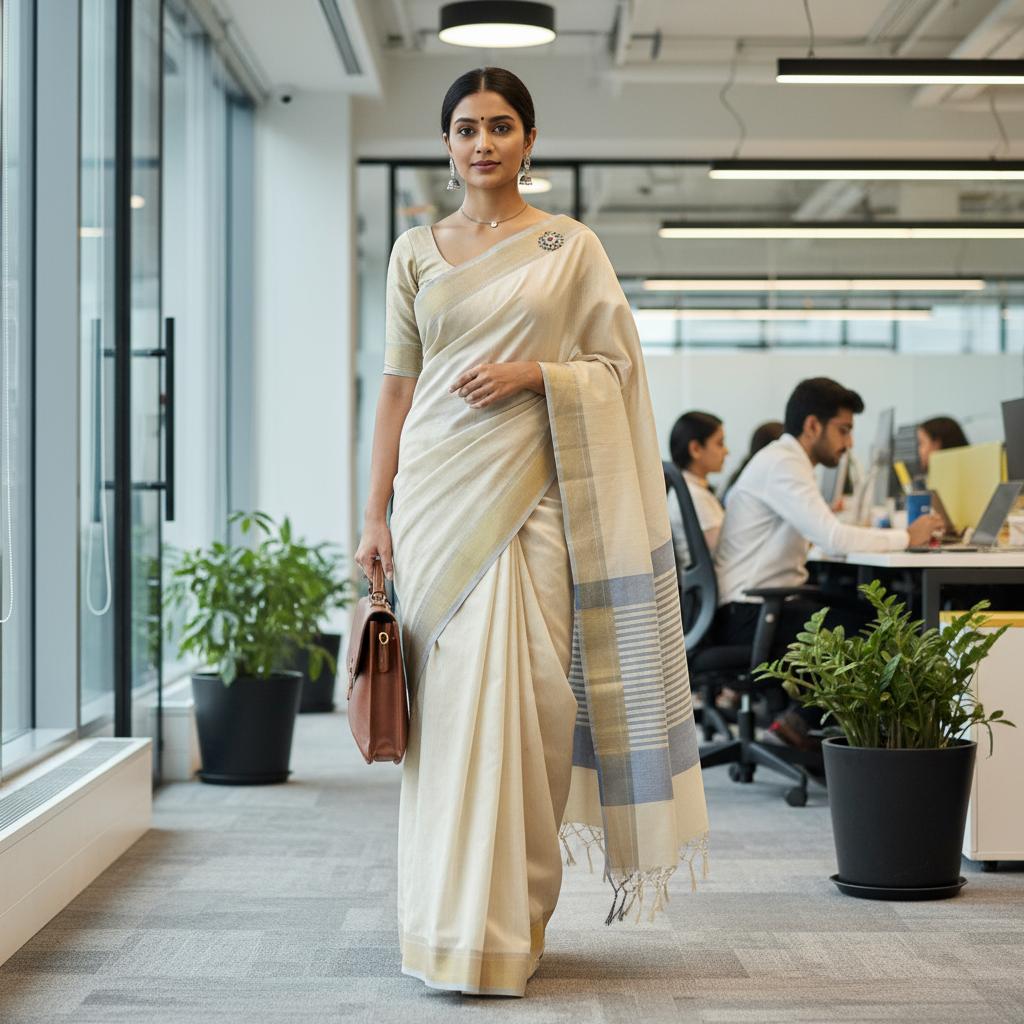
| Office or day events | Saree skirt with a simple blouse, minimal jewelry |
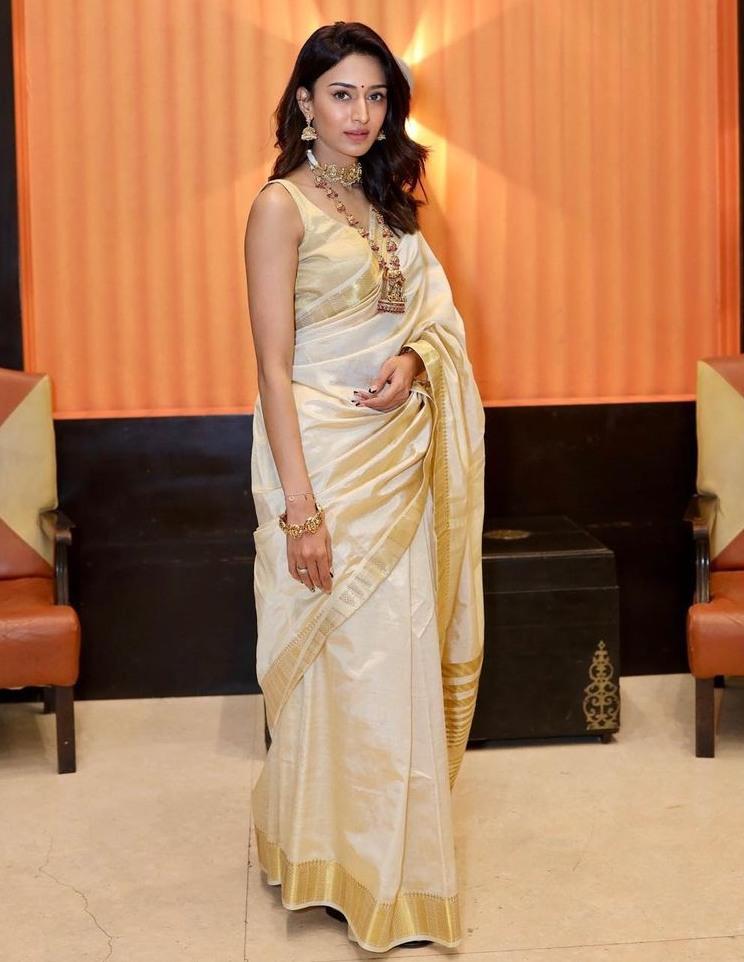
| Evening parties | Indo-western fusion saree-gown or dhoti drape with statement blouse |
| Daytime outings | Breezy handloom linen, light jewelry, comfortable footwear |
Common Styling Mistakes to Avoid
- Over-accessorizing pairing a heavily embellished blouse with statement jewelry and a printed contrast makes the look busy. Pick one focal point.
- Wrong fabric for the weather a stiff silk-blend saree in peak humidity is uncomfortable for a full day of events; save silk blends for evening functions and choose lighter cotton for daytime.
- Ignoring blouse fit a loose or tight blouse changes how the pallu falls; get it tailored close to your measurements, especially around the shoulders.
- Machine-washing on the first wash even “pre-washed” handloom pieces should be hand-washed the first few times to protect the zari.
- Buying purely by border width a wider gold border isn’t automatically more festive; match the border width to your height and the occasion’s formality.
Caring for Your Kasavu Saree
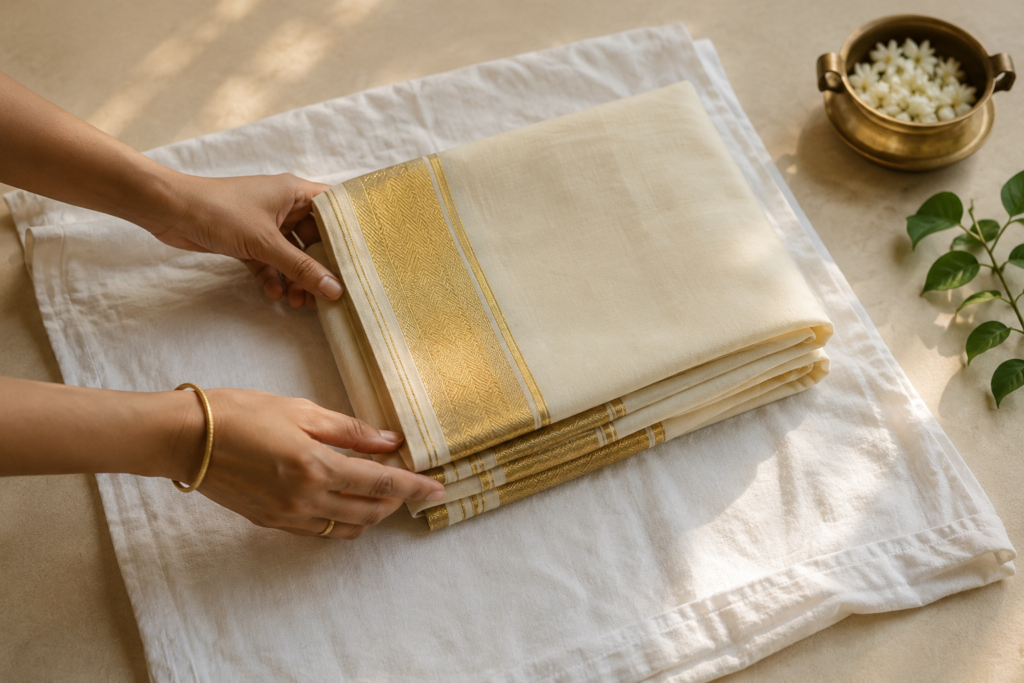
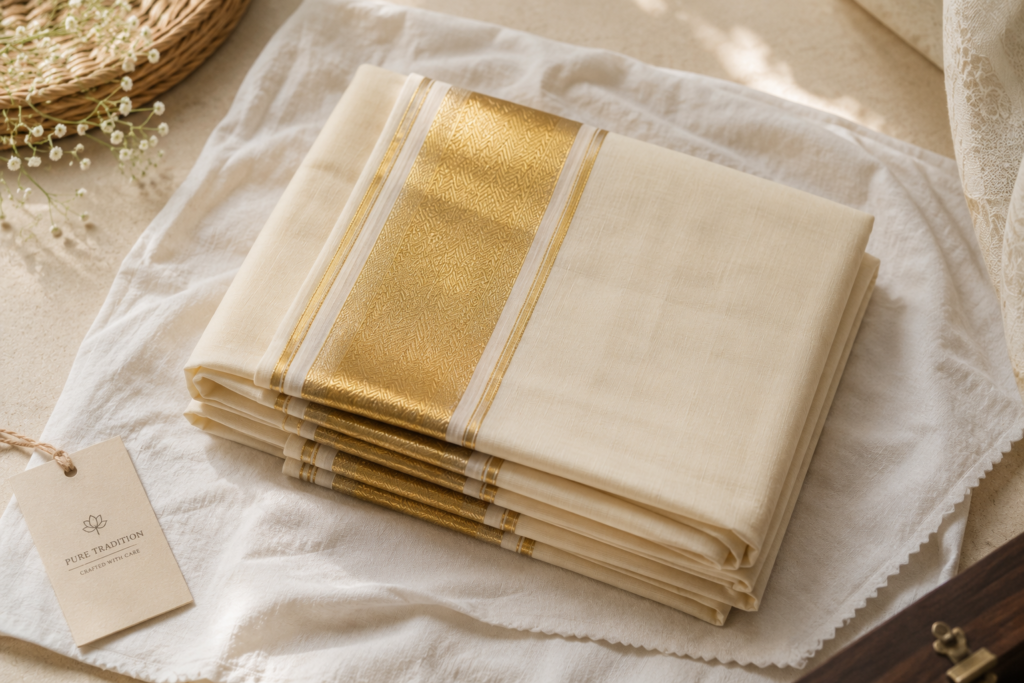
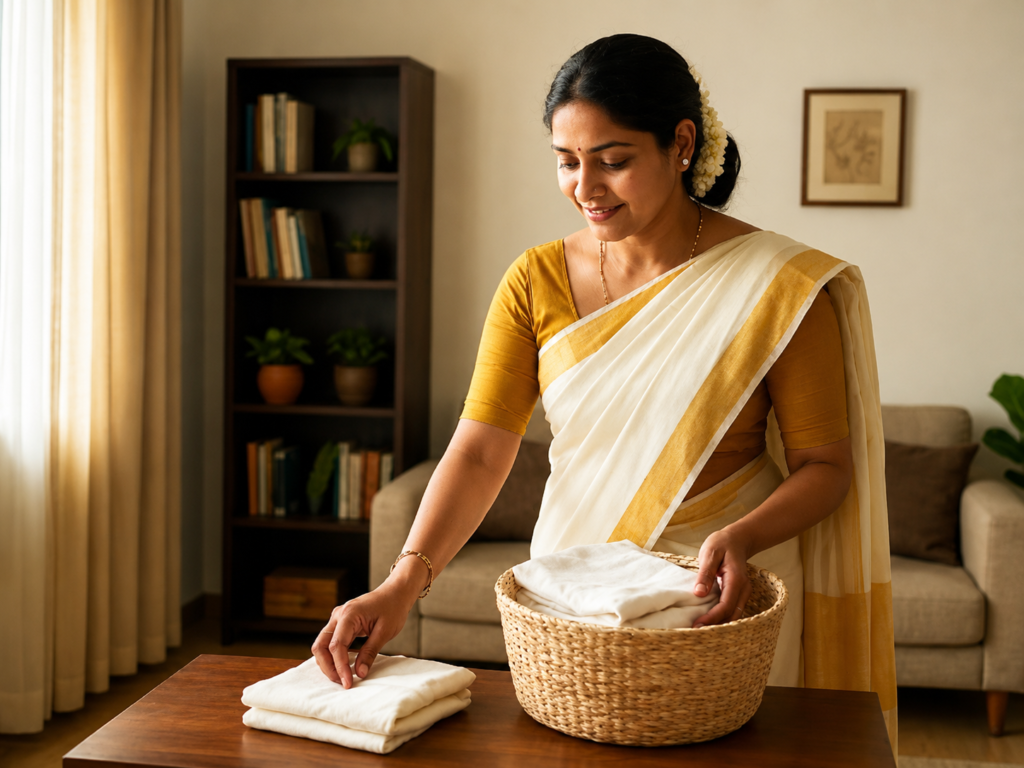
Handloom cotton and cotton-silk need gentle handling to keep the zari from tarnishing and the fabric from losing its texture:
- Wash in cold water by hand avoid machine washing, which weakens the weave and dulls the zari.
- Dry in shade, never in direct sunlight, to prevent the gold border from yellowing or fading.
- Store in muslin cloth or acid-free paper rather than plastic, to let the fabric breathe and prevent mildew.
- Upcycle old Kasavu borders reuse zari borders from worn-out sarees as trims for blouses, bags, or new garments instead of discarding them.
Quick Onam Styling Checklist
- Choose a GI-tagged handloom saree (Balaramapuram, Chendamangalam, Kuthampully, or Kasaragod) and check for the Handloom Mark
- Pick a drape style traditional, dhoti-style, or saree-gown based on the occasion
- Match your blouse neckline and sleeve style to the event (traditional vs. party)
- Complete the look with temple or antique gold jewelry and a gajra-braided bun
- Choose footwear and a bag that match the formality of the occasion
- Hand-wash and shade-dry after wearing, and store properly for next year
FAQs
What is the significance of the Kasavu saree during Onam? The ivory-and-gold Kasavu saree represents purity and prosperity and is Kerala’s traditional festive attire, worn during Onam as part of the state’s cultural identity.
How can I tell if a Kasavu saree is genuine handloom? Check for the official Handloom Mark or GI tag, look for slight weave irregularities, and buy from recognised cooperatives or weaver clusters like Balaramapuram or Chendamangalam.
Can I wear a Kasavu saree in a modern style for Onam 2026? Yes saree-gowns with Kasavu piping, dhoti-style drapes, and pastel color-blocked versions are all popular, contemporary ways to wear the fabric while keeping the traditional gold border.
What’s the difference between a Kerala-style drape and a regular Nivi drape? The Kerala style leaves the pallu open and flowing over the shoulder instead of pleating it, and it’s traditionally worn with a mundu-style front rather than the fan-pleated front seen in Nivi drapes from other regions.
How much does an authentic handloom Kasavu saree cost? Prices vary by cluster and zari content Kasaragod cotton sarees start more affordably, while Kuthampully or Balaramapuram pieces with heavier zari work cost more due to the labor-intensive weaving and higher gold-thread content.
Can I reuse the same Kasavu saree every Onam? Yes, with proper care hand-washing, shade-drying, and muslin storage a good handloom Kasavu saree can last for years and often improves in drape as the cotton softens with wash.