
Introduction
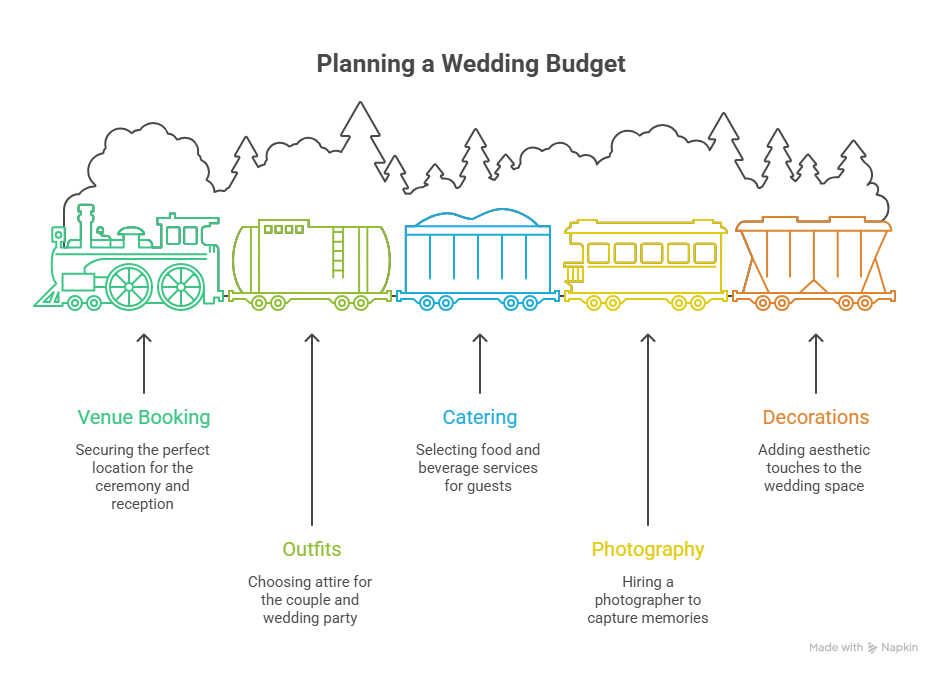
Planning a wedding is one of the most exciting milestones in life, but it can also become overwhelming when expenses start adding up. From booking the perfect venue to choosing outfits, catering, photography, and decorations, every decision affects your overall budget. Without a clear financial plan, it’s easy to overspend and begin married life with unnecessary financial stress.
A well-planned wedding budget helps you stay in control of your finances while ensuring you can celebrate your special day the way you envision. It allows you to prioritize what matters most, allocate your money wisely, and make informed decisions throughout the planning process. Whether you’re planning an intimate ceremony or a grand celebration, budgeting provides a roadmap that keeps your spending aligned with your goals.
In this guide, you’ll learn how to determine your total wedding budget, identify your priorities, allocate funds across different wedding categories, discover practical cost-saving strategies, and manage your finances from the planning stage to the wedding day. By following these steps, you can create a memorable wedding without compromising your financial future.
Determine Your Total Wedding Budget
Before booking a venue or contacting vendors, the first step is to determine how much you can realistically afford to spend. Knowing your total budget helps you make confident decisions, avoid unnecessary debt, and focus on options that fit your financial situation.
Instead of estimating your expenses as you go, calculate your available funds in advance. This creates a strong financial foundation for the rest of your wedding planning journey.
Personal Savings
Your personal savings should be the starting point of your wedding budget. Review your current savings and decide how much you can comfortably allocate without affecting your emergency fund or other financial goals.
If you’re planning your wedding several months in advance, consider setting aside a fixed amount each month. Even small, consistent contributions can significantly increase your budget over time while reducing financial pressure closer to the wedding.
Avoid draining all of your savings for a single event. Keeping money aside for emergencies and life after marriage, such as moving into a new home or future investments, is just as important as planning the wedding itself.
Family Contributions
In many weddings, parents or close family members may choose to contribute financially. If this applies to your situation, have an open and respectful conversation early in the planning process to understand how much they are comfortable contributing.
Knowing the exact amount helps you create a more accurate budget and prevents confusion later. It’s also important to discuss whether family members have any expectations regarding guest lists, traditions, or specific wedding arrangements tied to their contribution.
Clear communication ensures everyone is on the same page and reduces the chances of misunderstandings during the planning process.
Plan a Wedding You Can Afford Without Debt
A beautiful wedding doesn’t have to come with years of financial stress. While personal loans and credit cards may seem like quick solutions, borrowing more than you can comfortably repay can create unnecessary pressure after the celebration.
Focus on planning a wedding that fits within your available budget rather than stretching your finances to meet unrealistic expectations. Prioritizing affordability allows you to enjoy your special day while starting your married life on stronger financial footing.
Remember that guests are more likely to remember the joy, hospitality, and meaningful moments than the price tag of your wedding.
Make Smart Use of Credit Card Rewards
If you already use a rewards credit card responsibly, it can help you earn cashback, travel points, or reward miles on eligible wedding purchases. Large expenses such as venue deposits, catering, or hotel bookings may generate valuable rewards if paid through a qualifying card.
However, only use this strategy if you can pay the full balance by the due date. Carrying a balance and paying high-interest charges can quickly outweigh any rewards you earn.
Before making payments, check whether your vendors accept credit cards and whether any processing fees apply. In some cases, paying by bank transfer may be more cost-effective than earning rewards.
Quick Tips for Determining Your Wedding Budget
- Calculate your total available funds before making any bookings.
- Use personal savings without compromising your emergency fund.
- Confirm family contributions early to avoid budgeting confusion.
- Plan a wedding within your financial means instead of relying on debt.
- Take advantage of credit card rewards only if you can pay the balance in full.
- Review and update your budget regularly as planning progresses.
A realistic budget serves as the backbone of your wedding planning process. Once you know how much you can spend, the next step is deciding where your money should go based on what matters most to you as a couple.
Define Your Wedding Priorities
Every couple has a unique vision for their wedding. While some dream of a luxurious venue, others may value exceptional food, stunning photography, or an intimate celebration with close family and friends. Defining your priorities early helps you spend your budget on what matters most instead of trying to invest equally in every aspect of the wedding.
When your spending reflects your personal values, you’re more likely to be satisfied with the final experience. Prioritizing also makes it easier to identify areas where you can reduce costs without compromising your dream wedding.
Understand Your Personal Values
Before creating a detailed budget, take time to discuss what your wedding means to both of you. Your values will influence every financial decision, from selecting the venue to deciding on the guest list and entertainment.
Ask yourselves questions such as:
- Do we want a grand celebration or an intimate gathering?
- Is preserving traditions important to us?
- Would we rather invest in memorable experiences than luxury decorations?
- Are we planning a destination wedding or a local ceremony?
There are no right or wrong answers. The goal is to create a wedding that reflects your personalities and shared vision rather than following trends or outside expectations.
Identify Your Must-Haves and Non-Negotiables
Every wedding has a few elements that couples consider essential. These are the areas where you may choose to allocate a larger portion of your budget because they have the greatest emotional or practical value.
For example, your must-haves might include:
- A premium wedding venue
- Professional photography and videography
- High-quality catering
- Designer bridal and groom attire
- Live music or entertainment
- Customized décor
- A destination wedding experience
Once you’ve identified your top priorities, rank them in order of importance. This ranking becomes a valuable guide when making budgeting decisions and helps you avoid overspending on less important details.
Communicate Openly About Your Budget
Wedding planning is a shared journey, and honest communication is essential for making financial decisions together. Discuss your expectations, priorities, and spending limits before signing contracts or making large purchases.
If family members are contributing financially, involve them in relevant discussions to clarify expectations and responsibilities. Open communication helps prevent misunderstandings and ensures everyone is working toward the same goal.
It’s also helpful to schedule regular budget check-ins throughout the planning process. Reviewing expenses together allows you to adjust your spending if costs change or new priorities emerge.
Prioritize Your Guests’ Experience
While every couple wants a beautiful wedding, guests are most likely to remember how they felt during the celebration rather than how expensive it looked. Investing in guest comfort often creates a more enjoyable and memorable event than focusing solely on luxury details.
Consider allocating your budget toward:
- Delicious food and beverages
- Comfortable seating arrangements
- Efficient event scheduling
- Easy accessibility for elderly or differently abled guests
- Adequate parking or transportation
- Accommodation for out-of-town guests, if needed
Small touches that improve convenience and hospitality often leave a lasting impression without significantly increasing your overall budget.
Balance Dreams with Practicality
It’s natural to be inspired by social media, celebrity weddings, or luxury wedding magazines. However, trying to recreate every trend can quickly stretch your budget beyond what is financially comfortable.
Instead, focus on the elements that will have the greatest impact on your happiness. Choosing a few standout features while simplifying less important details allows you to create a beautiful wedding that feels personal and remains within your budget.
Quick Tips for Setting Wedding Priorities
- Discuss your shared vision before allocating your budget.
- List and rank your top wedding priorities.
- Differentiate between “must-haves” and “nice-to-haves.”
- Communicate openly with your partner and contributing family members.
- Invest in areas that enhance the guest experience.
- Avoid comparing your wedding to others or following every trend.
Once your priorities are clearly defined, budgeting becomes much easier. Instead of dividing your money equally across every category, you can allocate more funds to the elements that matter most while reducing spending in less important areas.
Standard Wedding Budget Allocation
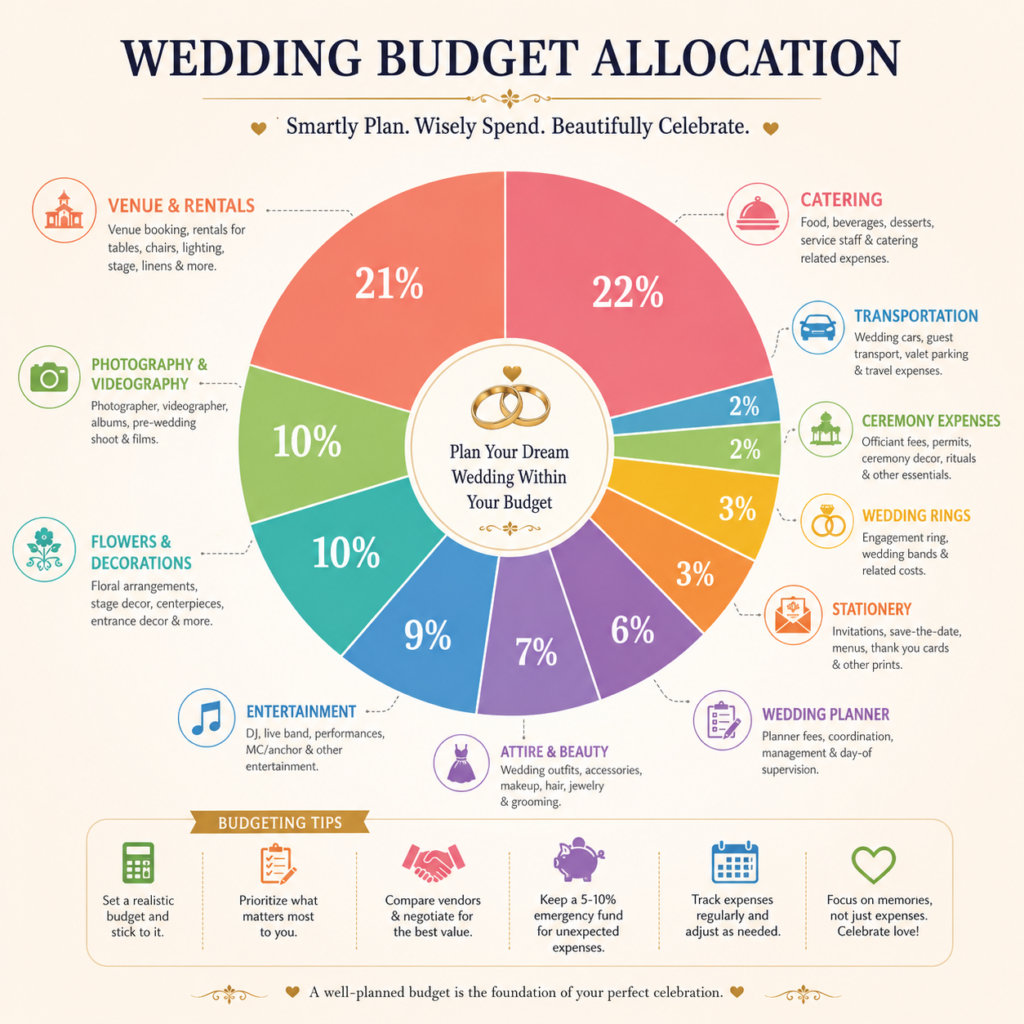
Once you’ve determined your total budget and identified your priorities, the next step is deciding how to distribute your money across different wedding expenses. A standard budget allocation serves as a practical starting point, helping you avoid overspending in one area while neglecting another.
Keep in mind that these percentages are guidelines, not fixed rules. Every wedding is unique, so you can adjust the allocation based on your priorities, guest count, location, and overall vision.
Recommended Wedding Budget Allocation
| Wedding Category | Suggested Budget Allocation |
| Catering | 22% |
| Venue & Rentals | 21% |
| Photography & Videography | 10% |
| Flowers & Decorations | 10% |
| Entertainment | 9% |
| Attire & Beauty | 7% |
| Wedding Planner | 6% |
| Stationery | 3% |
| Wedding Rings | 3% |
| Ceremony Expenses | 2% |
| Transportation | 2% |
Let’s take a closer look at each category and understand what it typically includes.
Catering (22%)
Food and beverages are often the largest expense in a wedding budget, especially for celebrations with a large guest list. Catering usually includes meals, desserts, beverages, service staff, and sometimes tableware, depending on the package.
To control catering costs, finalize your guest list before confirming the menu. Choosing seasonal dishes, limiting premium add-ons, and offering a curated menu instead of an extensive buffet can help reduce expenses without compromising quality.
Venue & Rentals (21%)
Your venue sets the tone for the entire celebration and often includes rental charges for banquet halls, resorts, lawns, or event spaces. Additional rental costs may cover tables, chairs, lighting, staging, linens, tents, and other event essentials.
Booking your venue well in advance can secure better pricing and availability. You can also save money by selecting venues that include furniture and basic décor in their packages, reducing the need for separate rentals.
Photography & Videography (10%)
Wedding photos and videos preserve memories that you’ll cherish for years. Professional photography packages may include pre-wedding shoots, candid photography, cinematic films, albums, drone coverage, and highlight videos.
Rather than choosing solely based on price, review each photographer’s portfolio and experience. Investing in skilled professionals often provides better long-term value than opting for the lowest quote.
Flowers & Decorations (10%)
Décor transforms your venue and creates the atmosphere for your celebration. This category includes floral arrangements, stage decoration, entrance displays, lighting, table centerpieces, and themed decorative elements.
If you’re working within a limited budget, focus on decorating high-visibility areas such as the ceremony stage, entrance, and photo backdrop. Using seasonal flowers and reusable decorative items can also help reduce costs.
Entertainment (9%)
Entertainment keeps guests engaged and contributes to the overall energy of the event. Depending on your preferences, this may include DJs, live bands, cultural performances, emcees, dance floors, or interactive activities.
Choose entertainment that matches the style of your wedding and your audience. Instead of booking multiple performers, one experienced DJ or live band may provide excellent value throughout the celebration.
Attire & Beauty (7%)
This category covers wedding outfits, accessories, footwear, jewelry rentals, hair styling, makeup, grooming, and beauty treatments for the couple. Costs vary depending on designer selections, customization, and the number of events.
Planning your attire early gives you more time to compare options and avoid last-minute premium pricing. Renting certain accessories or choosing timeless designs can also help keep expenses under control.
Wedding Planner (6%)
Hiring a wedding planner can simplify the planning process by coordinating vendors, managing timelines, and overseeing logistics. Their expertise often helps couples avoid costly mistakes and keeps the event running smoothly.
If hiring a full-service planner isn’t within your budget, consider partial planning or day-of coordination. These services provide professional support while costing significantly less than comprehensive planning packages.
Stationery (3%)
Wedding stationery includes save-the-date cards, invitations, RSVP cards, menus, seating charts, welcome signs, and thank-you cards. While these items contribute to the overall presentation, they don’t need to consume a large portion of your budget.
Digital invitations and minimalist designs are increasingly popular and can significantly reduce printing and postage costs while maintaining an elegant appearance.
Wedding Rings (3%)
Wedding rings symbolize your lifelong commitment and are one of the few wedding purchases you’ll use every day. Set a realistic budget based on your financial situation rather than feeling pressured to choose the most expensive options.
Compare designs, materials, and jewelers before making a purchase. Simple, high-quality rings often provide better long-term value than elaborate styles with higher maintenance costs.
Ceremony Expenses (2%)
Ceremony expenses vary depending on cultural and religious traditions. This category may include officiant fees, permits, ceremonial décor, seating arrangements, sound systems, and ritual materials.
Planning these expenses early helps ensure that important ceremonial elements are included without disrupting the overall budget.
Transportation (2%)
Transportation covers travel arrangements for the couple, family members, and sometimes guests. It may include decorated wedding cars, shuttle services, buses, or luxury vehicles.
If your ceremony and reception take place at the same venue, transportation costs can often be reduced significantly. Coordinating shared transportation for guests can also improve convenience while keeping expenses manageable.
Remember: Customize Your Budget
Although these percentages provide a balanced framework, they should not limit your planning. If photography is your highest priority, you may decide to allocate 15% of your budget there and reduce spending on décor or entertainment.
The key is to ensure that every adjustment aligns with your overall budget rather than increasing your total spending. A thoughtful allocation strategy allows you to create a wedding that reflects your priorities while maintaining financial balance.
Quick Budget Allocation Tips
- Use these percentages as a starting point, not a strict rule.
- Allocate more funds to your highest priorities.
- Monitor expenses regularly to stay on track.
- Compare multiple vendors before making commitments.
- Reserve a portion of your budget for unexpected costs.
- Review your budget after every major booking to avoid overspending.
A well-balanced budget allocation makes it easier to control expenses throughout the planning process. Once you understand where your money is going, you can confidently adjust spending to match your personal priorities without exceeding your overall budget.
Adjust Your Budget Based on Your Priorities
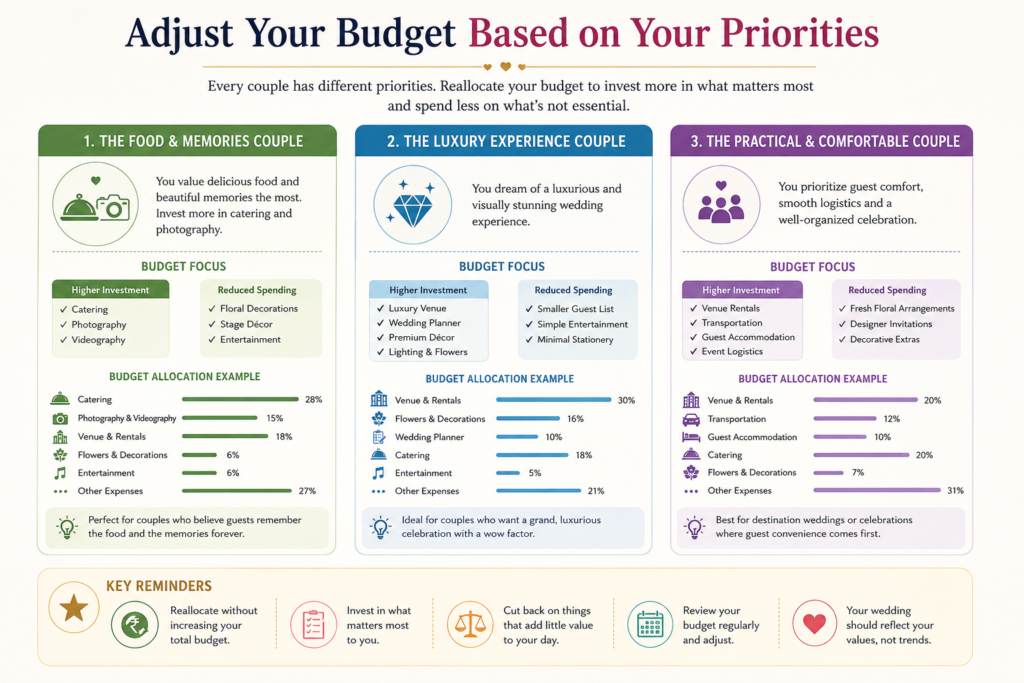
While the recommended budget allocation provides a solid starting point, every couple has different expectations for their wedding day. Some may value exceptional food, while others dream of breathtaking décor or unforgettable photographs. The key is to customize your budget so it reflects your priorities rather than following a fixed formula.
Think of your wedding budget as a flexible plan instead of a strict rulebook. By spending more on the areas that matter most and reducing costs in less important categories, you can create a celebration that feels personal and meaningful without exceeding your financial limits.
Example 1: The Food & Memories Couple
Some couples believe that guests remember two things most—the food and the memories captured in photographs. If these are your top priorities, it makes sense to allocate a larger share of your budget to catering and professional photography.
You may choose to spend more on a premium menu, live food stations, and an experienced photography and videography team while keeping decorations simple and selecting minimal entertainment.
Budget Focus
Higher Investment
- Catering
- Photography
- Videography
Reduced Spending
- Floral decorations
- Stage décor
- Entertainment
This approach ensures guests enjoy a memorable dining experience while preserving every special moment through high-quality photos and videos.
Example 2: The Luxury Experience Couple
For some couples, creating a visually stunning wedding is the ultimate goal. They want an elegant venue, beautifully designed décor, and a professionally managed event that offers a luxurious experience for everyone attending.
In this case, a larger portion of the budget can be allocated to the venue, decorations, and wedding planning services while simplifying other elements to maintain overall balance.
Budget Focus
Higher Investment
- Luxury venue
- Wedding planner
- Premium décor
- Lighting and floral arrangements
Reduced Spending
- Smaller guest list
- Simple entertainment
- Minimal stationery
By inviting fewer guests, couples can afford a more luxurious experience without significantly increasing their overall budget.
Example 3: The Practical & Comfortable Wedding
Some couples prioritize convenience, smooth logistics, and guest comfort over extravagant details. This approach works especially well for destination weddings or celebrations involving guests traveling from different locations.
Instead of spending heavily on elaborate decorations, the focus shifts toward transportation, rentals, and ensuring the event runs efficiently from start to finish.
Budget Focus
Higher Investment
- Venue rentals
- Transportation
- Guest accommodation
- Event logistics
Reduced Spending
- Fresh floral arrangements
- Designer invitations
- Decorative extras
This type of budget creates a comfortable and stress-free experience for both the couple and their guests.
Reallocate Without Increasing Your Budget
One of the biggest budgeting mistakes couples make is adding new expenses instead of redistributing their existing budget. Every time you decide to spend more in one category, consider reducing spending in another to maintain your overall financial plan.
For example, if you decide to upgrade your photography package, you might choose fewer floral installations or simplify your wedding favors. Likewise, choosing an off-season venue can free up funds for entertainment or premium catering.
The goal is not to spend more—it is to spend smarter.
Review Your Priorities Throughout the Planning Process
Wedding planning is dynamic, and your priorities may evolve as you compare vendors, visit venues, or discover new ideas. Regularly reviewing your budget helps ensure that your spending continues to align with your goals.
Set aside time after every major booking to update your budget tracker and evaluate whether any adjustments are needed. This habit makes it easier to identify potential overspending before it becomes a problem.
Focus on What Matters Most
A successful wedding isn’t measured by how much money you spend—it’s measured by how meaningful the day is for you and your loved ones. Concentrating your budget on the experiences and details that matter most creates a celebration that feels authentic and memorable.
Avoid the pressure to include every trend or luxury feature. Instead, invest in the elements that bring you the greatest joy and let go of those that add little value to your overall experience.
Quick Tips for Adjusting Your Wedding Budget
- Prioritize the wedding elements that matter most to you as a couple.
- Increase spending only by reducing costs in another category.
- Don’t feel pressured to follow standard budget percentages exactly.
- Review your budget after every major booking.
- Keep your financial goals in mind even after the wedding.
- Remember that a personalized budget leads to a more meaningful celebration.
Every couple’s wedding is unique, and your budget should reflect that uniqueness. Once you’ve aligned your spending with your priorities, the next step is learning practical ways to reduce costs without compromising the quality of your wedding.
Smart Cost-Saving Strategies
Planning a memorable wedding doesn’t always require a larger budget. In fact, many couples create beautiful celebrations by making thoughtful financial decisions instead of cutting corners. The key is to spend intentionally on the things that matter most while finding smart ways to reduce unnecessary expenses.
Cost-saving doesn’t mean sacrificing quality. With careful planning, flexibility, and a willingness to compare options, you can stay within your budget while still creating an unforgettable wedding experience.
Trim Your Guest List
One of the easiest ways to reduce wedding expenses is by limiting the number of guests. Since many costs are calculated per person, even a small reduction in guest count can lead to significant savings.
A smaller guest list can help reduce expenses for:
- Catering
- Venue size
- Seating and furniture rentals
- Invitation printing
- Wedding favors
- Transportation
- Accommodation arrangements
Instead of feeling obligated to invite everyone you know, focus on celebrating with the people who are genuinely important to your journey as a couple. An intimate wedding often creates a more personal and meaningful atmosphere for everyone involved.
Choose an Off-Season or Weekday Wedding
Wedding dates have a major impact on your overall budget. Popular weekends during peak wedding seasons usually come with higher prices due to increased demand for venues and vendors.
If your schedule is flexible, consider:
- Weekday weddings
- Morning or afternoon ceremonies
- Off-season months
- Non-holiday dates
Many venues and vendors offer attractive discounts during less busy periods. Besides saving money, you’ll also have better availability and more choices when selecting your preferred venue, photographer, and decorators.
Compare and Negotiate with Vendors
Don’t settle for the first quote you receive. Taking time to compare multiple vendors helps you understand market pricing and ensures you’re getting the best value for your money.
When speaking with vendors:
- Request detailed quotations.
- Compare services instead of just prices.
- Ask about package discounts.
- Discuss customized packages based on your needs.
- Clarify what’s included before signing a contract.
Most reputable vendors are open to reasonable discussions, especially if you’re booking multiple services or planning your wedding during a less busy season. However, avoid choosing solely based on the lowest price, as quality and reliability are equally important.
Eliminate Unnecessary Extras
It’s easy to get carried away with trending wedding ideas found on social media. While these additions may look impressive, many of them contribute little to the overall guest experience while increasing your budget considerably.
Consider whether you truly need extras such as:
- Luxury wedding cars
- Expensive wedding favors
- Multiple decorative installations
- Elaborate entrance displays
- Excessive printed materials
- Trend-driven décor pieces
- Fireworks or special effects
Before adding any expense, ask yourself, “Will this improve our wedding experience, or is it simply an optional luxury?” This simple question can help prevent impulse spending.
Consider DIY Where It Makes Sense
Not every wedding detail requires professional services. If you enjoy creative projects and have enough time before the wedding, you can handle a few simple tasks yourself.
Examples include:
- Welcome signs
- Seating charts
- Guest favors
- Photo displays
- Simple table decorations
- Digital invitations
However, avoid DIY projects for critical services like photography, catering, makeup, or event coordination. Professional expertise in these areas often prevents costly mistakes and ensures a smoother wedding day.
Book Early to Lock in Better Prices
Waiting until the last minute often limits your options and may result in higher prices. Booking major vendors early gives you access to better availability and allows you to secure current rates before seasonal price increases.
Prioritize early bookings for:
- Venue
- Photographer
- Caterer
- Makeup artist
- Entertainment
- Wedding planner
Early planning also gives you more time to compare vendors, negotiate packages, and spread payments over several months, making the financial burden easier to manage.
Reuse and Repurpose Decorations
Wedding decorations don’t have to be used only once. With thoughtful planning, many decorative elements can serve multiple purposes throughout the day.
For example, you can:
- Move ceremony flowers to the reception area.
- Reuse welcome boards as photo booth props.
- Repurpose aisle decorations for the stage.
- Use centerpieces in multiple event spaces.
Repurposing décor reduces rental and floral costs while maintaining a cohesive design across the venue.
Track Every Expense
Even small purchases can accumulate quickly during wedding planning. Regularly updating your budget tracker helps you identify overspending before it becomes a larger issue.
Maintain a record of:
- Vendor deposits
- Remaining balances
- Additional purchases
- Last-minute expenses
- Payment deadlines
Reviewing your budget weekly allows you to make timely adjustments and stay in control of your finances throughout the planning process.
Quick Cost-Saving Tips
- Keep your guest list focused on close family and friends.
- Consider weekday or off-season wedding dates for better pricing.
- Compare multiple vendors before making a decision.
- Negotiate packages instead of accepting the first quote.
- Skip unnecessary luxury extras that don’t add real value.
- Handle simple DIY projects if you have the time and skills.
- Book key vendors early to avoid price increases.
- Repurpose decorations wherever possible.
- Track every expense to prevent budget overruns.
Saving money isn’t about having a cheaper wedding—it’s about making smarter financial choices. Every rupee saved on unnecessary expenses can be redirected toward the parts of your wedding that truly matter, helping you create a celebration that’s both memorable and financially responsible.
Financial Management Throughout Wedding Planning
Creating a wedding budget is only the beginning. The real challenge is managing your finances consistently throughout the planning process. As you book vendors, make deposits, and purchase wedding essentials, it’s important to monitor your spending regularly to ensure you stay within your planned budget.
Good financial management helps you avoid last-minute surprises, reduces stress, and gives you greater confidence in every purchasing decision. With the right tools and habits, you can keep your wedding finances organized from start to finish.
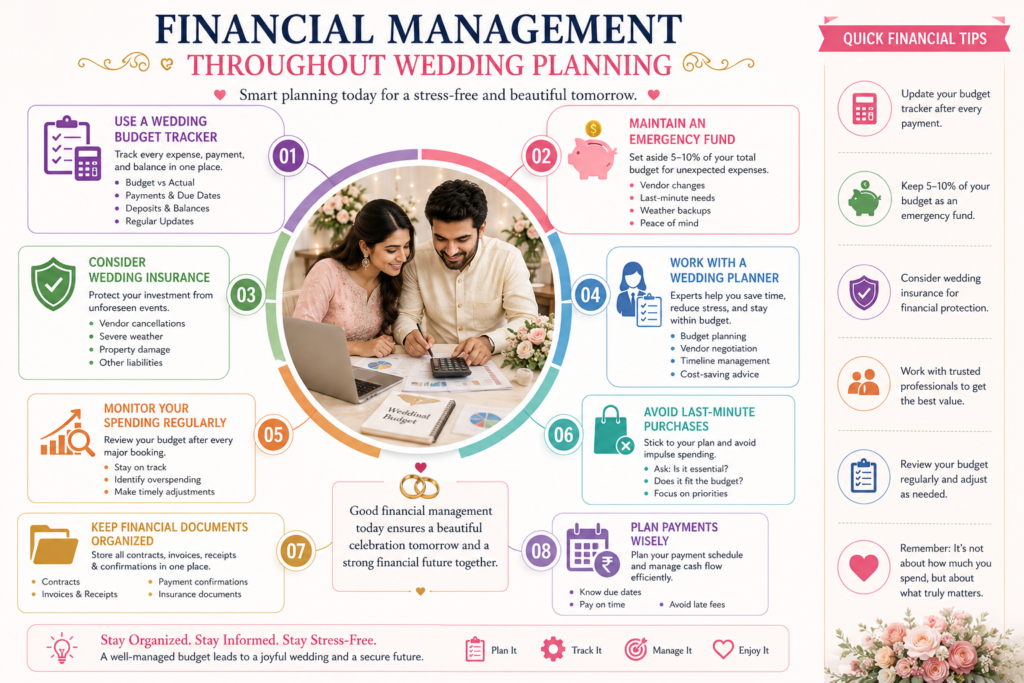
Use a Wedding Budget Tracker
A wedding budget tracker is one of the most effective tools for managing your expenses. Instead of relying on memory or scattered receipts, keep all your financial information in one place so you always know how much you’ve spent and how much remains.
Your budget tracker should include:
- Budget allocated for each category
- Estimated costs
- Actual expenses
- Vendor deposits paid
- Remaining balances
- Payment due dates
- Notes on contracts and agreements
You can use a spreadsheet, budgeting app, or wedding planning software—choose the option you’re most comfortable with. The important thing is to update it regularly whenever a payment is made.
Review your tracker at least once a week, especially as your wedding date approaches. Regular updates help identify overspending early and make it easier to adjust your budget if necessary.
Maintain an Emergency Fund
No matter how carefully you plan, unexpected expenses can arise during wedding preparations. Setting aside an emergency fund ensures you can handle these situations without disrupting your overall budget.
A good rule of thumb is to reserve 5–10% of your total wedding budget for unforeseen costs.
Your emergency fund may help cover expenses such as:
- Last-minute vendor replacements
- Weather-related arrangements
- Additional guest accommodations
- Extra décor or rental requirements
- Transportation delays
- Unexpected service charges
- Minor alterations to wedding attire
If you don’t end up using the emergency fund, you can simply keep the remaining amount as savings after the wedding. Having this financial cushion provides peace of mind throughout the planning process.
Consider Wedding Insurance
If you’re planning a large or high-value wedding, wedding insurance may be worth considering. While it’s an additional expense, it can offer financial protection against certain unforeseen events.
Depending on the policy, wedding insurance may provide coverage for situations such as:
- Vendor cancellations
- Venue-related issues
- Severe weather disruptions
- Property damage
- Lost or damaged wedding attire
- Liability claims during the event
Before purchasing a policy, carefully review what is included and what exclusions apply. Coverage varies between insurance providers, so choose a plan that matches your wedding’s size and requirements.
For smaller weddings, insurance may not always be necessary. However, for destination weddings or events with significant financial investments, it can provide valuable protection.
Work with a Wedding Planner
Hiring a wedding planner may seem like an added expense, but it can often help you save money in the long run. Experienced planners understand vendor pricing, know where to negotiate, and can prevent costly mistakes that inexperienced couples sometimes make.
A professional wedding planner can assist with:
- Creating a realistic budget
- Recommending trusted vendors
- Negotiating service packages
- Managing vendor communication
- Coordinating payment schedules
- Preventing unnecessary expenses
- Keeping the event on schedule
If a full-service planner doesn’t fit your budget, consider hiring a partial planner or a day-of coordinator. These services provide professional support at a lower cost while still reducing planning stress.
Monitor Your Spending Regularly
Wedding expenses don’t happen all at once—they build up over several months. That’s why it’s important to review your budget after every major booking rather than waiting until the final weeks before the wedding.
Ask yourself regularly:
- Are we staying within our planned budget?
- Have any categories exceeded their allocation?
- Can we reduce costs elsewhere if needed?
- Are there any upcoming payments we need to prepare for?
Frequent reviews allow you to make small adjustments before minor overspending becomes a significant financial issue.
Avoid Last-Minute Purchases
As the wedding day approaches, it’s common to feel tempted by additional decorations, gifts, or upgrades. While some purchases may genuinely improve the event, many are impulse decisions that unnecessarily increase your overall spending.
Before buying anything new, ask yourself:
- Is this item essential?
- Does it fit within our remaining budget?
- Will it significantly improve the wedding experience?
- Can we achieve the same result with what we already have?
Following this simple decision-making process helps you stay focused on your priorities and avoid unnecessary expenses.
Keep All Financial Documents Organized
Store all your contracts, invoices, receipts, and payment confirmations in one easily accessible location. Whether you prefer digital folders or printed files, organized documentation makes it easier to track payments and resolve any issues that may arise.
Important documents to keep include:
- Vendor contracts
- Payment receipts
- Invoices
- Insurance documents
- Booking confirmations
- Contact details for all vendors
Having everything organized also makes wedding-day coordination much smoother.
Quick Financial Management Tips
- Update your budget tracker after every payment.
- Reserve 5–10% of your budget for unexpected expenses.
- Review your finances regularly instead of waiting until the final month.
- Consider wedding insurance for high-value or destination weddings.
- Keep contracts and payment records organized.
- Avoid unnecessary last-minute purchases.
- Work with experienced professionals whenever possible.
- Focus on long-term financial stability as well as your wedding day.
Managing your wedding finances doesn’t have to be stressful. With careful planning, consistent tracking, and smart financial decisions, you can stay within your budget while enjoying every stage of the planning process.
Conclusion
A well-planned wedding budget is the foundation of a successful and stress-free celebration. By determining your total budget early, identifying your priorities, allocating funds wisely, and monitoring your expenses throughout the planning process, you can make informed financial decisions without compromising your vision.
Remember that every couple’s wedding is unique, and there is no perfect budget that works for everyone. Focus on the experiences and moments that matter most to you, be flexible when adjusting your spending, and don’t hesitate to simplify areas that aren’t essential to your dream celebration.
Most importantly, your wedding marks the beginning of a new chapter in your life—not the finish line for your finances. Planning within your means allows you to celebrate confidently while building a strong financial future together. With thoughtful budgeting, smart cost-saving strategies, and consistent financial management, you can create a beautiful wedding that is both memorable and financially responsible.
Frequently Asked Questions (FAQs)
1. How much should I budget for my wedding?
Your wedding budget should be based on your savings, family contributions, and overall financial goals. Rather than following a fixed amount, create a budget that you can comfortably afford without relying on unnecessary debt.
2. What is the ideal wedding budget allocation?
A common guideline is to allocate the largest portion of your budget to catering and the venue, followed by photography, décor, entertainment, attire, and other essential categories. However, these percentages should be adjusted based on your personal priorities.
3. How can I reduce wedding costs without affecting quality?
You can save money by trimming the guest list, choosing an off-season or weekday wedding, comparing vendor quotes, reusing decorations, and eliminating unnecessary extras while maintaining quality in your priority areas.
4. Should I use a wedding budget spreadsheet?
Yes. A wedding budget spreadsheet or budgeting app helps you track expenses, monitor payments, compare estimated and actual costs, and stay organized throughout the planning process.
5. Is hiring a wedding planner worth the cost?
For many couples, yes. An experienced wedding planner can help negotiate with vendors, avoid costly mistakes, manage timelines, and keep your wedding within budget, often saving both time and money.