
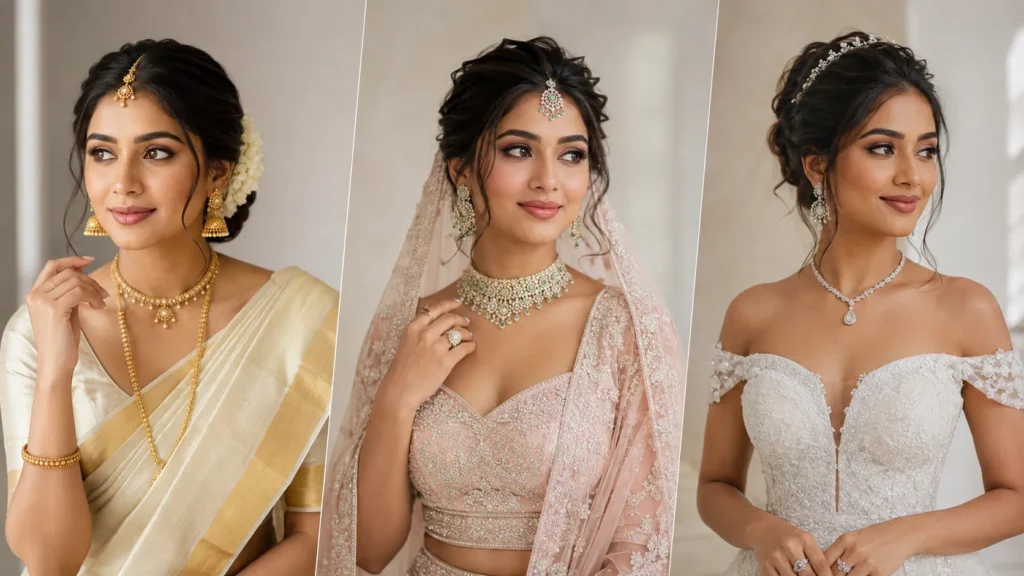
Most bridal makeup guides tell you what’s trending this year dewy bases, bold liners, soft glam. Few tell you how to actually match your makeup to the outfit you’ve already chosen. And that’s the piece that matters most on your wedding day, because a saree, a lehenga, and a gown don’t just look different they carry different textures, necklines, and levels of embellishment, and your makeup needs to work with all of it, not against it.
Here’s how to think about bridal makeup for 2026, organized the way you’re actually planning your wedding: by outfit. But before the outfit-specific pairings, here’s the actual step-by-step process every bridal look is built on.
The Bridal Makeup Application Guide: Step by Step
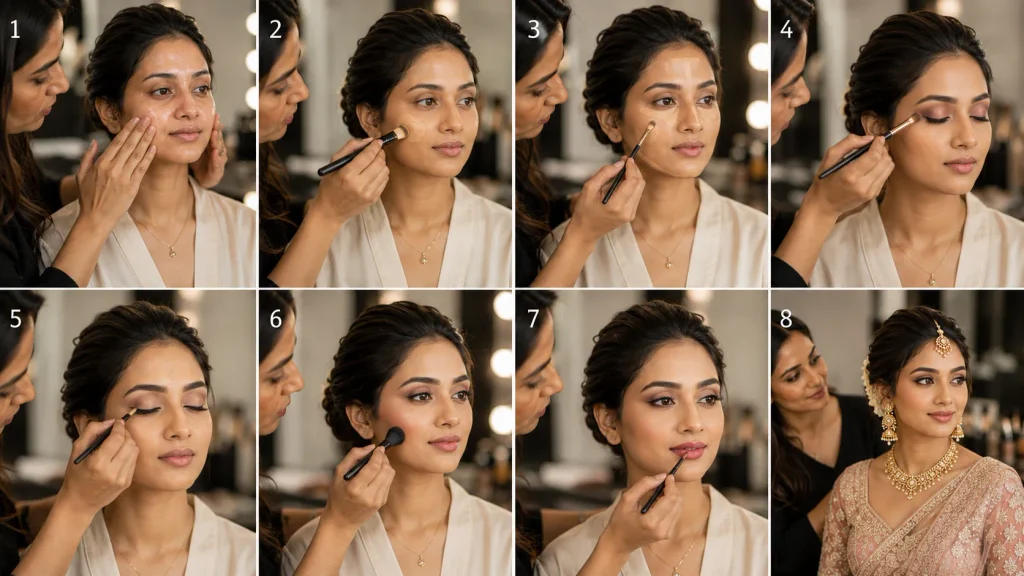
Regardless of what you’re wearing, every long-wearing bridal look is built in the same order. Here’s how a makeup artist typically approaches it, and what to ask for at each stage.
1. Skin prep (30–40 minutes before base) Start with a hydrating primer suited to your skin type pore-minimizing for oily skin, hydrating for dry skin. This step matters more for weddings than everyday makeup because you need the base to hold for 8–10+ hours, often through heat, tears, and multiple outfit changes.
2. Base: foundation, concealer, and setting Choose a full-coverage, long-wear foundation matched carefully to your undertone not just skin depth. Colour-correct any redness or dark circles before concealer, then set with a translucent powder in thin layers rather than one heavy coat, which helps the base move naturally on camera instead of looking cakey.
3. Eyes: base, definition, liner Apply an eyeshadow base first so colour stays true for hours. Build eyeshadow from lightest to darkest, blend the crease well, then add liner and lashes last. Whether you go bold or minimal here depends on your outfit (see the sections below) but the sequence stays the same.
4. Brows and contour Fill and set brows to frame the face before contouring, since brow shape affects how contour should be placed. Use cream contour for photos (it reads more natural than powder under flash) and set lightly.
5. Cheeks and highlight Blush goes on after contour, applied to the apples of the cheeks and blended upward. Highlight the high points cheekbones, brow bone, cupid’s bow sparingly; too much shimmer can look heavy in outdoor daylight photos.
6. Lips Line first to define shape and prevent feathering, then fill with your chosen shade. Blot and reapply for a long-wear finish, especially important if your ceremony involves food, drinks, or long speeches.
7. Setting spray Finish with a setting spray suited to your climate this is non-negotiable for Kerala weddings given the humidity (more on this below).
Once this base process is locked in, the tones and finish you choose at each step matte vs. dewy base, bold vs. neutral lips, subtle vs. shimmery eyes is what actually changes based on your outfit. That’s where the sections below come in.
Bridal Makeup for Sarees
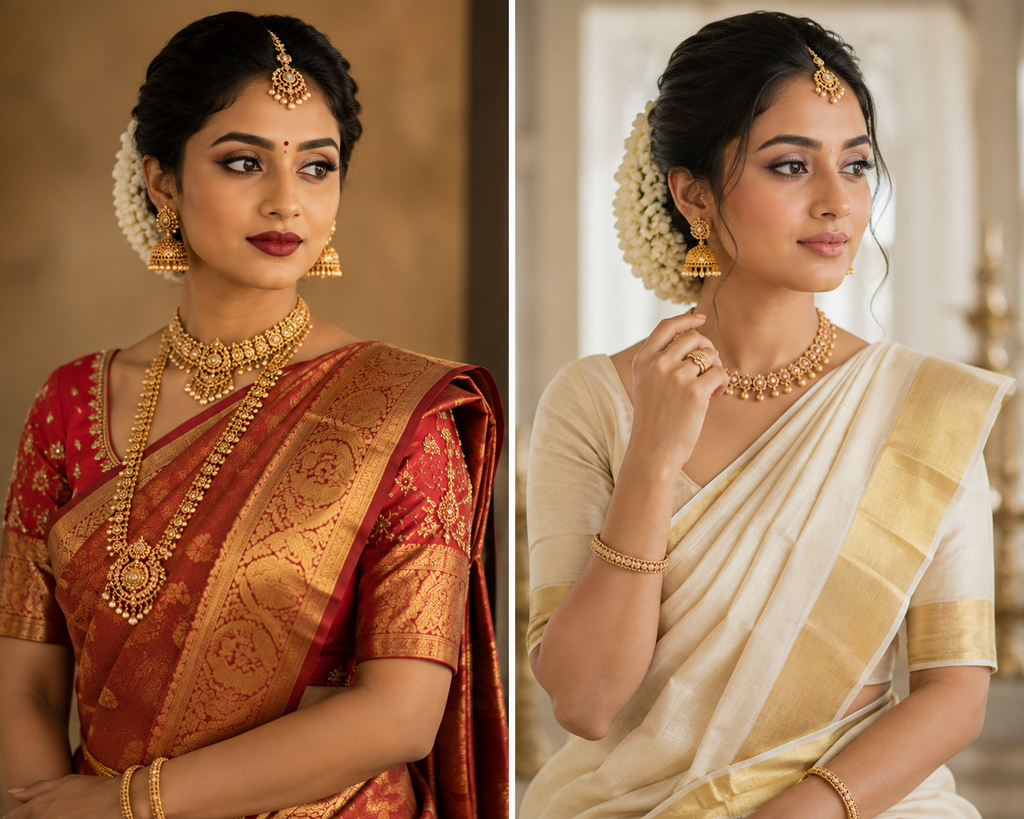
A saree is one of the most fabric-forward outfits a bride can wear the drape, the border, the blouse neckline all do a lot of visual work on their own. That means your makeup should support the saree’s character rather than compete with it. Using the base process from the guide above, here’s exactly how to adapt each step for a saree.
Silk and Kanjivaram Sarees
If you’re wearing a rich silk or Kanjivaram saree heavy zari borders, deep jewel tones, temple jewellery go structured and regal.
- Base: Go fully matte. A dewy or satin finish will pick up shine under the heat of ceremony lighting and next to gold jewellery, which already reflects a lot of light. Set every layer with powder, including under the eyes and around the nose.
- Eyes: Use warm, earthy eyeshadow tones copper, bronze, deep brown rather than cool shades, since they sit better against gold zari and temple jewellery. Line the upper lash line with a defined, slightly elongated wing, and use a brown or black kohl on the waterline for a fuller, more traditional eye shape.
- Brows and contour: Keep brows structured and slightly bold soft, undefined brows tend to get visually lost against a heavy saree border and jewellery. Contour should be more defined than usual since matte bases can flatten the face under strong lighting.
- Lips: This is where the saree earns its statement go with brick red, deep rose, or maroon, applied with a lip liner first to keep the edges crisp through a long ceremony.
- Finish: A blot-and-set routine (blot, powder, blot again) rather than heavy setting spray alone Kanjivaram and silk sarees are often worn for daytime muhurtham ceremonies where photos happen in bright natural light, and a fully matte, blotted finish photographs cleanest.
This combination is a favourite for South Indian temple-style weddings because it balances heavy gold jewellery instead of getting lost next to it.
Pastel and Kasavu Sarees
If your saree leans softer a pastel silk, or the ivory-and-gold of a Kasavu saree the goal shifts to a soft, dewy glow.
- Base: Use a lightweight, satin or dewy-finish foundation instead of full matte Kasavu and pastel sarees have a soft visual weight, and a heavy matte base can look mismatched against them. Skip heavy contour; a soft cream bronzer along the cheekbones is enough.
- Eyes: Lavender, champagne, or soft taupe eyeshadow, blended softly with no harsh lines. Skip bold winged liner a thin, close-set line or none at all keeps the eye look proportional to the outfit’s understated tone.
- Brows and contour: Keep brows soft and natural rather than sharply defined, and contour minimally just enough to add dimension, not sculpt.
- Lips: Nude-pink, rose, or champagne shades rather than anything bold or dark. A tinted balm finish (not fully matte) suits the “glow, don’t cover” approach best.
- Finish: A hydrating setting spray for a natural sheen rather than a fully powdered matte-set this is the one saree category where a slight dewiness is the goal, not something to avoid.
Kasavu sarees especially reward a “glow, don’t cover” approach the outfit’s understated elegance looks best with makeup that feels equally light-handed.
Explore our Sarees collection to find the drape that fits your day.
Bridal Makeup for Lehengas
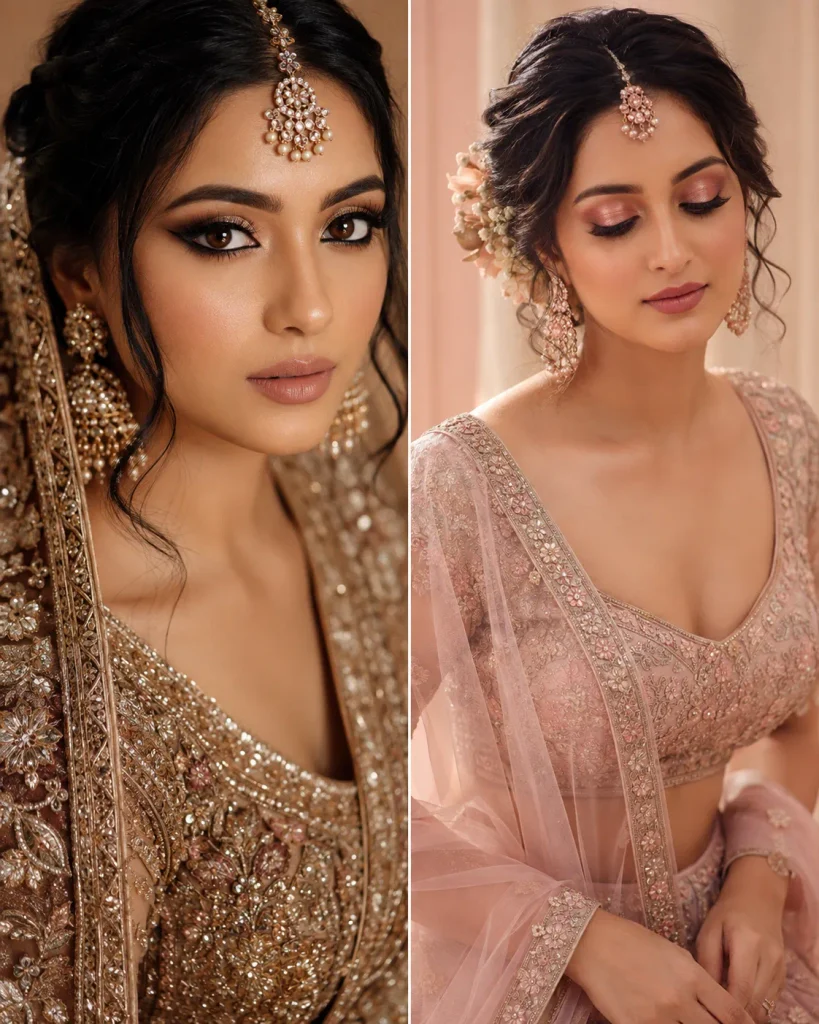
Lehengas tend to carry the most embellishment of any bridal outfit embroidery, sequins, mirror work, layered dupattas which means makeup decisions here are really about knowing when to hold back and when to lean in.
Heavily Embellished or Zardozi Lehengas
When your lehenga is doing a lot visually dense zardozi, dabka, or heavy stonework let it lead. Keep your lips in a neutral or muted shade, use shimmer sparingly (on the lids or inner corners only), and rely on a defined liner and soft contour to frame your features without adding more visual noise. This is especially important if you’re also wearing statement jewellery with your lehenga jewellery, embroidery, and bold makeup competing for attention is the most common styling mistake brides make.
Pastel or Minimal Lehengas
For a pastel or lightly embroidered lehenga, go monochrome. Pick one tonal family blush, mauve, or soft bronze and carry it across eyes, cheeks, and lips for a cohesive, modern look. Rose-gold accents on the eyes photograph beautifully against pastel fabric and keep the whole look feeling intentional rather than like separate decisions stacked together.
Browse our Lehenga rentals to pair with your ideal makeup mood.
Bridal Makeup for Gowns
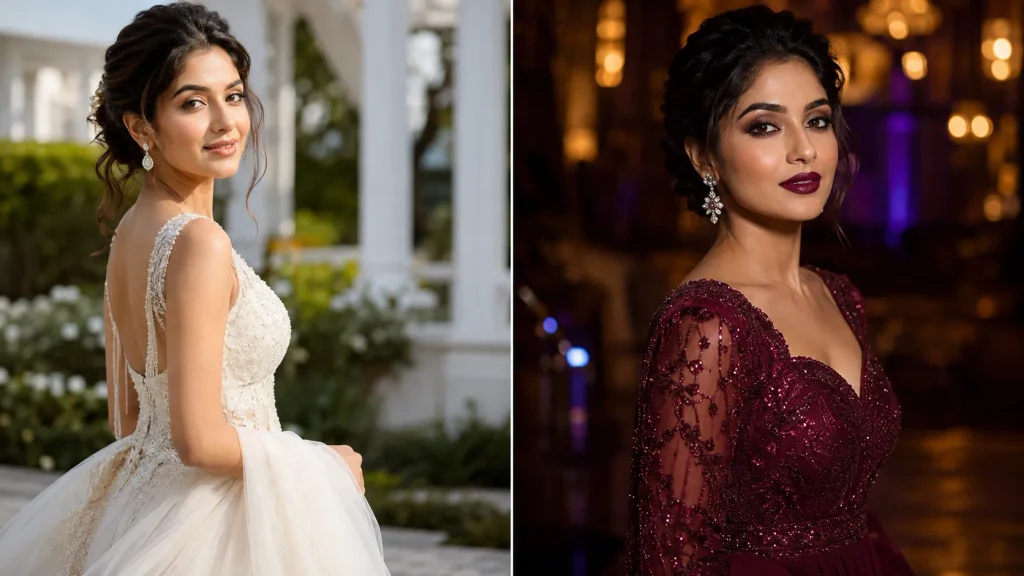
Gowns are a growing choice for receptions, cocktail functions, and destination-style weddings in Kerala, and they call for a different logic than traditional wear — mainly because the silhouette is cleaner, so your face carries more of the visual weight.
Ivory and White Gowns
With an ivory or white gown, warmth needs to be handled carefully anything too orange or bronze can clash with the fabric’s coolness. Champagne or soft nude lips, subtle highlighting on the cheekbones, and a fresh, luminous base work best. The goal is quiet elegance: makeup that makes you glow rather than makeup that announces itself.
Coloured or Reception Gowns
Reception gowns give you more room to play. Deep plum lips, metallic or smoky eyes, and a sculpted contour all work well for evening functions where lighting is warmer and the mood is more celebratory than ceremonial. This is where you can safely go bolder than you would for your main ceremony look.
See our Gown collection for reception-ready and ceremony styles alike.
Quick Tips for Every Outfit Type
A few things apply no matter which outfit you choose:
- Book your makeup trial 3–4 weeks out, and wear a similar neckline or drape to your trial session so you can see how the look actually sits with the outfit.
- Plan for Kerala’s humidity. Long-wear, sweat-resistant products matter more here than in drier climates ask your makeup artist specifically about transfer-proof bases and setting sprays.
- Coordinate, don’t duplicate. Your makeup and outfit don’t need to match colour-for-colour they need to complement each other. A cool-toned lehenga doesn’t require cool-toned makeup; it just needs makeup that doesn’t clash.
- Decide the order. If possible, finalise your outfit before your makeup trial, not after. It’s much easier to build a look around a saree, lehenga, or gown than to force an outfit to fit a makeup look you’ve already committed to.
Final Thought
The outfit you choose sets the tone for your entire bridal look makeup should be the finishing layer that ties it together, not an afterthought. Whether you’re leaning toward a classic silk saree, an embellished lehenga, or a modern gown, choosing your makeup direction alongside your outfit makes for a more cohesive, camera-ready look on the day that matters most.
Still deciding between a saree, lehenga, or gown? Explore Zyara’s full rental collection or get in touch with our styling team for a look built around you.
FAQs
Should my makeup match my outfit colour, or just complement it? Complement, not match. Matching too literally (red lips with a red lehenga, for instance) can look flat. Aim for tones that sit well alongside your outfit’s colour rather than repeating it exactly.
How far in advance should I book a bridal makeup trial? Ideally 3–4 weeks before the wedding, and after you’ve finalised your outfit this gives you time to adjust the look and still book your preferred artist for the date.
Can I use the same makeup for my saree and my reception gown? You can, but most brides adjust at least slightly a softer, structured look for the ceremony outfit and a slightly bolder version for the reception gown tends to photograph better and suit the different lighting and energy of each event.
Does the same makeup logic apply to a Kasavu saree during Onam? Yes Kasavu’s understated gold-and-ivory palette pairs best with the same soft, dewy approach recommended for pastel sarees above.